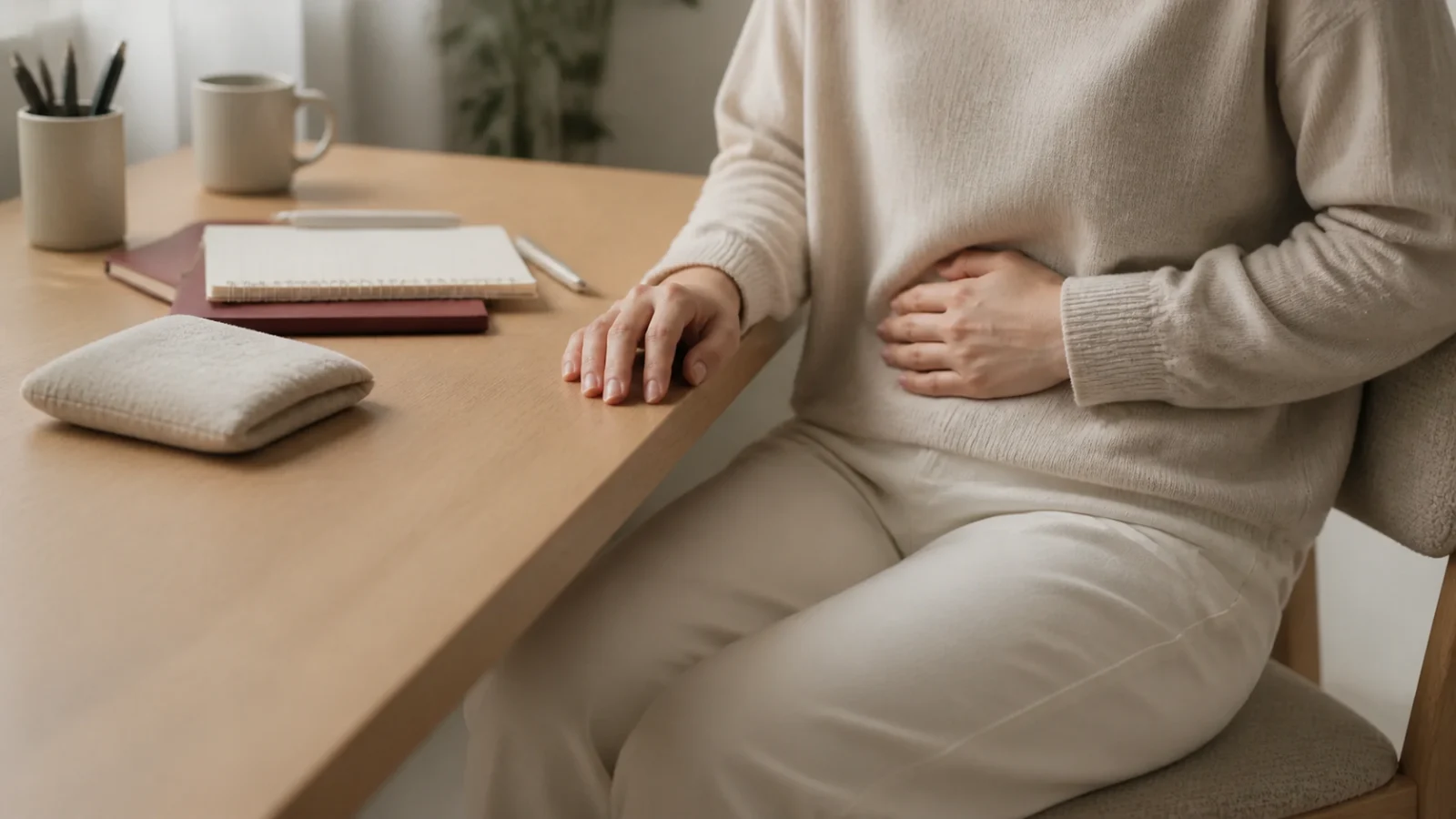
Menstrual cramps: Read in order of your curiosity
Understanding the diagnosis and test results
For menstrual cramps, we check the timing of medication and disrupted activities rather than just the intensity of pain
Primary Menstrual crampsusually involve a squeezing pain in the lower abdomen just before or at the start of menstruation, which may spread to the lower back and thighs, and may be accompanied by nausea, vomiting, diarrhea, headache, or dizziness. Conversely, if new pain develops, pain gradually worsens, pain lasts long before or remains after menstruation, or if it overlaps with excessive/irregular bleeding, dyspareunia, painful urination, or pain during bowel movements, secondary causes such as endometriosis, adenomyosis, fibroids, or pelvic inflammatory disease must be checked. If there is a possibility of pregnancy and you experience severe one-sided pain, bleeding, shoulder pain, dizziness, or a feeling of fainting, do not assume it is menstrual cramps and seek an immediate evaluation.
If it is primary dysmenorrhea, we focus on Korean medicine treatment and sequentially monitor the pain and recovery of the next menstrual cycle.
While it may be necessary to verify other causes, Korean medicine treatment does not only begin after all gynecological treatments are completed.
you can start with a focus on Korean medicine treatment
We treat with the goal of reducing pain intensity and life disruption in the next menstrual cycle by observing the onset of pain, sensations of cold or heat, blood clots, digestion, sleep, and the response to painkillers.
we connect tests and medication treatment at the appropriate time
If you are already using painkillers or hormone therapy, please share your medication history, and we will determine the specific goals for Korean medicine treatment among pain, nausea, diarrhea, or poor sleep.
If you are planning a pregnancy, the benefits and risks of hormone therapy and endometriosis surgery are determined in conjunction with your fertility planning.
Other medical evaluations are necessary if these changes occurCheck when applicable
For suddenly worsening pain, possibility of pregnancy, fever, fainting, or heavy bleeding, an evaluation for acute causes related to endometriosis, infection, or pregnancy must come first.
- When the possibility of pregnancy is accompanied by severe one-sided pelvic pain, vaginal bleeding, or shoulder pain
- When accompanied by dizziness, a feeling of fainting, or decreased consciousness
- When there is suddenly onset, very severe pelvic pain or repeated vomiting
- When pain that is more severe than usual or worsening does not subside even with painkillers, or when bleeding is very heavy
Surgery, procedure, or further evaluationIf pain gradually worsens or is accompanied by dyspareunia (pain during intercourse), dyschezia (pain during bowel movements), or infertility, the OB-GYN department will determine the need for cause evaluation, such as endometriosis, and surgical consultation.
Why consider Korean medicine treatment
Menstrual pain: Setting clear treatment goals first
We look at how many days you endure with painkillers and how many days you miss school or work. EndometriosisWhile checking for causes such as adenomyosis, changes in digestion and sleep as well as pain before and after menstruation are reflected in the Korean herbal medicine prescription.
Observing how symptoms have disrupted your daily life
For each cycle, record the time painkillers were taken from the start of menstruation, their effectiveness, canceled schedules, and the number of times you woke up due to pain.
Categorizing symptom combinations even within the same diagnosis
The priority of the prescription is determined by selecting clues that match the actual medical interview and examination among Qi stagnation and blood stasis, tension type, cold-response blood stasis, cold-pain type, damp-heat blood stasis, heat-pain type, Qi and blood deficiency, and delayed recovery type.
Re-evaluating through the next cycle and lifestyle changes
Compare the time until additional painkillers are taken, the time spent lying down due to pain, the days you attended work or class, and non-menstrual pain by cycle.
Treatment goalThe goal is to reduce the time spent stopping activities and the use of additional painkillers during each menstruation, and to ensure that necessary OB-GYN re-evaluations are not missed if the pain pattern changes.
Consult using menstrual pain cycle records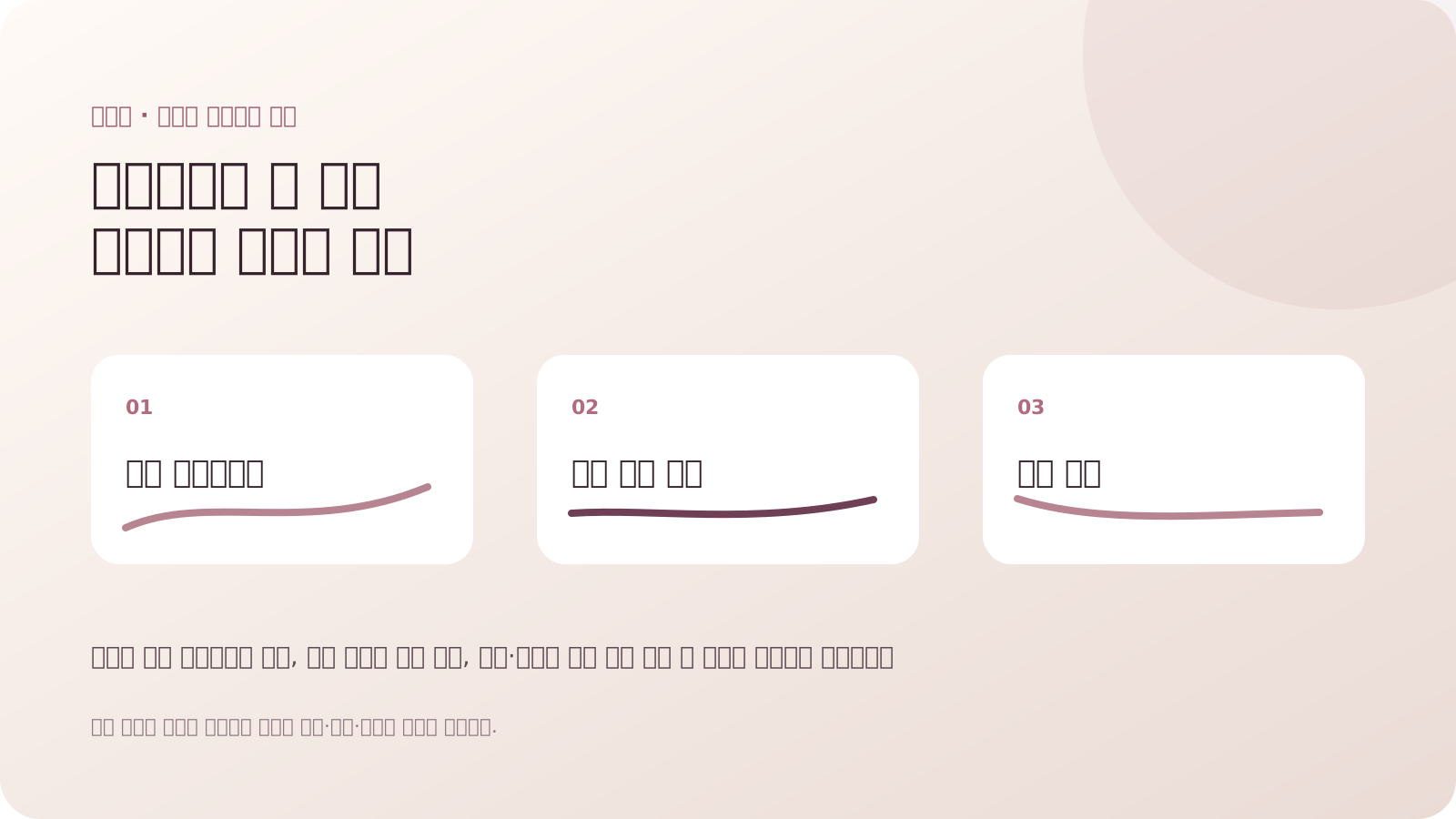
Compare the time until additional painkillers are taken, the time spent lying down due to pain, the days you attended work or class, and non-menstrual pain by cycle.
Photos show scenes of how cycles, pain, breastfeeding, and life transitions have affected daily life without revealing faces or identities. Disease tracking charts and conceptual diagrams are simplifications of differential diagnosis, examination, and progress records; they do not represent an individual's diagnosis or pregnancy/treatment results.Understanding Tests and Diagnosis
Menstrual pain: Three things to know first
When Interpreting Test Results
Lower abdominal cramps just before or at the start of menstruation may spread to the back and thighs, and may be accompanied by digestive or neurological symptoms.
When Identifying Causes and Risk Factors
Newly developed or gradually worsening pain, as well as pain or bleeding outside the cycle, dyspareuniaare details used to identify secondary causes.
When Reviewing Lifestyle Changes
Possibility of pregnancy, severe one-sided pain, bleeding, or a feeling of fainting are not treated as menstrual cramps, but are first screened for emergency pregnancy-related causes.
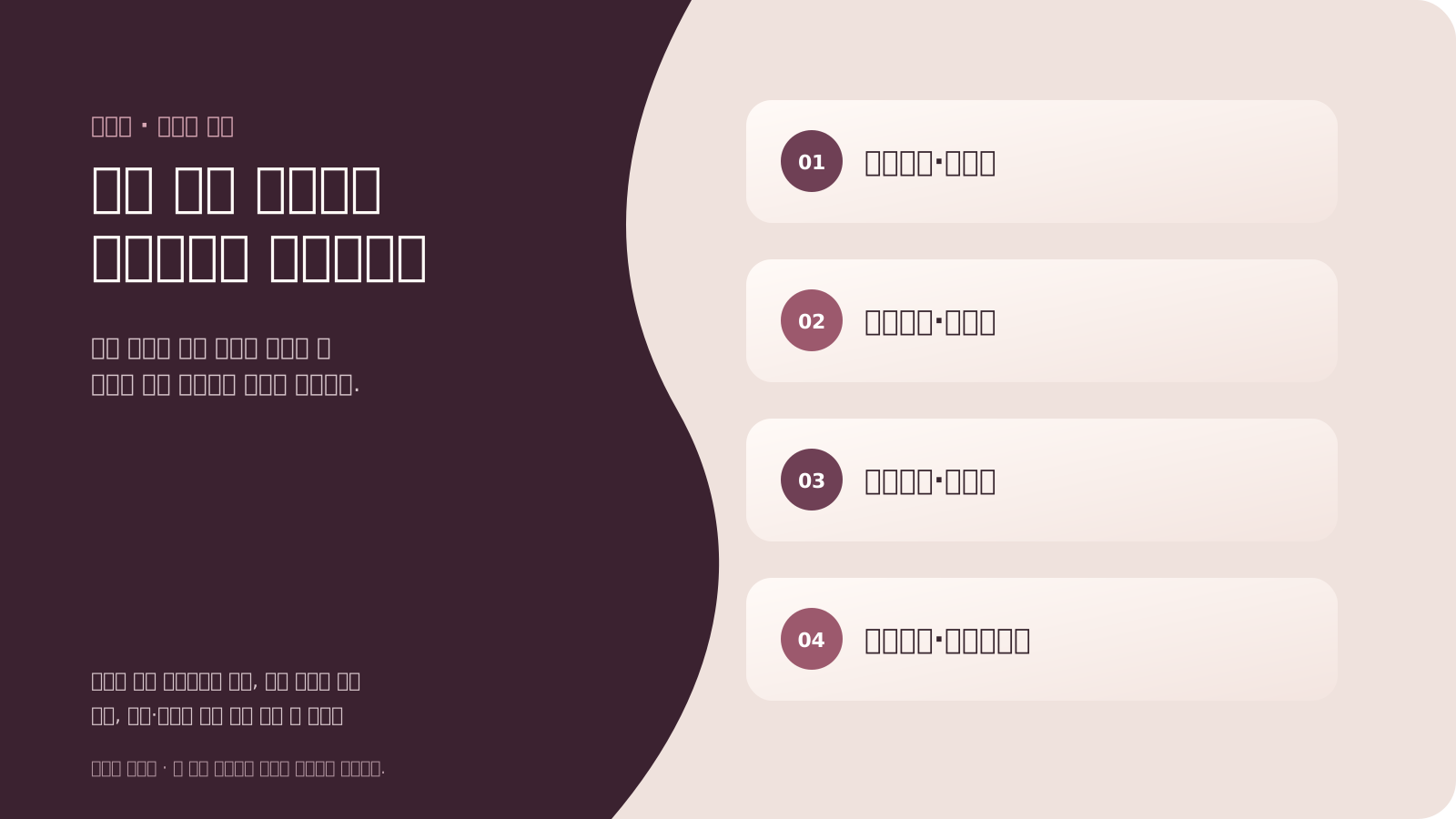
After screening for primary or secondary causes, we categorize whether there is tight pain starting before menstruation, cold and squeezing pain, relief after passing blood clots, or a lingering dull ache after menstruation.
Conceptual reference · National Korean Medicine Clinical Information Portal: Korean Medicine Standard Clinical Practice Guidelines for Dysmenorrhea · Korea Institute of Oriental Medicine: Herbal medicine for dysmenorrheaStarting and Adjusting Korean Medicine Treatment
Korean medicine treatment is adjusted according to symptom combinations and changes in the next cycle
Before starting, record your current state
The criteria for organizing your current condition are the onset, peak, duration of pain, and amount of bleeding over the last 3 cycles. Pain, cycle, and daily life disruptions are re-verified as a single set of items.
Even with the same diagnosis, symptom combinations differ
When there is tight and stabbing pain before menstruation that eases slightly after passing clots / When there is cold, squeezing pain that clearly improves with warmth / When there is a sensation of heat, heavy pelvic discomfort, and sticky dischargeWhen these overlap / When there is a lingering dull ache after menstruation that lasts longer with fatigue, we identify the actually repeating combination among these to determine the weight of the prescription.
Re-verify in the next cycle
After treatment, we record the time until additional painkillers were needed, the time spent lying down, and the schedules kept in the same manner to maintain or adjust the prescription.
What to prepare before your visit
Please organize these three things before your visit
Pain onset, peak, duration, and bleeding amount for the last 3 cycles
Note the test dates and results together to track recent changes.
Painkiller name, time of dose, effect, gastrointestinal discomfort, and history of hormone therapy
Prepare test results and a list of medications used so that the status before and after treatment can be compared.
Pain during intercourse, bowel movements, or urination, non-menstrual pain, and missed schedules
Inform the medical staff of all prescription drugs, over-the-counter drugs, Korean herbal medicine, and supplements without omission.
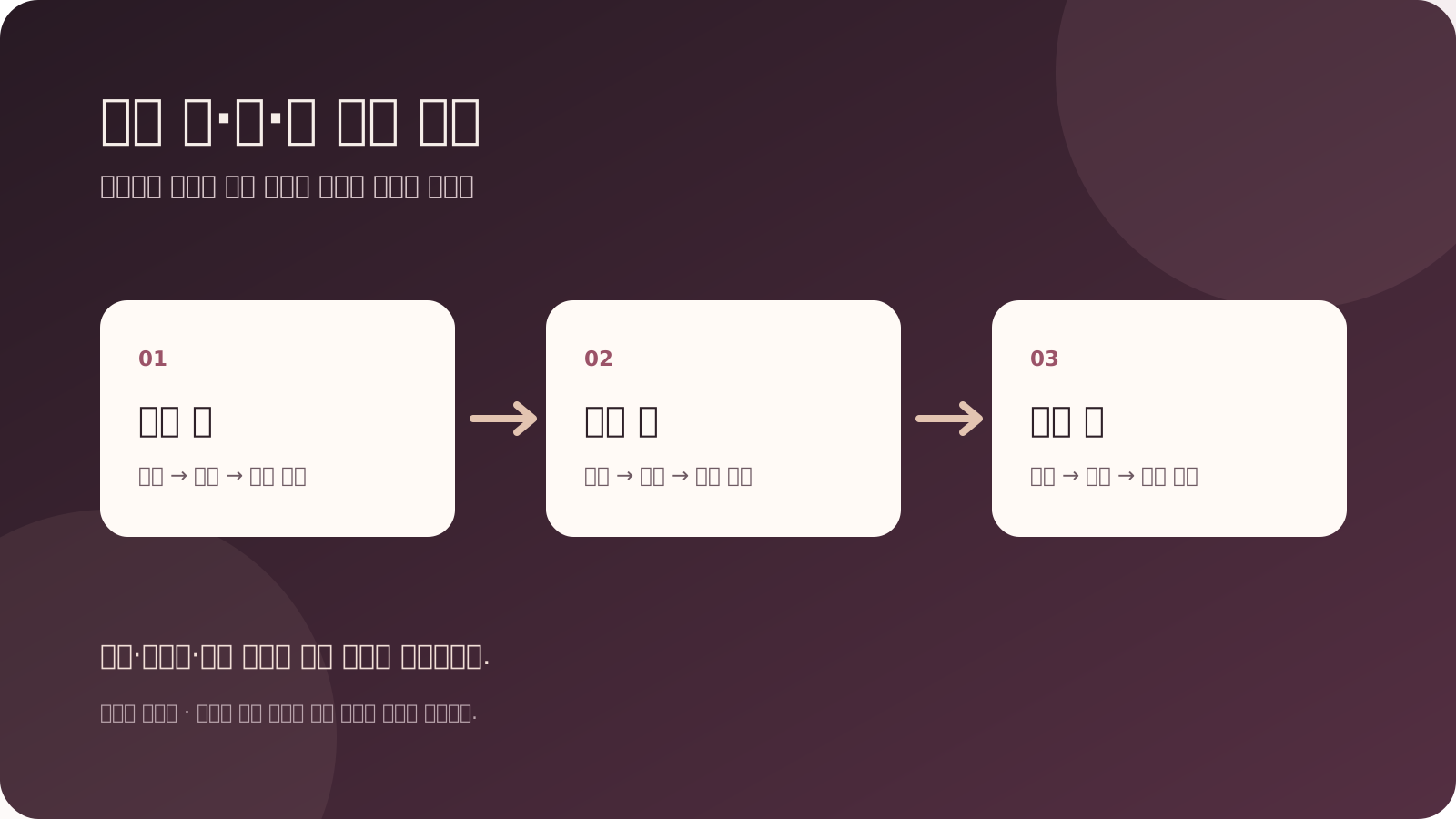
Compare pain, painkiller use, and life disruptions within the cycle.
Conceptual reference · National Korean Medicine Clinical Information Portal: Korean Medicine Standard Clinical Practice Guidelines for Dysmenorrhea · Korea Institute of Oriental Medicine: Herbal medicine for dysmenorrheaChanges to monitor before and after treatment
Check again using the same categories to determine if the treatment is helpful
We compare the time until additional painkillers were taken, the time spent lying down due to pain, the days work or classes were attended, and non-menstrual pain by cycle.
Until additional painkillers
Establish a baseline by confirming your current status during the first consultation.
Time spent lying down
Record this along with the dates when treatment or medication changed.
Schedules kept
Look for consistent changes over several days rather than a single good day.

Record not only the start date but also the amount of bleeding, pain, medication, and impact on daily life using the same criteria.
If starting Korean medicine treatment
Menstrual cramps: Four symptom combinations for Korean herbal medicine prescriptions
After screening for primary or secondary causes, we categorize whether there is tight pain starting before menstruation, cold and squeezing pain, relief after passing blood clots, or a lingering dull ache after menstruation.
Pattern identification (Byun-jeung) is not about renaming a gynecological diagnosis. For each condition, we determine whether to center the care on Korean medicine treatment, combine it with other treatments, or prioritize treating the underlying cause first. Then, we reflect items that actually change together, such as cycle, pain, cold/heat sensations, digestion, sleep, and energy levels, into the prescription.
When there is a tight, stabbing pain before menstruation that eases slightly after passing blood clots
- Changes observed in cycles and pain
- Check for pain that starts or remains fixed before menstruation and the presence of dark blood clots.
- Concurrent changes observed in the body
- Verify the sequence of stress, chest tightness, headache, and pain.
- Prescription Priority
- Prioritize a direction that relieves tension while simultaneously reducing blocked Qi and blood flow and pain caused by blood stasis.
When the pain is cold and squeezing, and clearly improves with warmth
- Changes observed in cycles and pain
- Check for a cold sensation in the lower abdomen, contractile pain, and accompanying loose stools.
- Concurrent changes observed in the body
- Ask about cold sensations in the hands and feet, or worsening after consuming cold food or exposure to cold.
- Prescription Priority
- Warm the lower abdomen and resolve stagnant flow, while simultaneously checking for excessive bleeding.
When heat sensations and heavy pelvic discomfort overlap with sticky discharge
- Changes observed in cycles and pain
- Check for pelvic pain, heat sensations, and changes in discharge outside of the menstrual period.
- Concurrent changes observed in the body
- If fever, foul odor, or dyspareunia (pain during intercourse) are present, prioritize an evaluation for infection.
- Prescription Priority
- After ruling out infection, adjust for signs where damp-heat and stagnation overlap.
When there is a dull pain even after menstruation, and it lasts longer as fatigue increases
- Changes observed in cycles and pain
- Check for post-menstrual pain, paleness, dizziness, and delayed recovery.
- Concurrent changes observed in the body
- Check food intake, sleep, anemia test results, and whether the pain improves with pressure.
- Prescription Priority
- Support the recovery of Qi and blood after bleeding and track the pain threshold for the next cycle.
Order of Prescription Adjustment
- Check for urgent medical evaluation and current treatments
Check for emergency symptoms and the timing for re-evaluation; do not arbitrarily change prescription or procedure plans.
- Select the combination of symptoms that actually recur
Rather than using the four categories as a self-diagnosis checklist, we retain only the relevant clues from medical interviews and existing tests.
- Determine the next prescription based on the same items
Re-verify the use of additional painkillers, time spent lying down, and changes in the maintained schedule to determine whether to maintain, adjust, or discontinue treatment.
We review pregnancy-related evaluations, tests or surgeries for structural diseases, antibacterial treatment for infections, and schedules for infertility procedures and menopause treatment to divide and coordinate the scope of Korean herbal medicine treatment. Treatment goals are tracked by specifically defining changes in pain, bleeding, sleep, energy levels, and daily functioning.
Consult using menstrual pain cycle recordsWomen's Health Glossary
Additional information regarding menstrual pain
You can check a brief definition before proceeding to a detailed explanation.Frequently Asked Questions
Frequently Asked Questions about Menstrual Pain
Can diarrhea or nausea occur along with menstrual pain?
Yes. Severe menstrual pain can be accompanied by diarrhea, nausea, vomiting, headache, and dizziness. Please record whether these recur at the same time every month and whether you are able to maintain fluid intake.
What is the difference between primary and secondary menstrual pain?
Primary pain is usually centered around cramping before and after the start of menstruation. If pain is new, gradually worsening, lasting longer, or overlapping with excessive bleeding, pain during intercourse, painful urination, or painful bowel movements, secondary causes are investigated.
If there is pain and bleeding around the expected date of menstruation, is it menstrual pain?
If pregnancy is possible, it cannot be concluded as such. In particular, if you experience severe pain on one side, shoulder pain, dizziness, or a feeling of fainting, seek an immediate evaluation for emergency causes such as an ectopic pregnancy.
Why does primary menstrual pain occur?
In the absence of other pelvic diseases, prostaglandins produced in the uterine lining cause the uterine muscles and blood vessels to contract, resulting in cramping.
If menstrual pain is severe, is it endometriosis?
It cannot be concluded based on pain alone. If the pain has worsened over time, persists after menstruation, or overlaps with pain during intercourse, painful bowel movements, or infertility, secondary causes including endometriosis are evaluated.
Can uterine fibroids or adenomyosis also cause menstrual pain?
Yes. Both conditions secondary menstrual paincan be a cause, and may overlap with excessive bleeding or a feeling of pelvic pressure; these are distinguished through a physical examination and necessary imaging tests.
I am preparing for pregnancy, but my menstrual cramps are severe. Do I need a medical examination?
If severe pain is accompanied by difficulty conceiving, please consult for an evaluation of causes such as endometriosis. If there is a possibility of pregnancy and you experience one-sided pain and bleeding, an immediate evaluation is the priority.
When should I consider herbal medicine for menstrual cramps?
If there are no symptoms that require prior verification or other suspected causes, you may start with a focus on Korean medicine treatments. We evaluate the timing of pain onset, sensations of cold or heat, blood clots, digestion, sleep, and response to painkillers to reduce the intensity of pain and loss of daily activity in the next menstrual cycle.
What should I record before a consultation for menstrual cramps?
It is helpful to organize the following information in chronological order: the onset, peak, and duration of pain for the last 3 cycles, amount of bleeding, names of painkillers, time of administration, effectiveness, gastrointestinal discomfort, history of hormone therapy, pain during intercourse, bowel movements, or urination, pain outside of menstruation, and missed schedules. Please provide a calendar of pain and bleeding for the last 3 cycles, responses to painkillers, and a list of activities canceled due to menstruation.
Can I use herbal medicine along with other treatments for menstrual cramps?
Do not stop your current prescriptions arbitrarily; please inform us of all medications and supplements you are taking. The goal is to reduce the time spent incapacitated during each period and the use of additional painkillers, while ensuring that any changes in pain patterns lead to necessary re-evaluation by an obstetrician-gynecologist.
Evidence and Update Information
This content was compiled by Korean medicine doctor Choi Yeon-seung based on the official professional materials and disease-specific clinical data below, and was updated on 2026-08-24.
- ACOG: DysmenorrheaPrimary and secondary dysmenorrhea and medical evaluation criteria
- NHS: Period painProvides guidance on medical criteria for lower abdominal cramps before and after the start of menstruation, radiating pain to the back and thighs, worsening, excessive, or irregular menstruation, and pain during intercourse, urination, or bowel movements.
- NHS: Vaginal bleeding in pregnancyExplains the emergency evaluation criteria for bleeding during pregnancy, severe abdominal pain, shoulder pain, dizziness, fainting, and excessive bleeding.
- MedlinePlus: Period PainProvides guidance on the difference between primary and secondary dysmenorrhea and their relationship with prostaglandins, endometriosis, and uterine fibroids.
- NHS: Period painEvidence for lifestyle management, such as heat therapy, light exercise, painkillers, reducing alcohol consumption, and smoking cessation.
- NIH Office of Dietary Supplements: IronEvidence for combinations of iron-rich foods and Vitamin C foods that aid the absorption of plant-based iron, and safety boundaries for iron supplements.
- ACOG: Abnormal Uterine BleedingTiming, amount, cycle, and evaluation criteria for abnormal bleeding
- ACOG: Amenorrhea: Absence of PeriodsDefinition of amenorrhea and evaluation of pregnancy, endocrine, and structural causes
- NICE NG88: Heavy menstrual bleedingEvaluation of menorrhagia and treatment selection recommendations
- ACOG: Chronic Pelvic PainCauses of chronic pelvic pain and functional impact assessment
- National Korean Medicine Clinical Information Portal: Korean Medicine Standard Clinical Practice Guidelines for DysmenorrheaDecision-making guidelines for Korean medicine treatments, such as herbal medicine, acupuncture, and moxibustion, for primary dysmenorrhea.
- Korea Institute of Oriental Medicine: Herbal medicine for dysmenorrheaChanges in pain, duration, and painkiller use from a domestic multi-center prospective observational study and the limitations of non-randomized evidence.