Menstrual pain
Criteria for Combining Herbal Medicine Treatment When Painkillers Work but Menstrual Pain Worsens Monthly
While maintaining the response to painkillers, if pain starts earlier each month or if pain during bowel movements or pelvic pain remains, we design a plan for cause evaluation along with herbal medicine and acupuncture treatment.
Enduring for a few hours with painkillers Menstrual cramps A general feeling of lightness is a different kind of change. We look at the specific role Korean medicine should play by analyzing not only whether the medication is working, but also when the pain begins and any symptoms that occur outside of the menstrual period.
Just because painkillers work does not mean the cause of menstrual pain has been resolved.
It is a significant help when pain decreases within two to three hours of taking medication. However, if the pain starts earlier with each subsequent period, the frequency of dosage increases, or the pain returns immediately after the medication wears off, the underlying cause of the pain may still remain.
Baekrokdam does not ask you to endure the pain without painkillers. While managing immediate pain with necessary medication, we target the reasons for excessive contraction and blocked circulation during menstruation, as well as recurring cold sensations, blood clots, edema, and digestive discomfort, for Korean herbal medicine treatment.
It is important to determine whether the pain occurs only on the first day or extends to the periods before and after menstruation.
Pain that lasts for a few hours immediately after menstruation begins and then subsides requires a different depth of treatment than pain where the lower back and pelvis feel heavy before menstruation and the pain lingers even after it ends. If pain that used to last one day has recently blocked your daily life for three days or more, we do not simply overlook it by increasing the frequency of medication.
As the duration of pain increases, Endometriosis·we examine whether an evaluation for causes such as adenomyosis is necessary, and regardless of test results, we provide Korean medicine treatment to resolve pelvic congestion and blood stasis before and after menstruation.
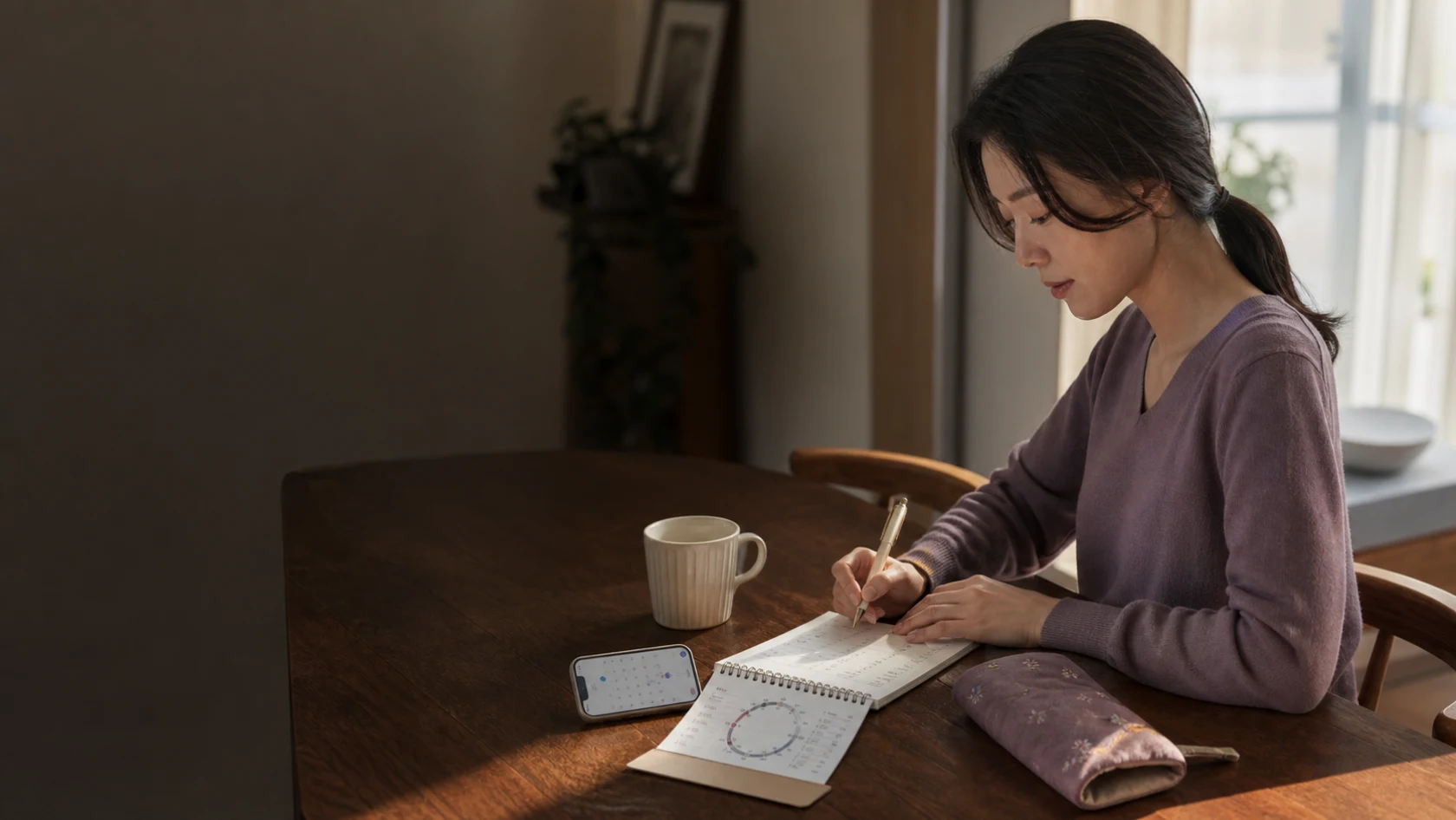
Record not only the start date but also the amount of bleeding, pain, medication, and impact on daily life using the same criteria.
When pain during bowel movements, pain during intercourse, or excessive bleeding overlap, we do not group them under the single term 'menstrual pain'.
If deep stabbing pain during bowel movements during menstruation, pelvic pain after intercourse, large blood clots, and heavy bleeding overlap, comparing only the response to painkillers is insufficient. We must identify the cause of the pain and Anemiaaddress excessive fatigue and pelvic discomfort together.
Korean herbal medicine is prescribed differently depending on the goal: helping menstrual blood discharge smoothly and resolving lower abdominal stiffness caused by coldness and blood stasis-related pain, or focusing on recovery in cases of heavy bleeding and significant loss of energy. Acupuncture treatment is used in conjunction to reduce tension in the lower back and pelvis, making movement more comfortable during menstruation.
The goal of Korean medicine treatment is to make you less fearful of your next period.
Treatment for menstrual pain does not end with temporarily masking this month's pain. The point at which pain begins should be delayed, the peak intensity should decrease, and days when you could not go to work even after taking painkillers should become days when you can function again.
If you are preparing for pregnancy, we adjust the prescription to reflect your current medications and plans. Rather than separating menstruation and pregnancy preparation into different treatments, Baekrokdam ovulation·adjusts the intensity and timing of Korean herbal medicine treatment so that menstrual and pelvic recovery lead naturally into one another.
Even if you do not have immediate plans for pregnancy, there is no reason to leave pain that makes daily life impossible without painkillers every month untreated for long. Lifestyle management, such as keeping the lower abdomen warm before menstruation and reducing overwork, supports the changes created by the prescription, but we do not expect you to endure the pain through lifestyle management alone.
We determine the next prescription by distinguishing between the pain that has improved and the discomfort that still remains.
Pain on the first day may have decreased, but swelling and lower back pain before menstruation may remain; or the amount of bleeding may have improved, but pain during bowel movements may recover more slowly. While maintaining the parts that responded first, we shift the focus of the prescription to address the remaining issues.
The final goal is not simply to reduce the number of times you take painkillers. True recovery, as viewed by Baekrokdam, is a state where your sleep, diet, daily routine, and exercise remain stable during menstruation, and fatigue does not carry over into the next cycle.
Even if the pain decreases, recovery is not yet complete if you feel completely drained of energy or are unable to eat due to digestive discomfort for three days after menstruation. In the next prescription, while maintaining the direction of reducing pain, we will also address the recovery of Qi and blood after bleeding and the speed at which digestion returns to normal.
Painkillers are responsible for necessary pain control, while Korean herbal medicine and acupuncture treat the cold-heat imbalance, blood stasis, pelvic tension, and impaired recovery that cause monthly pain. Even if the medication works, if the duration of pain and the impact on your daily life increase, it is time to design the next phase of treatment together.
Evidence and Update Information
This content was organized by Korean medicine doctor Choi Yeon-seung and updated on 2026-08-24.
- ACOG: DysmenorrheaPrimary and secondary dysmenorrhea and medical evaluation criteria
- ACOG: Endometriosis
- ACOG: Abnormal Uterine BleedingTiming, amount, cycle, and evaluation criteria for abnormal bleeding
- ACOG: Amenorrhea: Absence of PeriodsDefinition of amenorrhea and evaluation of pregnancy, endocrine, and structural causes
- NICE NG88: Heavy menstrual bleedingEvaluation of menorrhagia and treatment selection recommendations
- ACOG: Chronic Pelvic PainCauses of chronic pelvic pain and functional impact assessment