PCOS and the Cycle After Medication
When Periods Are Delayed After Stopping Birth Control: PCOS Cycle Recovery and Herbal Medicine Treatment
Regular bleeding during medication use is not the same as natural ovulation. We categorize the purpose of stopping birth control into four goals to determine the next schedule for tests, treatments, or procedures.
If your period is delayed again after stopping birth control pills, first choose your current goal among checking your natural cycle, preparing for pregnancy, ovulationinduction or IVF scheduling, or endometrial protection. Even for the same cycle delay, your goal determines whether you should wait and record symptoms, proceed immediately to fertility evaluation or procedure scheduling, or redefine your endometrial protection plan.
| Current Change | What the Change Means | Next Goal to Set |
|---|---|---|
| Regular bleeding while taking birth control pills | A process of managing the timing of bleeding and the endometrium with medication | Confirm current purpose of intake and duration of maintenance |
| Return to long cycles after discontinuation | Original ovulation or cycle irregularities may reappear | Evaluate pregnancy plans, duration of amenorrhea, and accompanying symptoms |
| Recurrence of acne or hirsutism | Clues to re-examine androgen-related changes outside the cycle | Treatment that does not separate the skin from menstruation |
| Menstruation has returned, but the interval remains unstable | The flow over several cycles is more important than a single instance of bleeding | Coordinating the recovery of ovulation, bleeding, sleep, and metabolism together |
Regular bleeding during medication is not the same as the recovery of a natural cycle
Combined oral contraceptives make the timing of bleeding regular while suppressing ovulation, PCOSand are used to manage irregular menstruation, acne, and hirsutism. The fact that bleeding occurred on a scheduled date means the medication's target is working; it is not confirmation that the ovaries are ovulating consistently on their own.
Therefore, we do not determine that PCOS has disappeared simply because the calendar was filled evenly during medication. Conversely, if menstruation becomes delayed again after stopping the medication, it does not mean the period of medication was in vain. One must separate the benefits gained, such as contraception, endometrial protection, and skin symptom management, from the ovulation and cycle functions that must be re-verified without medication.
Contraceptives are not a drug to mask PCOS, but a choice with a clear therapeutic purpose. However, the recovery of a natural cycle cannot be judged solely by bleeding during medication.
Your next choice will differ depending on which of these four goals led to stopping the medication
First, decide whether you intend to verify your natural cycle, are currently preparing for pregnancy, are aligning with an ovulation induction or IVF schedule, or intend to protect the endometrium without plans for pregnancy. Only with a clear goal can you distinguish between a situation where you should continue documenting a cycle delay and a situation that requires immediate connection to a medical evaluation, test, or procedure plan.
If you have plans for pregnancy or a procedure schedule, do not wait indefinitely for menstruation; instead, include age, previous cycles, ovulation clues, tests for both partners, and the next schedule within one plan. If you have no plans for pregnancy, re-determine with your prescribing healthcare provider whether to prioritize contraception, endometrial protection, acne/hirsutism, or the amount and interval of bleeding. Do not arbitrarily stop or resume contraceptives or procedure-related medications, nor add new herbal medicine on your own.
- Verifying natural cycle: Tracking the date of discontinuation, subsequent bleeding intervals/amount, and changes in acne, hirsutism, sleep, and weight on the same calendar
- Preparing for pregnancy: First confirming the possibility of pregnancy and jointly determining the timing for ovulation verification and fertility evaluation
- Ovulation induction/IVF schedule: Sharing injection, retrieval, and transfer dates along with all medications to align the timing of treatment
- Endometrial protection: No plans for pregnancy and a long amenorrheainterval persists; re-determine the contraception and bleeding plan with the prescribing healthcare provider
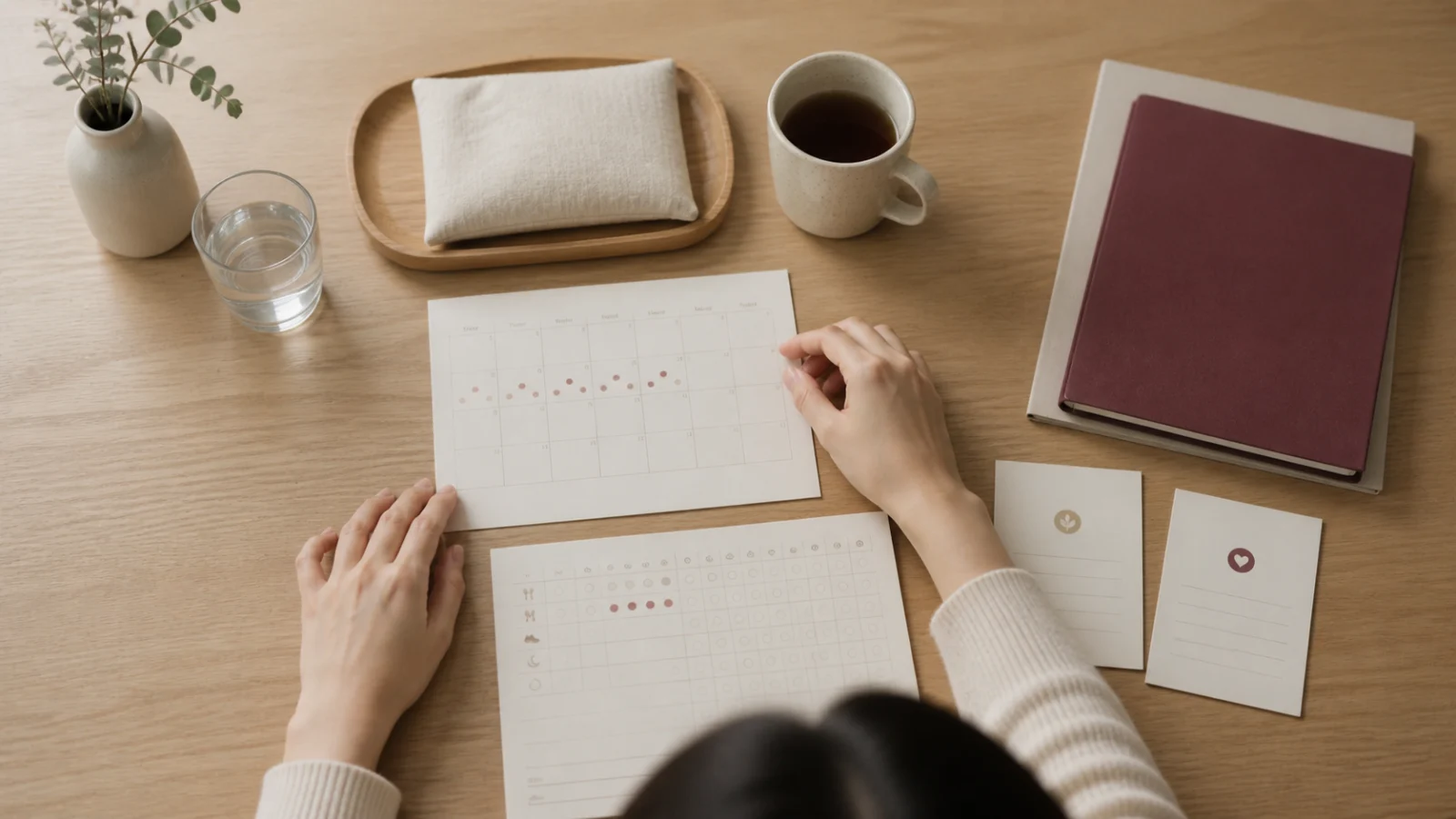
We prioritize discussing your current endometrial, metabolic, and ovulation goals over the ultrasound appearance.
The flow of the next two to three cycles is more important than the fact that a single period occurred.
The occurrence of the first bleeding after discontinuation does not immediately mean that a regular ovulation cycle has been established. We monitor how the cycle intervals continue, whether bleeding becomes excessively long or heavy, and the sequence in which acne, hirsutism, appetite, sleep, and weight changes return to normal.
If unexplained amenorrhea lasts more than three months, or if there is a possibility of pregnancy accompanied by bleeding, unilateral pelvic pain, or dizziness, a medical evaluation is necessary rather than waiting. Cases of heavier-than-usual bleeding are also not dismissed as typical menstrual irregularity associated with PCOS.
- Average cycle length and the longest interval before starting contraceptive pills
- Purpose of discontinuation, date of last dose, and the date and amount of subsequent bleeding
- The sequence in which acne, hirsutism, hair loss, appetite, sleep, and weight changes recurred
Rather than simply inducing a single period, Korean herbal medicine treatment aims for a self-sustaining cycle.
Baekrokdam does not focus solely on matching the date of menstruation. We determine the core of the Korean herbal medicine prescription by analyzing whether a lengthening cycle is accompanied by a heavy body and post-meal drowsiness or edema, whether acne and breast pain fluctuate following stress and lack of sleep, or whether bleeding is concentrated after a long period of amenorrhea.
If phlegm-dampness and metabolic burden are central, we address appetite, digestion, and body heaviness together; if the cycle fluctuates after tension and sleep changes, we resolve the rhythm of stagnation and body heat. For those whose energy drops significantly after bleeding or who are exhausted during weight loss or ovulation treatment, we reinforce the recovery of Qi, blood, and the spleen and stomach. This is why prescriptions differ based on the body's flow after stopping contraceptive pills, even for the same PCOS.
We examine the menstrual interval, abnormal bleeding, ovulation treatment schedule, blood glucose, blood pressure, sleep, skin symptoms, and the sustainability of lifestyle habits.
The end of treatment is not a single date on the calendar, but a state where the next choice becomes clear.
Treatment does not end simply because a natural period occurred once; we observe whether the cycle continues and whether bleeding, skin, sleep, and appetite stabilize together. If preparing for pregnancy, we ensure the body can handle the process without delaying ovulation or procedure schedules; if there are no pregnancy plans, we manage endometrial protection and daily discomfort together.
Rather than a binary choice of whether to take contraceptive pills again, the important thing is a choice that fits your current goal. We clearly utilize the role the medication plays, and while addressing the cycle, skin, metabolism, and systemic symptoms revealed during the pause in medication through Korean herbal medicine treatment, we determine the direction for the coming months.
Regular bleeding while taking contraceptive pills does not necessarily mean the recovery of a natural ovulation cycle. If you have stopped the medication, first determine your current goal among confirming the natural cycle, preparing for pregnancy, procedure scheduling, or endometrial protection. Then, we adjust the next treatment by looking at the cycle, bleeding, skin, sleep, metabolic changes, and overall medication history together.
Evidence and Update Information
Dr. Choi Yeon-seung, KMD, organized this based on the following materials and updated the content on 2026-09-02.
- ACOG: Polycystic Ovary Syndrome (PCOS)PCOS treatment goals and the role of combined hormonal contraceptives in managing menstruation, skin, and the endometrium
- ASRM: 2023 International Evidence-based Guideline for PCOSEvaluation of irregular cycles and ovulation function, and treatment choices based on pregnancy plans
- ACOG: Amenorrhea: Absence of PeriodsTiming for the evaluation of unexplained amenorrhea
- ACOG: Combined Hormonal Birth Control: Pill, Patch, and RingOvulation suppression and treatment purposes of combined hormonal contraception