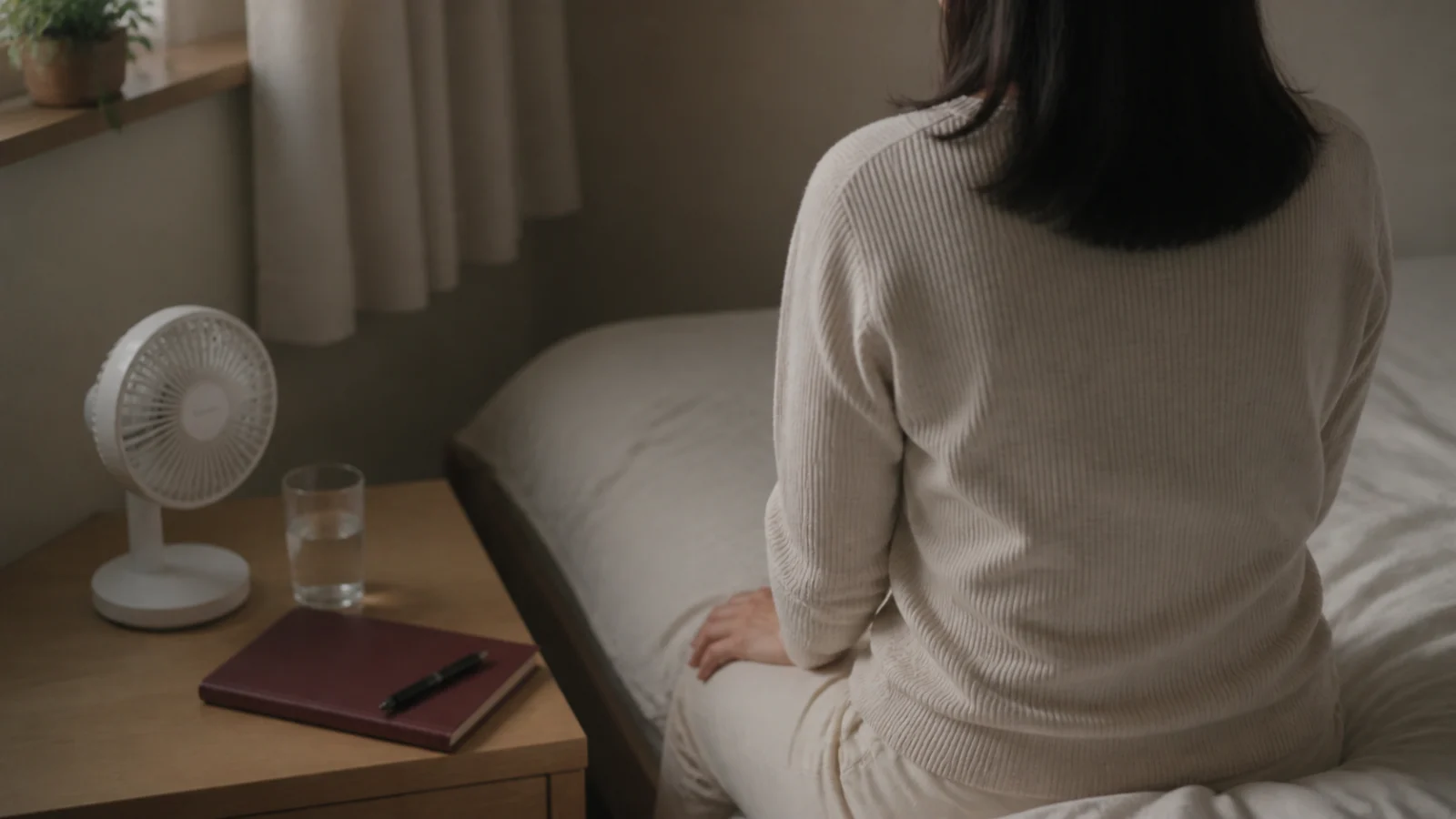
Menopause and postmenopause: Read in the order of your curiosity
Understanding the diagnosis and test results
Menopause and postmenopause: Checking for flushing, nighttime awakening, bleeding, and dryness symptoms
In healthy individuals aged 45 or older, if symptoms such as facial flushing and menstrual changes are typical, menopause ormenopause transitionis usually determined clinically without blood tests. FSH is considered limitedly for suspected symptoms in those aged 40–45 or suspected premature ovarian failure in those under 40; however, levels are difficult to interpret during hormonal contraception or treatment. Other causes, such as the possibility of pregnancy or thyroid issues, are tested according to the situation, and bleeding after menopause must be medically evaluated.
If there are no symptoms that require prior verification, we sequentially evaluate flushing, sleep, dryness, and energy levels, centering on Korean medicine treatment.
While it may be necessary to verify other causes, Korean medicine treatment does not only begin after all gynecological treatments are completed.
you can start with a focus on Korean medicine treatment
Rather than looking at the frequency of flushing alone, we observe nighttime awakening, next-day fatigue, vaginal dryness/urinary discomfort, cold sensitivity, throbbing, and digestive changes to confirm if daily functioning is recovering.
we connect tests and medication treatment at the appropriate time
Whether hormonal or non-hormonal treatments are used together or not chosen at all, a separate Korean medicine treatment plan for flushing, sleep, digestion, and energy symptoms can be established.
Individual risks and treatment preferences, such as age of menopause, presence of the uterus, thrombosis, and breast cancer, influence the choice of medication.
Other medical evaluations are necessary if these changes occurCheck when applicable
Bleeding after menopause requires evaluation regardless of the amount. New chest pain, shortness of breath, swelling in one leg, or severe headache requires immediate medical evaluation.
- Heavy vaginal bleeding that quickly soaks a pad, accompanied by dizziness or a feeling of fainting
- Vaginal bleeding accompanied by chest pain, shortness of breath, or changes in consciousness
- Possibility of pregnancy and severe one-sided pelvic pain or bleeding
- New one-sided paralysis, difficulty speaking, or sudden severe headache
Surgery, procedure, or further evaluationMenopausal symptoms themselves are not an indication for surgery; if postmenopausal bleeding or abnormal areas are identified, endometrial evaluation and corresponding treatment are prioritized.
Why consider Korean medicine treatment
Menopause and postmenopause: Setting clear treatment goals first
We first determine which of the following makes your day most difficult: hot flashes, sweating, insomnia, or throbbing. After checking for bleeding or thyroid and heart issues, any remaining discomfort is addressed through Korean herbal medicine treatment alongside necessary care.
Observing how symptoms have disrupted your daily life
We record not only the frequency of flushing but also nighttime awakenings, next-day functioning, dryness, dyspareunia (pain during intercourse), urinary symptoms, mood, and all treatment responses.
Categorizing symptom combinations even within the same diagnosis
We determine prescription priorities by selecting clues from medical interviews and examinations that match patterns such as Yin deficiency with internal heat, flushing type, heart-spleen deficiency, insomnia-exhaustion type, phlegm-dampness heavy-pressure type, or kidney Yang deficiency cold-sensation type.
Re-evaluating through the next cycle and lifestyle changes
We monitor activities interrupted by nighttime awakenings or flushing, next-day concentration, dryness, sexual life, urinary discomfort, and the presence of bleeding.
Treatment goalRather than unconditionally avoiding or recommending hormone therapy, we restore sleep, heat sensation, dryness, and vitality while maintaining treatment that fits individual risks and preferences.
Consult by menopausal symptom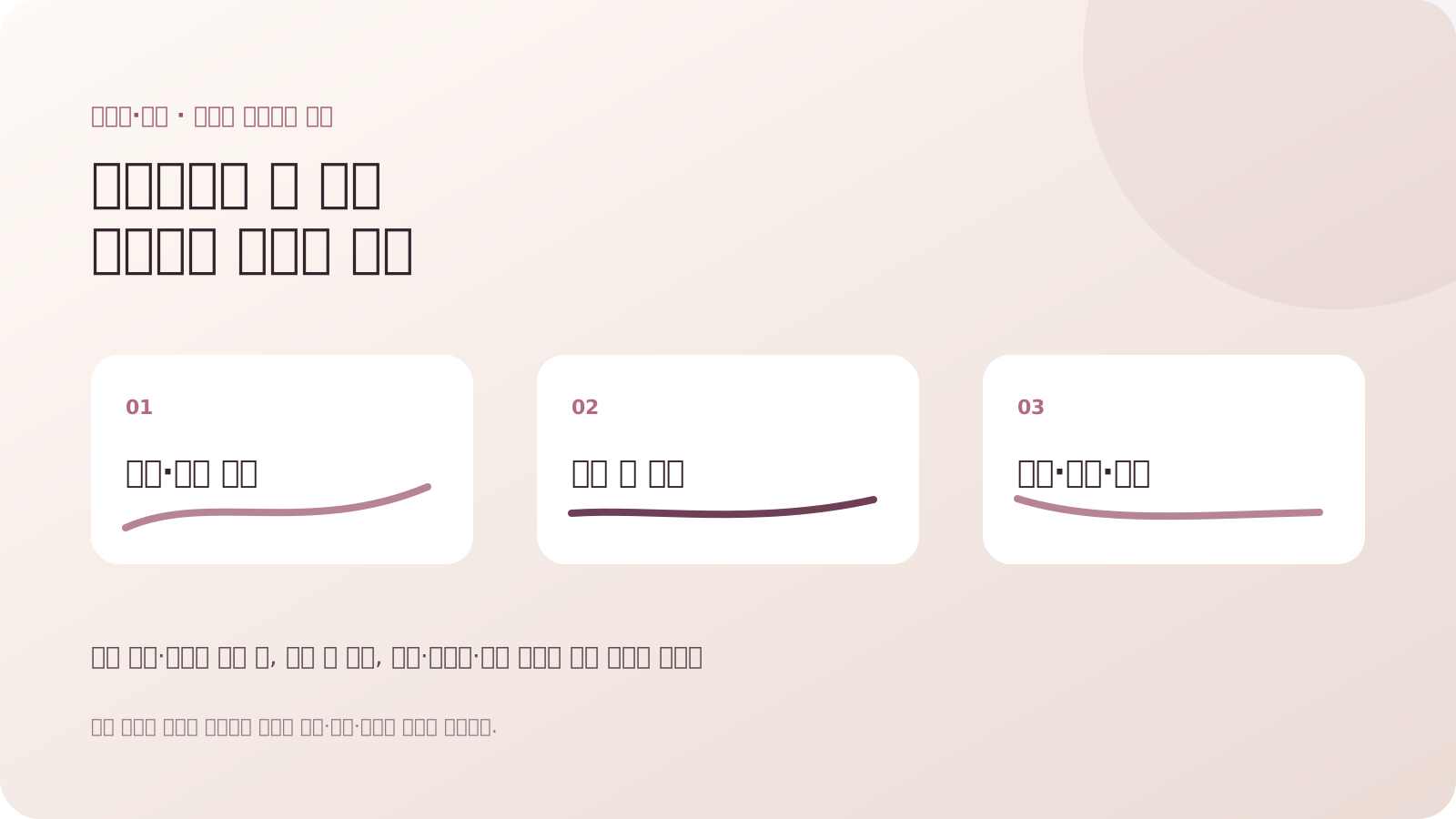
We monitor activities interrupted by nighttime awakenings or flushing, next-day concentration, dryness, sexual life, urinary discomfort, and the presence of bleeding.
Photos show scenes of how cycles, pain, breastfeeding, and life transitions have affected daily life without revealing faces or identities. Disease tracking charts and conceptual diagrams are simplifications of differential diagnosis, examination, and progress records; they do not represent an individual's diagnosis or pregnancy/treatment results.Understanding Tests and Diagnosis
Menopause and Perimenopause: Three Things to Know First
When Interpreting Test Results
For those 45 years or older, typical symptoms are often judged without uniform hormone testing.
When Identifying Causes and Risk Factors
Menopause is not confirmed or excluded based on a single normal or elevated FSH level alone.
When Reviewing Lifestyle Changes
Possibility of pregnancy, before age 40 amenorrhea, and postmenopausal bleeding requires a separate evaluation.
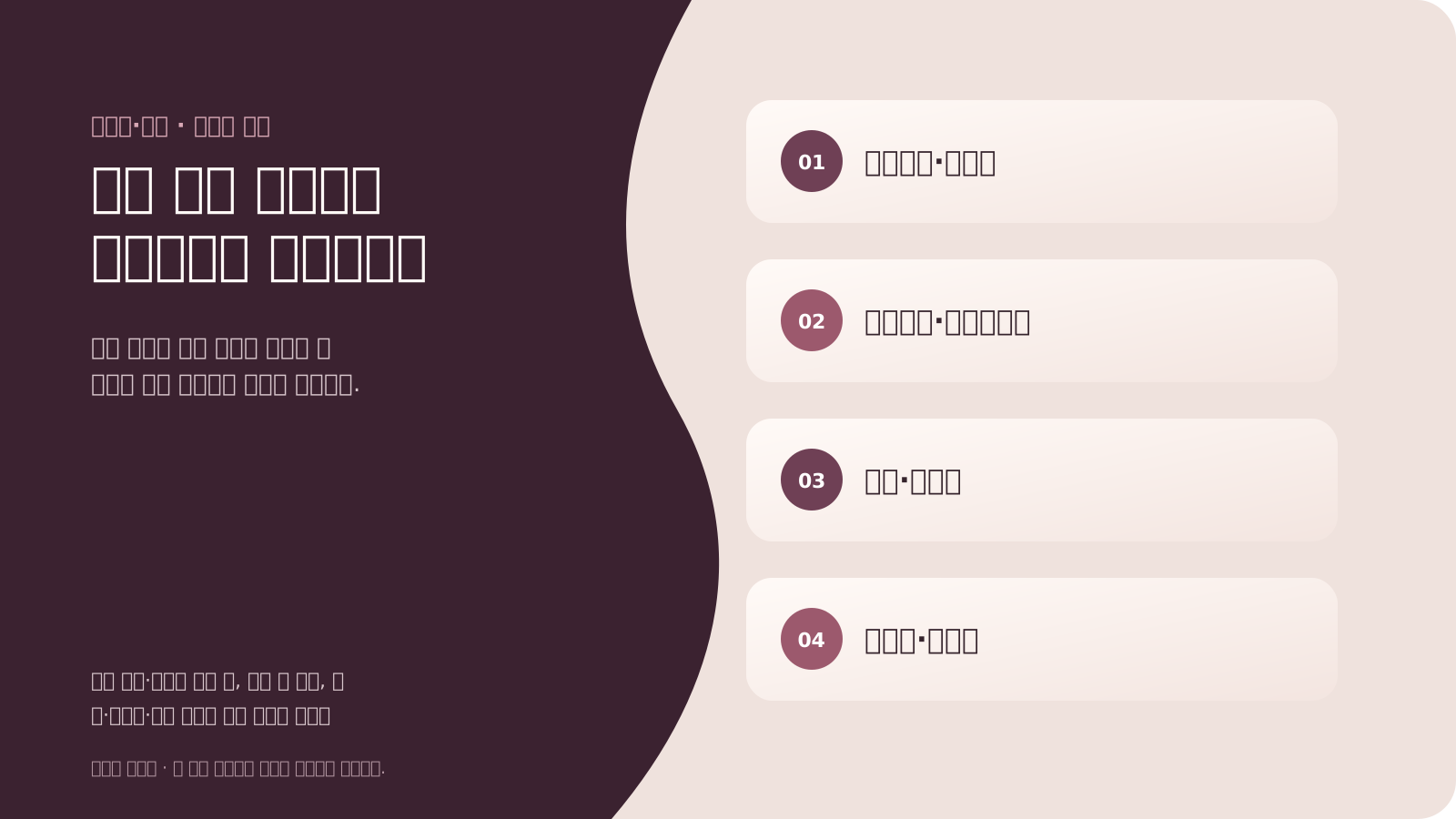
While maintaining the choice between hormonal and non-hormonal treatment, the actual symptom combinations are categorized into Yin-deficiency heat, Qi-blood deficiency, Phlegm-dampness, or Yang-deficiency coldness.
Conceptual reference · ACOG: Hormone Therapy for Menopause · ACOG: Hormone Therapy in Primary Ovarian InsufficiencyStarting and Adjusting Korean Medicine Treatment
Korean medicine treatment is adjusted according to symptom combinations and changes in the next cycle
Before starting, record your current state
The criteria for organizing your current state are the last menstrual period and logs of flushing, night sweats, and sleep. Pain, cycle, and lifestyle inconveniences are re-verified under the same categories.
Even with the same diagnosis, symptom combinations differ
The proportion of the prescription is determined by identifying which of the following recurring combinations actually apply: night heat, sweating, dry mouth combined with frequent waking / palpitations, anxiety, decreased concentration combined with lingering fatigue / edema, weight changes, bloating combined with a heavy feeling / coldness, lower back pain, nocturia, and decreased energy being more prominent than heat sensations.
Re-verify in the next cycle
After treatment, continue recording flushing, nighttime awakenings, next-day functioning, dryness, urinary symptoms, and bleeding in the same manner to maintain or adjust the prescription.
What to prepare before your visit
Please organize these three things before your visit
Last menstrual period and logs for flushing, night sweats, and sleep
Note the test dates and results together to track recent changes.
Vaginal dryness, dyspareunia (pain during intercourse), urinary symptoms, and whether there has been postmenopausal bleeding
Prepare test results and a list of medications used so that the status before and after treatment can be compared.
History of cancer, thrombosis, cardiovascular disease, or liver disease, and a complete list of hormones, non-hormonal medications, and supplements
Inform the medical staff of all prescription drugs, over-the-counter drugs, Korean herbal medicine, and supplements without omission.
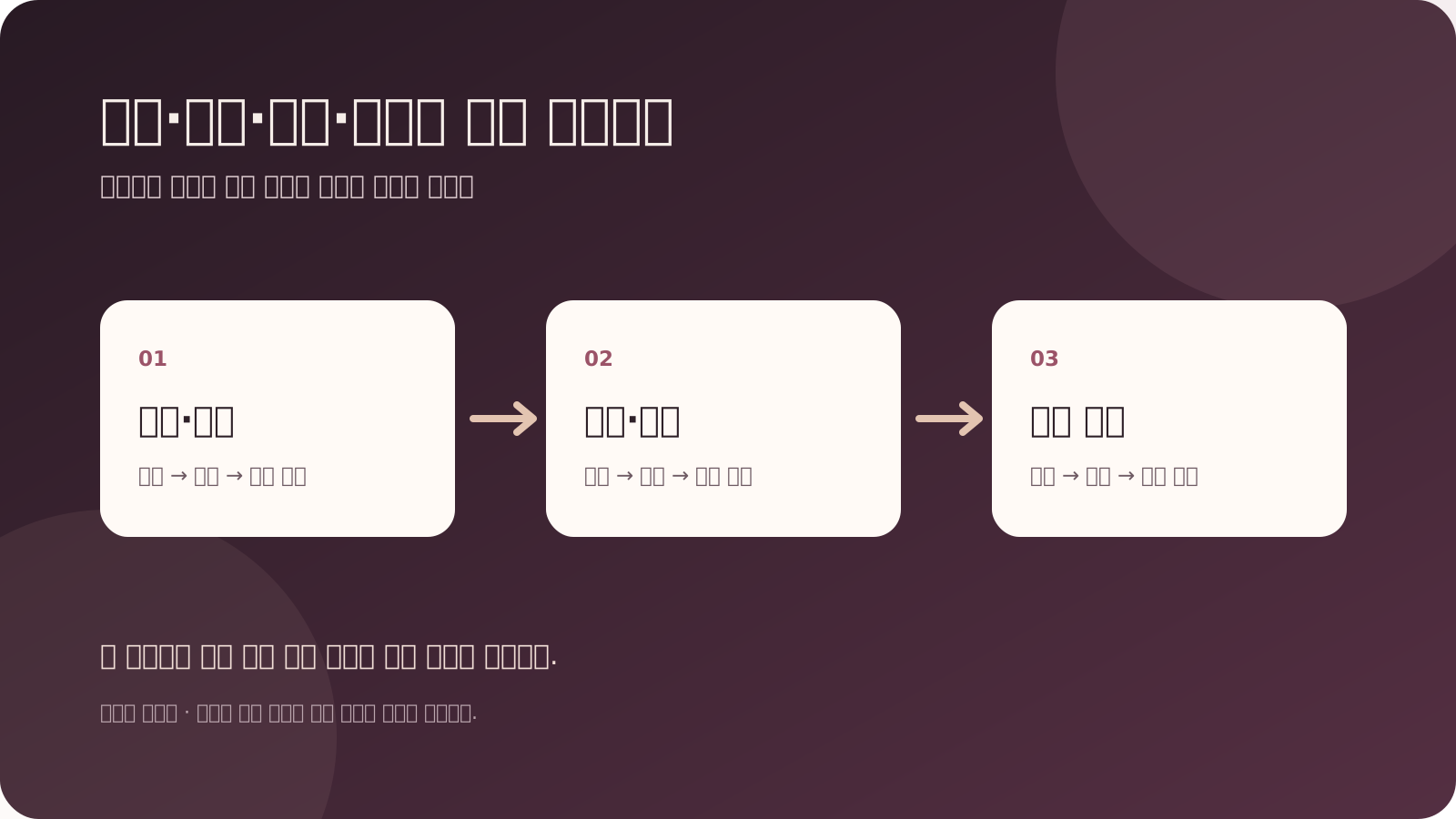
Symptoms are categorized separately rather than grouped as a single symptom to ensure safety and guide treatment selection.
Conceptual reference · ACOG: Hormone Therapy for Menopause · ACOG: Hormone Therapy in Primary Ovarian InsufficiencyChanges to monitor before and after treatment
Check again using the same categories to determine if the treatment is helpful
Monitor activities interrupted by nighttime awakenings or flushing, next-day concentration, dryness, sexual life, urinary discomfort, and the presence of bleeding.
Flushing and nighttime awakenings
Establish a baseline by confirming your current status during the first consultation.
Next-day functioning
Record this along with the dates when treatment or medication changed.
Dryness, urinary symptoms, and bleeding
Look for consistent changes over several days rather than a single good day.

Record not only the start date but also the amount of bleeding, pain, medication, and impact on daily life using the same criteria.
If starting Korean medicine treatment
Menopause and postmenopause: four symptom combinations for prescribing Korean herbal medicine
While maintaining the choice between hormonal or non-hormonal treatments, we categorize the actual symptom combinations into Yin deficiency heat, Qi and blood deficiency, phlegm-dampness, or Yang deficiency cold sensation.
Pattern identification (Byun-jeung) is not about renaming a gynecological diagnosis. For each condition, we determine whether to center the care on Korean medicine treatment, combine it with other treatments, or prioritize treating the underlying cause first. Then, we reflect items that actually change together, such as cycle, pain, cold/heat sensations, digestion, sleep, and energy levels, into the prescription.
When night heat, sweating, dry mouth, and frequent awakenings overlap
- Changes checked in cycle and pain
- We monitor the frequency of hot flashes, nightly awakenings, and dryness.
- Other changes checked in the body
- We check the effects of hormone therapy, thyroid function, and medications.
- Prescription priority
- We adjust heat sensations, dryness, and sleep while maintaining the individual treatment plan.
When palpitations, anxiety, decreased concentration, and lingering fatigue occur
- Changes checked in cycle and pain
- We monitor heart rate, sleep quality, memory, and appetite.
- Other changes checked in the body
- We check for depression, anxiety, sleep apnea, and anemia.
- Prescription Priority
- Priority is given to daytime functioning by helping recover Qi, blood, and sleep.
When edema, weight changes, bloating, and heaviness are significant
- Changes observed in cycles and pain
- We monitor edema, postprandial somnolence, bowel movements, and activity levels.
- Concurrent changes observed in the body
- We check for blood glucose, lipid, thyroid, and cardiovascular risks.
- Prescription Priority
- We adjust phlegm-dampness and the burden of activity while maintaining metabolic management.
When cold sensitivity, lower back pain, nocturia, and loss of energy are more significant than heat sensations
- Changes observed in cycles and pain
- We monitor cold sensations, lower back pain, urination, and edema.
- Concurrent changes observed in the body
- We identify causes related to urinary, thyroid, and bone health.
- Prescription Priority
- We support the recovery of resilience and manage cold sensations while maintaining necessary treatments.
Order of Prescription Adjustment
- Check for urgent medical evaluation and current treatments
Check for emergency symptoms and the timing for re-evaluation; do not arbitrarily change prescription or procedure plans.
- Select the combination of symptoms that actually recur
Rather than using the four categories as a self-diagnosis checklist, we retain only the relevant clues from medical interviews and existing tests.
- Determine the next prescription based on the same items
We will re-evaluate changes in flushing, nighttime awakening, next-day functioning, dryness, urinary symptoms, and bleeding to determine whether to maintain, adjust, or discontinue treatment.
We review pregnancy-related evaluations, tests or surgeries for structural diseases, antibacterial treatment for infections, and schedules for infertility procedures and menopause treatment to divide and coordinate the scope of Korean herbal medicine treatment. Treatment goals are tracked by specifically defining changes in pain, bleeding, sleep, energy levels, and daily functioning.
Consult by menopause symptomWomen's Health Glossary
Additional information regarding menopause and postmenopause
You can check a brief definition before proceeding to a detailed explanation.Frequently Asked Questions
Frequently asked questions about menopause and postmenopause
Is an FSH blood test performed for all menopause screenings?
No. In healthy individuals aged 45 or older, a diagnosis is generally made based on typical symptoms and menstrual changes without a blood test.
Can menopause be detected via FSH while taking hormonal contraceptives?
Combined hormonal contraceptives or high-dose progestogens limit the interpretation of FSH. Do not stop taking contraceptives arbitrarily; please determine the evaluation method with your prescribing institution.
Should I be tested even for a single instance of light bleeding after menopause?
Yes. Bleeding that occurs after 12 months of amenorrhea requires medical evaluation, even if it is a small amount or occurs only once. If bleeding is heavy or if you experience dizziness or a feeling of fainting, seek emergency evaluation immediately.
What causes menopausal symptoms?
During the menopausal transition, estrogen and progesterone produced by the ovaries decrease significantly and fluctuate, which can lead to menstrual changes, facial flushing, night sweats, and sleep problems. However, not all fatigue, mood, and sleep issues in middle age can be explained by menopause alone, and symptoms may start abruptly after the removal of both ovaries.
What treatments are available for menopausal facial flushing?
You can choose a method that fits your symptoms, individual risks, and preferences in consultation with your medical team, including lifestyle adjustments, cognitive behavioral therapy, systemic hormone therapy, or non-hormonal medications.
If I have a uterus, can I take estrogen alone?
When using systemic estrogen, progestogen may be necessary to protect the uterine lining. Please discuss the form of medication and the combination plan with your prescriber.
Should I receive hormone therapy even if I only have severe vaginal dryness?
Local treatments, such as moisturizers, lubricants, and low-dose vaginal estrogen, can be considered. Please inform your medical staff of your personal medical history and whether you have experienced any bleeding.
When can Korean herbal medicine treatment be considered for perimenopause and menopause?
If there are no symptoms that need to be checked first or other suspected causes, you can start with a focus on Korean medicine treatment. Rather than looking at the frequency of hot flashes alone, we monitor nocturnal awakening, next-day fatigue, vaginal dryness, urinary discomfort, cold sensitivity, throbbing, and digestive changes to see if daily functioning is restored.
What should I record before a consultation for perimenopause and menopause?
It is helpful to organize the following information in chronological order: the date of your last period, a log of hot flashes, night sweats, and sleep, and vaginal drynessdyspareunia· urinary symptoms, whether there has been bleeding after menopause, history of cancer, thrombosis, cardiovascular or liver disease, and a complete list of all hormones, non-hormonal medications, and supplements. Please also prepare records of hot flashes, sleep, and dryness, as well as personal risk factors and any hormonal or non-hormonal treatments used.
Can I use Korean herbal medicine along with perimenopause and menopause treatments?
Do not stop your current prescriptions arbitrarily; please inform us of all medications and supplements you are taking. We do not unconditionally avoid or recommend hormone therapy, but rather maintain a treatment plan suited to your personal risks and preferences while restoring sleep, heat sensations, dryness, and vitality.
Evidence and Update Information
This content was compiled by Korean medicine doctor Choi Yeon-seung based on the official professional materials and disease-specific clinical data below, and was updated on 2026-08-24.
- NICE NG23 - Menopause: identification and management recommendationsOfficial guidelines for clinical judgment for those aged 45 and older, and for determining the age and situation in which tests and FSH should not be used or should be considered.
- NHS - What are menopause and perimenopause?The basis for the definition of 12 months of amenorrhea and patient guidance stating that routine menopause tests are not necessary.
- NHS - Symptoms of menopause and perimenopauseThe basis for the safety standard that even a single instance of light bleeding after menopause requires medical evaluation.
- National Institute on Aging: What Is Menopause?Ovarian hormone changes during the menopausal transition and surgical menopause
- NHS: Treatment for menopause and perimenopauseHormone therapy based on the presence of the uterus, local estrogen, non-hormonal medications, CBT, and the evidence and interaction limits of complementary therapies
- ACOG: Hormone Therapy for MenopauseHormone therapy by menopause symptom and consideration of personal risk
- NHS: Things you can do to help menopause and perimenopause symptomsBasis for principles on balanced diet, fruits, vegetables, calcium-rich foods, bone health, and supplement consultation
- NIH Office of Dietary Supplements: Calcium Fact Sheet for ConsumersBasis for changes in calcium absorption and retention after menopause, and limitations of food sources and supplement effects
- NCCIH: Soy: Usefulness and SafetyBasis for consultation on the limited and inconsistent effects of soy and isoflavones, and drug interactions
- ACOG: Hormone Therapy in Primary Ovarian InsufficiencyHormone therapy and long-term health management for POI
- ACOG: Amenorrhea: Absence of PeriodsDefinition of amenorrhea and evaluation of pregnancy, endocrine, and structural causes
- ACOG: Abnormal Uterine BleedingTiming, amount, cycle, and evaluation criteria for abnormal bleeding