
Preparing for IVF: Read in the order of your curiosity
Understanding the diagnosis and test results
Preparing for IVF: Aligning the procedure schedule with medication, sleep, and digestive burdens
After artificial insemination, short lower abdominal cramps or light spotting may occur due to catheter stimulation, but the presence or absence of these symptoms cannot be used to determine the success of the pregnancy. Please take the pregnancy test on the date guided by the infertility center and do not change prescribed medications arbitrarily. ovulationIf you experience severe abdominal bloating, vomiting, feeling of fainting, shortness of breath, chest pain, or decreased urination after induction, contact the center or seek emergency care immediately.
Maintain your IVF schedule as planned; your physical condition before and after retrieval and transfer will be managed together through Korean medicine treatment.
First, we confirm the retrieval and transfer schedule of the IVF procedure and the hormone medications being used. We do not promise procedure results, but we address the burdens of sleep, digestion, bowel movements, and recovery in accordance with the schedule.
we examine recurring symptoms and the body's recovery
While sharing the injection responses and procedure schedule, we address abdominal bloating, constipation, insomnia, decreased intake, and post-retrieval fatigue and pelvic discomfort step-by-step.
Test, medication, and procedure schedules are shared as they are
Within the scope permitted by the procedure team, supportive care for abdominal bloating, constipation, insomnia, and decreased intake can be provided concurrently.
Conservative treatment and the sequence of the procedure are determined based on age, ovarian reserve, previous stimulation responses, and embryo plans.
Cases requiring an OB/GYN evaluationCheck when applicable
If you experience abdominal bloating, shortness of breath, decreased urination, or rapid weight gain suspected to be ovarian hyperstimulation syndrome, or severe one-sided pain and bleeding, an immediate evaluation by the procedure team comes first.
- Worsening abdominal pain, bloating, and repeated vomiting
- Shortness of breath or pain in the chest or upper back
- Severe thirst and a more noticeable decrease in urination than usual
- One-sided pelvic pain, shoulder pain, or feeling of fainting after a positive pregnancy test
Surgery, procedure, or further evaluationAbnormalities that may affect the outcome of the procedure, such as issues with the fallopian tubes, uterine cavity, fibroids, or endometriosis, will be evaluated by the infertility team to determine if surgery is necessary before retrieval or transfer.
To what extent to integrate Korean medicine treatment
Preparing for IVF: Distinguishing the roles of the two treatments
First, share the retrieval and transfer schedule and the hormone medications currently in use. We do not promise procedure results; instead, we examine sleep, digestion, bowel movements, and recovery that may have been disrupted during the preparation process, aligning with the medical team's schedule.
Observing how symptoms have disrupted your daily life
Note the dates for injections, retrieval, transfer, and blood tests, and record all medications, supplements, Korean herbal medicine, and changes in abdominal bloating, bowel movements, and sleep.
Categorizing symptom combinations even within the same diagnosis
Prescription priorities are determined by selecting clues from the actual medical interview and examination among categories such as procedure-safety priority, non-dampness-phlegm, digestive-burden, liver-qi stagnation, sleep-tension, qi-blood deficiency, and post-retrieval recovery.
Re-evaluating through the next cycle and lifestyle changes
We review the procedure schedule and medication sharing, the safety of abdominal bloating, urination, weight, and breathing, as well as sleep, intake, bowel movements, and recovery time.
Treatment goalWithout guaranteeing procedure results, we follow the procedure team's plan while reducing the physical burden of enduring injections, retrieval, and transfer, as well as reducing medication confusion.
Consult regarding IVF schedule and medication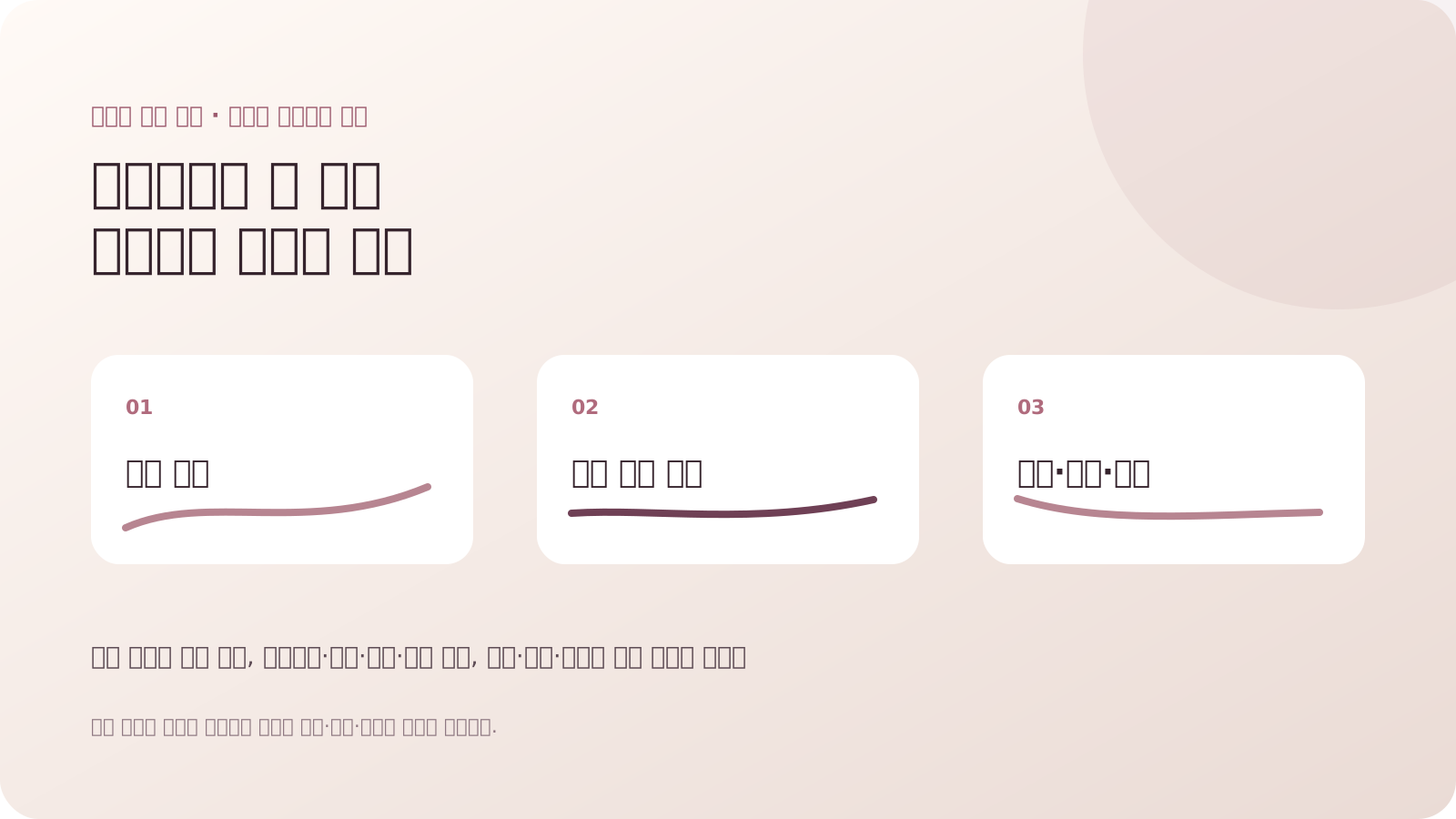
We monitor the procedure schedule and medication sharing, safety regarding abdominal bloating, urination, weight, and breathing, as well as sleep, intake, bowel movements, and recovery time.
Photos show scenes of how cycles, pain, breastfeeding, and life transitions have affected daily life without revealing faces or identities. Disease tracking charts and conceptual diagrams are simplifications of differential diagnosis, examination, and progress records; they do not represent an individual's diagnosis or pregnancy/treatment results.Understanding Tests and Diagnosis
IVF Preparation: Three Things to Know First
When Interpreting Test Results
After catheter insertion Menstrual cramps Similar mild cramping may occur briefly; please record the intensity and duration.
When Identifying Causes and Risk Factors
Testing too early can be difficult to interpret due to the effects of ovulation-inducing injections or low hormone levels, so we follow the center's schedule.
When Reviewing Lifestyle Changes
If the abdomen swells rapidly, pain occurs, or there is nausea or a feeling of fainting after ovulation induction, we check for the possibility of Ovarian Hyperstimulation Syndrome (OHSS).
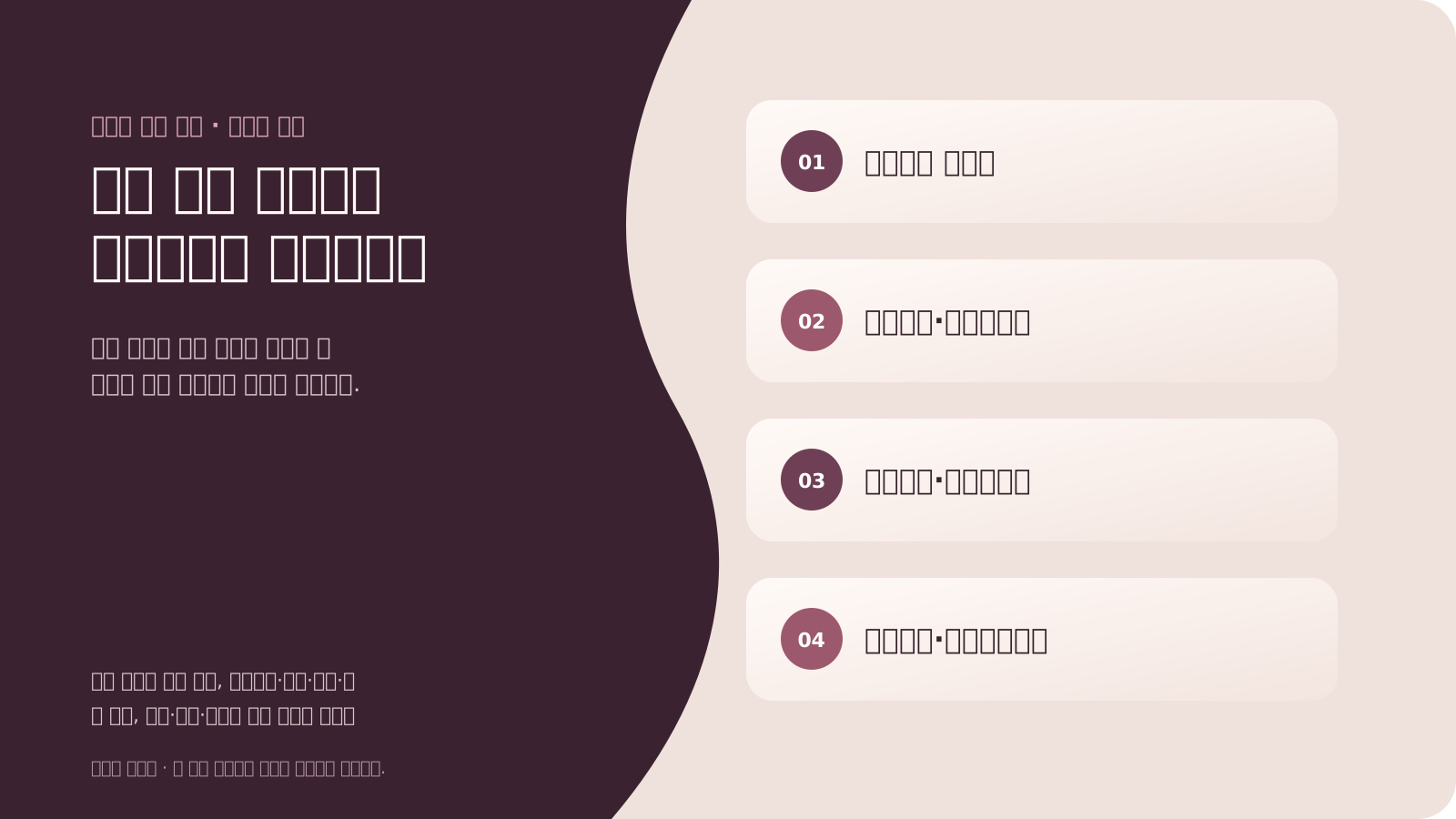
We do not guarantee the number of eggs, embryo quality, or implantation results. While maintaining the procedure protocol, we only limitedly address burdens related to digestion, hydration, sleep, energy levels, and pelvic pain.
Conceptual reference · ASRM: Fertility Evaluation of Infertile Women · ASRM: Ovarian ReserveDefining the role of concurrent treatment
Integrating tests, procedures, and Korean medicine treatment within a single plan
Scheduled tests and procedure dates are shared
We do not arbitrarily change the current plan and instead record symptoms and recovery status before and after treatment.
Setting specific goals for Korean medicine treatment
We review within a scope that helps the patient endure the procedure schedule by reducing abdominal bloating, constipation, insomnia, decreased intake, and overall medication confusion, without changing the procedure protocol or the plan for injections, retrieval, and transfer.
Review all medications in a single list
Please provide a complete list of prescription drugs, over-the-counter drugs, Korean herbal medicine, and supplements to adjust the timing and feasibility of concurrent use.
What to prepare before your visit
Please organize these three things before your visit
Procedure Protocol, Injection, Retrieval, Transfer Schedule, and Previous Responses
Note the test dates and results together to track recent changes.
Complete List of Prescribed Medications, Vaginal Suppositories, Injections, Korean Herbal Medicine, and Supplements
Prepare test results and a list of medications used so that the status before and after treatment can be compared.
Records of Abdominal Bloating, Weight, Urination, Breathing, Bowel Movements, and Sleep
Inform the medical staff of all prescription drugs, over-the-counter drugs, Korean herbal medicine, and supplements without omission.
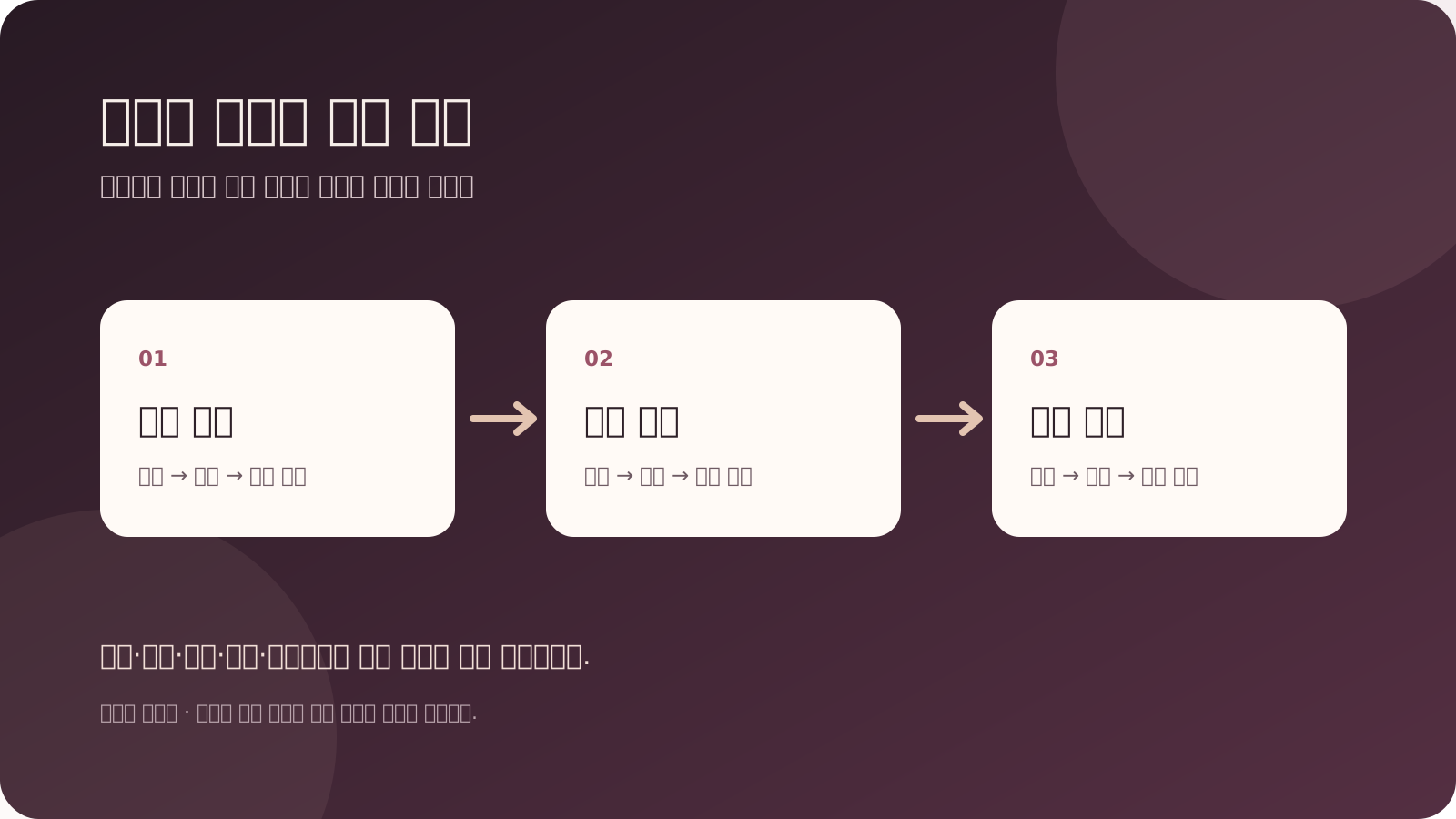
We review age, ovulation, fallopian tubes, uterus, semen analysis, and the procedure schedule together.
Conceptual reference · ASRM: Fertility Evaluation of Infertile Women · ASRM: Ovarian ReserveChanges to monitor before and after treatment
Check again using the same categories to determine if the treatment is helpful
We monitor the procedure schedule and medication sharing, safety regarding abdominal bloating, urination, weight, and breathing, as well as sleep, intake, bowel movements, and recovery time.
Procedure Schedule
Establish a baseline by confirming your current status during the first consultation.
Sharing Complete Medication List
Record this along with the dates when treatment or medication changed.
Bloating, Urination, Breathing
Look for consistent changes over several days rather than a single good day.

Organizing test results and treatment history chronologically helps you identify specific questions to ask during your next appointment.
When continuing 2 treatments together
Four symptom combinations for IVF preparation and Korean herbal medicine prescriptions
We do not guarantee the number of eggs, embryo quality, or implantation results. While maintaining the procedure protocol, we only provide limited support for digestion, hydration, sleep, energy levels, and pelvic pain.
Pattern identification (Byun-jeung) is not about renaming a gynecological diagnosis. For each condition, we determine whether to center the care on Korean medicine treatment, combine it with other treatments, or prioritize treating the underlying cause first. Then, we reflect items that actually change together, such as cycle, pain, cold/heat sensations, digestion, sleep, and energy levels, into the prescription.
When experiencing rapid bloating, weight gain, or shortness of breath during stimulation
- Changes observed in cycles and pain
- We monitor abdominal circumference, weight, urination, breathing, and pain.
- Concurrent changes observed in the body
- Ovarian hyperstimulation, torsion, or bleeding must be confirmed immediately with the procedure team.
- Prescription Priority
- Same-day reproductive medicine evaluation takes priority over Korean herbal medicine.
When experiencing significant bloating, constipation, or loss of appetite after injections
- Changes observed in cycles and pain
- We monitor intake, bowel movements, bloating, and weight changes.
- Concurrent changes observed in the body
- To ensure safety against hyperstimulation, we first check for specific symptoms and medication side effects.
- Prescription Priority
- We make limited adjustments to digestion and hydration burdens within the procedure plan.
When sleep, heart rate, or digestion are unstable due to anxiety over schedules and results
- Changes observed in cycles and pain
- We monitor nighttime awakenings, heart rate, appetite, and abdominal tension.
- Concurrent changes observed in the body
- We provide mental health support and verify the medication plan with the procedure team.
- Prescription Priority
- We assist in reducing sleep issues and tension to help you better manage the procedure schedule.
When fatigue, dizziness, or pelvic discomfort persist after egg retrieval
- Changes observed in cycles and pain
- We monitor bleeding, pain, body temperature, and recovery after activity.
- Concurrent changes observed in the body
- We first rule out infection, bleeding, and hyperstimulation.
- Prescription Priority
- After confirming safety, we assist in the recovery of Qi, blood, and daily functioning.
Order of Prescription Adjustment
- Check for urgent medical evaluation and current treatments
Check for emergency symptoms and the timing for re-evaluation; do not arbitrarily change prescription or procedure plans.
- Select the combination of symptoms that actually recur
Rather than using the four categories as a self-diagnosis checklist, we retain only the relevant clues from medical interviews and existing tests.
- Determine the next prescription based on the same items
We determine whether to maintain, adjust, or stop treatment by re-verifying the procedure schedule, all current medications, and changes in bloating, urination, and breathing.
We review pregnancy-related evaluations, tests or surgeries for structural diseases, antibacterial treatment for infections, and schedules for infertility procedures and menopause treatment to divide and coordinate the scope of Korean herbal medicine treatment. Treatment goals are tracked by specifically defining changes in pain, bleeding, sleep, energy levels, and daily functioning.
Consult regarding IVF schedule and medicationsWomen's Health Glossary
Additional Information for IVF Preparation
You can check a brief definition before proceeding to a detailed explanation.Frequently Asked Questions
Frequently Asked Questions about IVF Preparation
If I have no symptoms after artificial insemination, does it mean it failed?
No. Success cannot be determined by the presence or absence of symptoms. You must take a pregnancy test on the date guided by the infertility center.
Is it okay if I see a little bit of blood after artificial insemination?
A small amount of spotting may occur due to catheter irritation. If the amount increases or is accompanied by severe pain or dizziness, notify the center immediately.
Can I take herbal medicine after artificial insemination?
All medication and test schedules for the procedure cycle must take priority. Do not take any medicine arbitrarily; consult regarding a limited scope that does not conflict with the infertility center's plan.
When can I consider herbal medicine treatment during IVF preparation?
It is possible. Share the test, medication, and procedure schedules exactly as they are, and first determine what will be addressed through Korean medicine treatment. While sharing injection responses and procedure schedules, we manage abdominal bloating, constipation, insomnia, and decreased intake, as well as post-retrieval fatigue and pelvic discomfort in stages.
What should I record before a consultation for IVF preparation?
It is helpful to organize the following in chronological order: procedure protocol, injection, retrieval, and transfer schedules and previous responses; a full list of prescribed medications, vaginal suppositories, injections, herbal medicine, and supplements; and records of abdominal bloating, weight, urination, breathing, bowel movements, and sleep. Please bring your procedure schedule, full medication list, and changes in abdominal bloating, bowel movements, and sleep during previous stimulation.
Can I use herbal medicine along with IVF preparation treatment?
Do not stop your current prescriptions arbitrarily, and please provide a full list of all medications and supplements you are taking. This does not guarantee the results of the procedure, but it reduces the physical burden of enduring injections, retrieval, and transfer while following the procedure team's plan and minimizes medication confusion.
Evidence and Update Information
This content was compiled by Korean medicine doctor Choi Yeon-seung based on the official professional materials and disease-specific clinical data below, and was updated on 2026-08-24.
- NHS: Intrauterine insemination (IUI)Convulsions immediately after artificial insemination, pregnancy test timing, and emergency symptoms of ovarian hyperstimulation syndrome
- ACOG: Treating infertilityTreatment risks such as ovulation stimulation, IUI, ovarian hyperstimulation, and multiple pregnancies
- ASRM: Fertility Evaluation of Infertile WomenTiming of infertility evaluation and assessment of ovulation, fallopian tubes, uterus, and ovarian reserve
- ASRM: Ovarian ReservePrediction of ovarian stimulation response via AMH and AFC and limitations of interpretation
- ASRM: 2023 International PCOS GuidelinePCOS diagnosis, metabolic, and reproductive management recommendations
- ACOG: Abnormal Uterine BleedingTiming, amount, cycle, and evaluation criteria for abnormal bleeding
- ACOG: Amenorrhea: Absence of PeriodsDefinition of amenorrhea and evaluation of pregnancy, endocrine, and structural causes