Menopause
When Menopausal Hot Flashes and Insomnia Occur Together, What Does Herbal Medicine Regulate?
Depending on the overlapping patterns of menopausal hot flashes, night sweats, insomnia, and vaginal dryness, we determine the priority of herbal medicine and acupuncture treatments to lead the way toward recovery in daily life.
Many people experience facial flushing during the day and wake up at night due to sweat and hot flashes, feeling exhausted the next day because they cannot fall back asleep. Rather than simply reducing the frequency of flushing, Baekrokdam treats the overall flow of recovery for sleep and energy after the heat rises and subsides.
We distinguish between sudden surges of heat and heat sensations that linger all day.
Some experience flushing where the face and chest suddenly heat up and sweat during meetings or meals, subsiding within minutes. Others experience heat building up inside the body from the afternoon, leaving the hands, feet, and chest hot until night. Even for menopausal heat sensations, the patterns of onset and recovery differ.
Baekrokdam examines whether heat surges upward, whether you feel exhausted and cold after sweating, and whether dry mouth and skin dryness are severe. Rather than simply lowering heat, we prescribe Korean herbal medicine by balancing the force that causes heat to rise with the body's power to cool and recover.
When nighttime heat sensations wake you up, we do not treat insomnia as a separate issue.
If you kick off your blankets because your body heats up at bedtime, or if you cannot fall back asleep after changing clothes due to early morning sweats, the heat sensations and insomnia are part of the same flow. Conversely, if heat sensations are brief but anxiety and palpitations linger, preventing sleep, tension and mental-physical stagnation may play a larger role.
Korean herbal medicine treatment simultaneously regulates nighttime heat, sweating, palpitations, dry mouth, and sleep depth. Acupuncture is used in conjunction to reduce tension in the neck and chest and help the body transition from arousal to sleep.
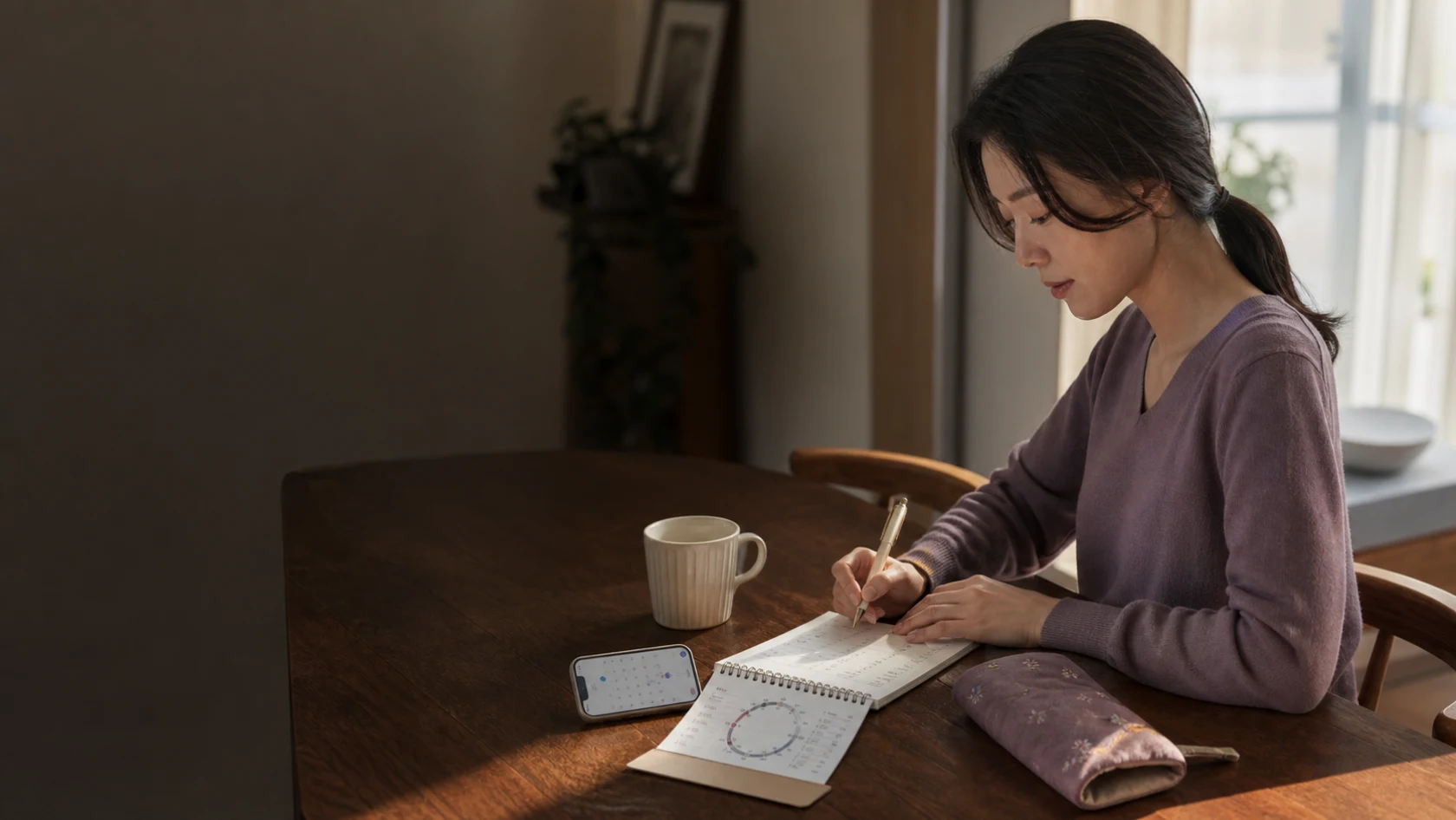
Record not only the start date but also the amount of bleeding, pain, medication, and impact on daily life using the same criteria.
Vaginal dryness, dyspareunia (pain during intercourse), and urinary discomfort are also part of menopausal recovery.
Even if heat sensations are the most prominent, vaginal dryness dyspareunia, frequent urination, and stinging sensations can restrict your life more significantly. If these discomforts are dismissed as merely a result of age, sleep, marital life, and outings may all decrease.
Baekrokdam examines whether there is a pattern of depleted fluids and slow mucosal recovery, or if there is accompanying coldness and poor circulation in the lower abdomen. While continuing necessary gynecological treatment and moisturizing care, we use Korean herbal medicine to address overall dryness, heat sensations, and lower abdominal recovery.
Korean medicine treatment does not compete with hormone therapy; it fulfills the role currently needed.
Those receiving or considering hormone therapy can also be candidates for Korean herbal medicine treatment. After reviewing current medical history and medications, we divide the roles: either supplementing sleep, digestion, and fatigue remaining despite hormone therapy, or focusing on heat sensations and tension that require non-hormonal management.
Menstrual intervalDuring this unstable transition period, we also check bleeding patterns, anemia, and the condition of the uterus and ovaries. New bleeding after menopause is not grouped with menopausal heat sensations; the cause is evaluated first, and Korean medicine treatment is then connected based on the test results.
Improvement means that even if heat sensations occur, they take less of your night and the following day.
In the early stages of treatment, even if flushing does not disappear completely, the duration of the heat may shorten, and the frequency of waking up at night and the time it takes to fall back asleep may decrease. In the next stage, the focus of the prescription shifts toward areas that recover more slowly, such as daytime fatigue, concentration, and vaginal dryness.
The goal Baekrokdam pursues is not merely enduring menopause. We continue Korean herbal medicine and acupuncture treatment until you recover your sleep, feel comfortable with social activities and exercise again, and reach a state where you no longer have to reduce your daily plans due to heat sensations.
Heat sensations may decrease while morning fatigue and lethargy remain, or sleep may improve while vaginal dryness and dyspareunia recover more slowly. To ensure menopausal treatment does not end with temporarily suppressing a single symptom, we must reflect the remaining discomforts in the next prescription without erasing the areas that have already improved. The criterion for the next stage is whether recovery is maintained despite changes in season or workload, and the comfort felt in daily life serves as the basis for adjusting the prescription.
Menopausal heat sensations must be viewed alongside the recovery of sleep, fluids, and energy. Baekrokdam prescribes Korean herbal medicine by distinguishing between the pattern of surging heat and the recovery after cooling, and focuses on reclaiming your nights and daily life by combining this with acupuncture. Subsequent prescriptions vary based on the remaining discomforts.
Evidence and Update Information
This content was organized by Korean medicine doctor Choi Yeon-seung and updated on 2026-08-24.
- ACOG: Hormone Therapy for MenopauseHormone therapy by menopause symptom and consideration of personal risk
- ACOG: The Menopause Years
- ACOG: Hormone Therapy in Primary Ovarian InsufficiencyHormone therapy and long-term health management for POI
- ACOG: Amenorrhea: Absence of PeriodsDefinition of amenorrhea and evaluation of pregnancy, endocrine, and structural causes
- ACOG: Abnormal Uterine BleedingTiming, amount, cycle, and evaluation criteria for abnormal bleeding
- ACOG: Having a Baby: Postpartum CarePostpartum visits and management of recovery, emotions, and breastfeeding