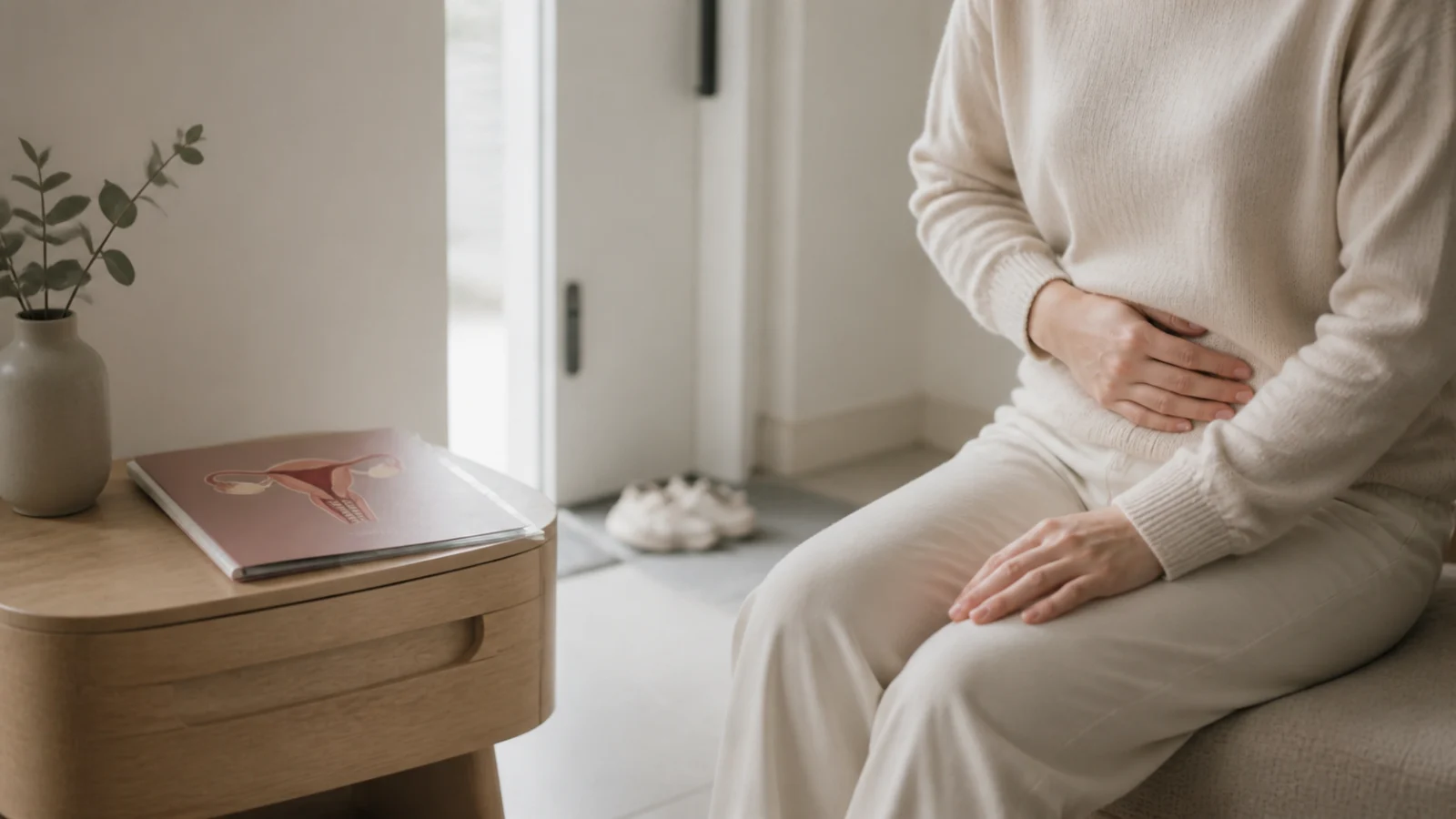
Endometriosis: Read in the order of your curiosity
Understanding the diagnosis and test results
Endometriosis: Identifying the situations where pain occurs and the resulting diminished quality of life
EndometriosisThe exact cause has not yet been identified. Research suggests it may involve retrograde menstruation, where menstrual blood and tissue flow through the fallopian tubes into the pelvis; the failure of the immune system to remove similar tissue outside the uterus; and genetic predisposition and hormonal influences. However, none of these explain every case or can confirm an individual's specific cause. A family history of endometriosis, early menarche, short cycles, or long menstrual periods are contexts that may increase risk, but they are not diagnoses in themselves. If you experience recurring menstrual pain, pelvic pain, or difficulty conceiving, please seek an evaluation from an OB/GYN rather than blaming yourself for the cause.
We do not unconditionally rush into or avoid surgery. The order of treatment is determined based on pain, fertility, and the location and extent of the abnormalities.
Plans for medication, procedures, or surgery proceed according to the changes confirmed by ultrasound and tests. Korean herbal medicine treatment is used in parallel, with specific goals such as managing pain, bleeding, bowel discomfort, and recovery after treatment.
we examine recurring symptoms and the body's recovery
Without promising the complete disappearance of endometriosis tissue, we focus on restoring life functions diminished by pain, considering the combination of menstrual pain, dyspareunia (pain during intercourse), pain during bowel movements or urination, as well as cold/heat sensations, digestion, and sleep.
Test, medication, and procedure schedules are shared as they are
When burdens regarding pain, sleep, or digestion remain after OB/GYN treatment, Korean medicine treatment may be used concurrently for symptomatic support, but it does not promise a curative effect for the disease itself.
Before surgery, we review age, pregnancy plans, and ovarian reserve to compare the potential impact of ovarian surgery on fertility.
Cases requiring an OB/GYN evaluationCheck when applicable
Sudden severe one-sided pain, fainting, vomiting, heavy bleeding, or pain when pregnancy is possible requires an acute evaluation before a scheduled consultation.
- If you experience sudden and very severe pelvic pain on one side or across the entire pelvis
- If severe pain is accompanied by dizziness (feeling as if you might faint), paleness, or cold sweats
- If there is heavy bleeding requiring frequent changes of sanitary pads within a short period of time
- If pelvic pain or vaginal bleeding occurs when pregnancy is possible
Surgery, procedure, or further evaluationIf medication is ineffective, daily life is significantly impaired, or if endometrioma, deep infiltrating endometriosis, or organ involvement is suspected, a professional surgical consultation is necessary.
To what extent to integrate Korean medicine treatment
Endometriosis: Distinguishing the roles of the two treatments
Beyond just menstrual pain, dyspareunia·We identify daily activities missed due to pain, including pain during bowel movements. While respecting imaging results, hormone therapy, and surgical plans, we simultaneously address the timing of recurring pain and the recovery of digestion and sleep.
Observing how symptoms have disrupted your daily life
Rather than looking only at the size of the lesion, we map menstrual, sexual, bowel, and urinary pain, response to painkillers, canceled schedules, and sleep loss within a single cycle.
Categorizing symptom combinations even within the same diagnosis
We determine prescription priorities by selecting clues from the following patterns based on actual medical interviews and examinations: Qi stagnation and blood stasis, fixed pain type, cold-response blood stasis (cold pain type), damp-heat blood stasis (inflammatory burden type), or Qi and blood deficiency (post-surgical recovery type).
Re-evaluating through the next cycle and lifestyle changes
We compare the number of pain days, additional painkiller intake, nighttime awakenings, and the function of sexual activity, bowel movements, and commuting, as well as whether acute worsening occurs, on a cycle-by-cycle basis.
Treatment goalWithout promising the removal of endometriosis tissue, we maintain the treatment of confirmed causes while expanding the scope of sleep, work, and relationships that have been reduced due to pain.
Consult about the progress of endometriosis pain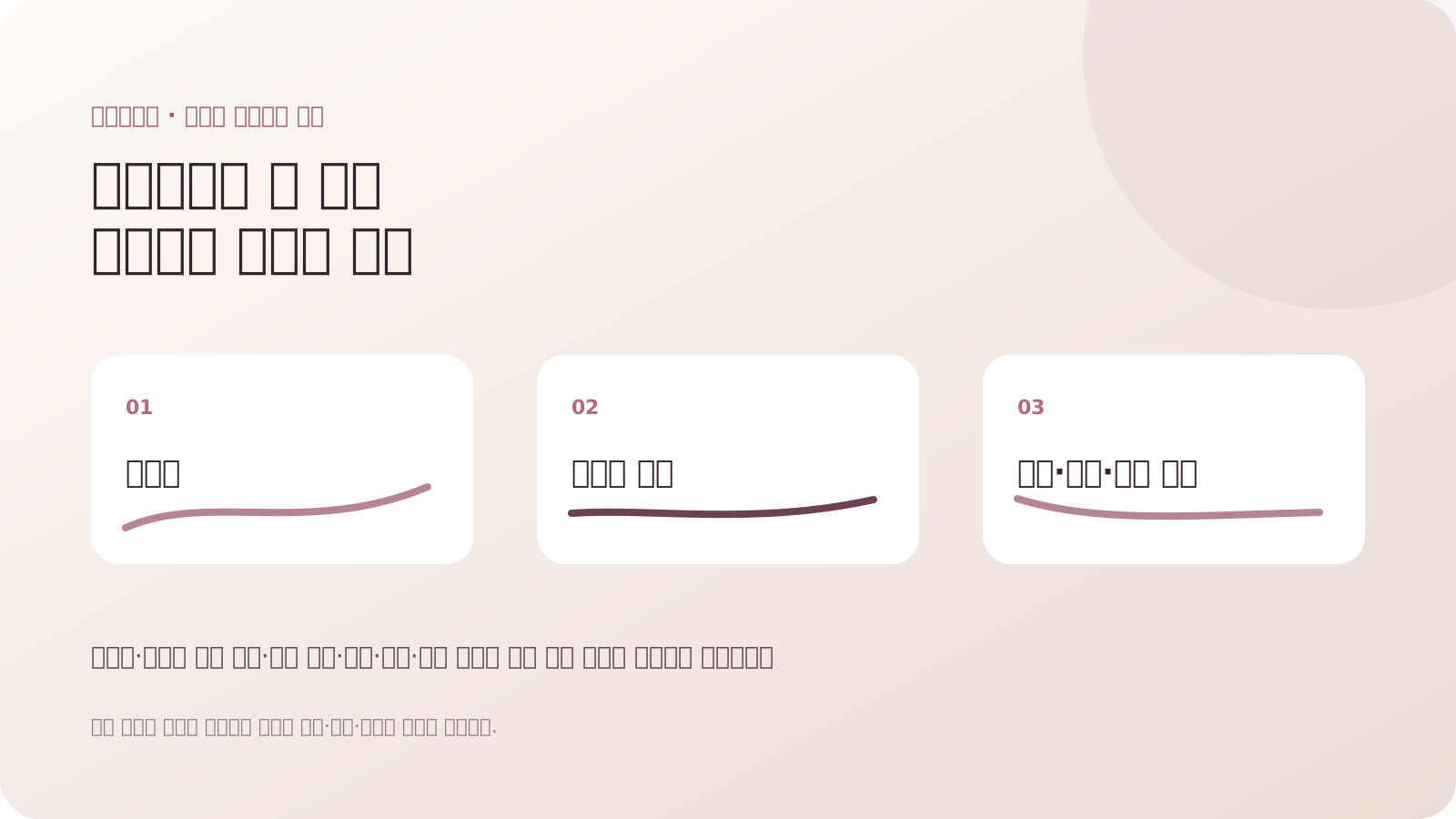
We compare the number of pain days, additional painkiller intake, nighttime awakenings, and the function of sexual activity, bowel movements, and commuting, as well as whether acute worsening occurs, on a cycle-by-cycle basis.
Photos show scenes of how cycles, pain, breastfeeding, and life transitions have affected daily life without revealing faces or identities. Disease tracking charts and conceptual diagrams are simplifications of differential diagnosis, examination, and progress records; they do not represent an individual's diagnosis or pregnancy/treatment results.Understanding Tests and Diagnosis
Endometriosis: Three things to know first
When Interpreting Test Results
The exact cause of endometriosis is unknown and cannot be attributed to a single lifestyle habit.
When Identifying Causes and Risk Factors
Retrograde menstruation, immune dysregulation, and genetic factors are being researched as related processes and risk contexts.
When Reviewing Lifestyle Changes
Diagnosis is not made based on family history or menstrual patterns alone; persistent pain and pregnancy plans are evaluated at an obstetrics and gynecology clinic.
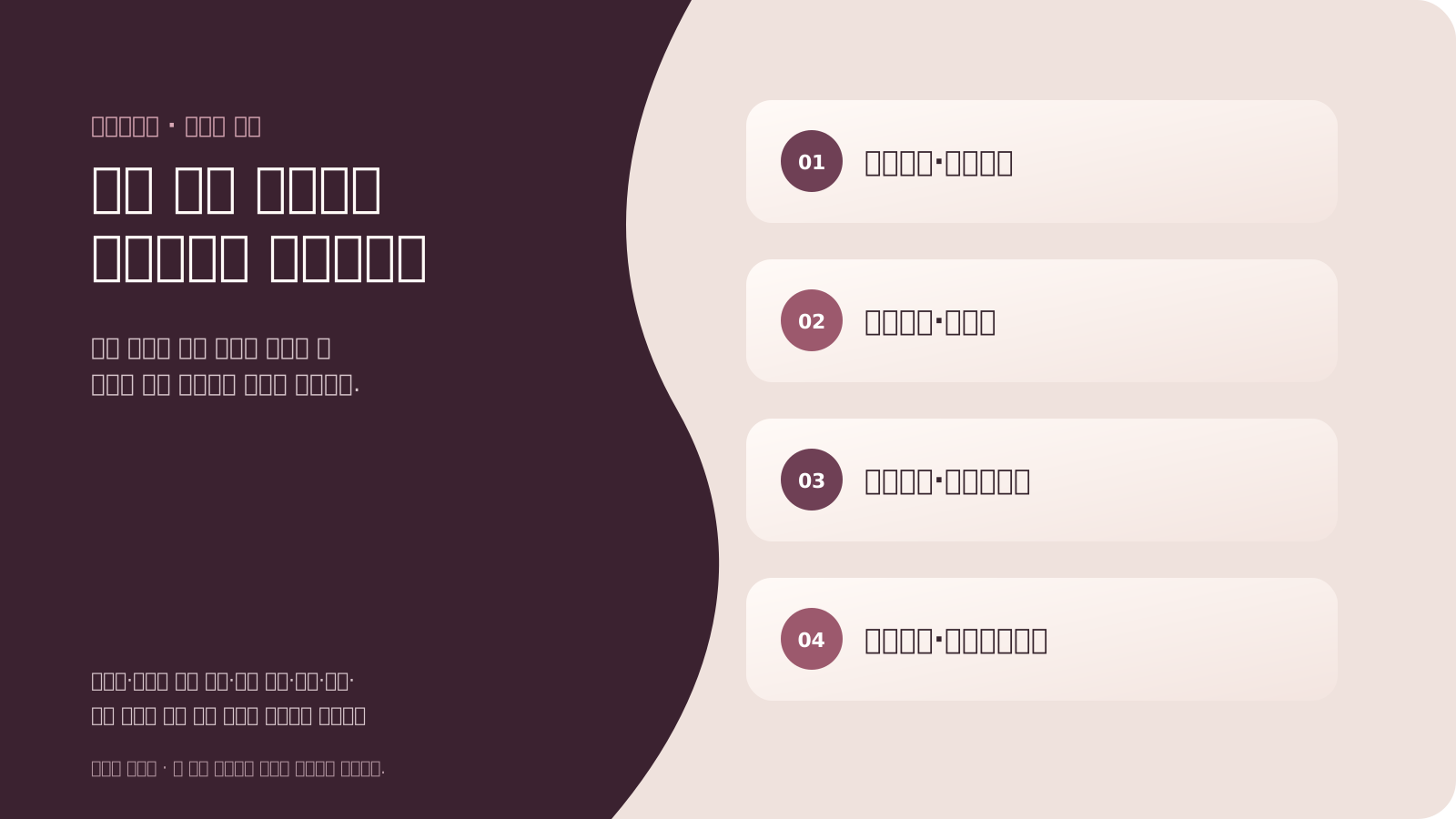
While maintaining obstetrics and gynecology diagnoses, hormone therapy, surgery, and fertility plans, we narrow down the axis that aligns with actual pain among congestion, cold response, damp-heat, and Qi and blood deficiency.
Conceptual reference · ACOG: Chronic Pelvic Pain · NICE NG73: EndometriosisDefining the role of concurrent treatment
Integrating tests, procedures, and Korean medicine treatment within a single plan
Scheduled tests and procedure dates are shared
We do not arbitrarily change the current plan and instead record symptoms and recovery status before and after treatment.
Setting specific goals for Korean medicine treatment
If menstrual, sexual, bowel, or urinary pain and fatigue persist despite hormone therapy, surgery, or fertility plans, we support the recovery of daily functions according to the timing of pain and the combination of cold/heat, digestion, and sleep.
Review all medications in a single list
Please provide a complete list of prescription drugs, over-the-counter drugs, Korean herbal medicine, and supplements to adjust the timing and feasibility of concurrent use.
What to prepare before your visit
Please organize these three things before your visit
Pain during menstruation, intercourse, bowel movements, and urination, and response to painkillers
Note the test dates and results together to track recent changes.
Ultrasound, MRI, laparoscopy, and pathology results, and hormone or surgical history
Prepare test results and a list of medications used so that the status before and after treatment can be compared.
Pregnancy plans, procedure schedules, and changes in fatigue, sleep, and digestion
Inform the medical staff of all prescription drugs, over-the-counter drugs, Korean herbal medicine, and supplements without omission.
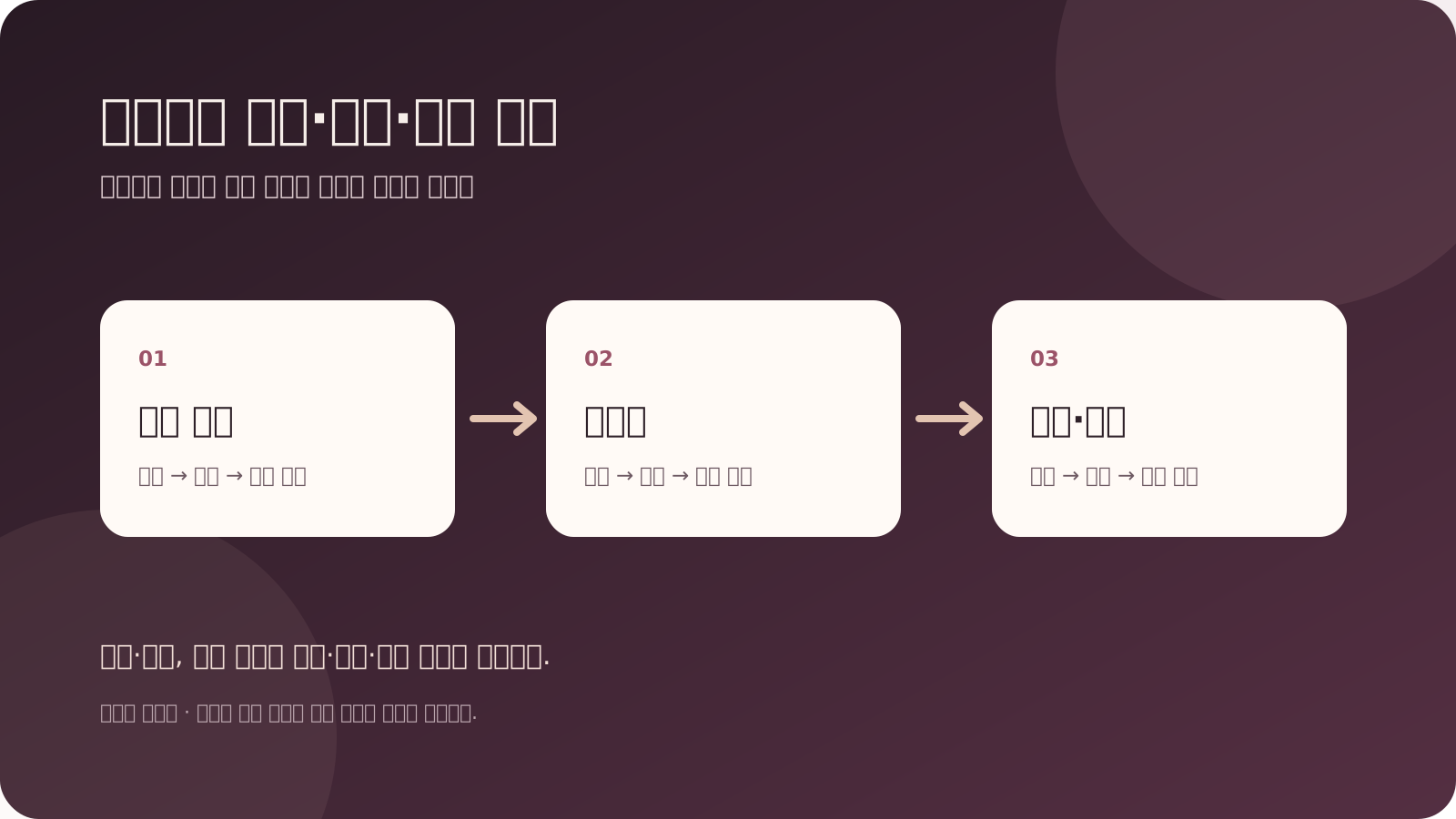
We categorize pain by location (one side or center) and timing, such as before or after menstruation, or during intercourse, bowel movements, and urination.
Conceptual reference · ACOG: Chronic Pelvic Pain · NICE NG73: EndometriosisChanges to monitor before and after treatment
Check again using the same categories to determine if the treatment is helpful
We compare the number of pain days, additional painkiller intake, nighttime awakenings, and the ability to engage in intercourse, bowel movements, and commuting across cycles, as well as whether acute worsening has occurred.
Pain days
Establish a baseline by confirming your current status during the first consultation.
Additional painkillers
Record this along with the dates when treatment or medication changed.
Intercourse, bowel movement, and commuting function
Look for consistent changes over several days rather than a single good day.

Record not only the start date but also the amount of bleeding, pain, medication, and impact on daily life using the same criteria.
When continuing the two treatments together
Endometriosis: Four symptom combinations for prescribing Korean herbal medicine
While maintaining gynecological diagnoses, hormone therapy, surgery, and fertility plans, we narrow down the axis that moves in tandem with actual pain among stagnation, cold response, damp-heat, and deficiency of qi and blood.
Pattern identification (Byun-jeung) is not about renaming a gynecological diagnosis. For each condition, we determine whether to center the care on Korean medicine treatment, combine it with other treatments, or prioritize treating the underlying cause first. Then, we reflect items that actually change together, such as cycle, pain, cold/heat sensations, digestion, sleep, and energy levels, into the prescription.
When there is stabbing pain starting before menstruation and localized pain during intercourse or bowel movements
- Changes observed in cycles and pain
- We look for fixed pelvic pain, blood clots, and tenderness.
- Concurrent changes observed in the body
- We check for stress, chest tightness, and the spread of pain.
- Prescription Priority
- While maintaining treatment for the identified cause, we reduce the proportion of stagnation and blood stasis-related pain.
When squeezing pain worsens after exposure to cold or eating cold foods
- Changes observed in cycles and pain
- We look for sensations of cold, contractile pain, and relief when warm.
- Concurrent changes observed in the body
- We check for loose stools, cold hands and feet, and changes in menstrual flow.
- Prescription Priority
- We resolve the cold sensation in the lower abdomen and stiff flow while simultaneously monitoring changes in bleeding.
When pelvic heat, sticky discharge, and heavy pain overlap
- Changes observed in cycles and pain
- We examine pain, discharge, and urinary discomfort occurring outside of menstruation.
- Concurrent changes observed in the body
- We first screen for infection, fever, and acute changes in endometriomas.
- Prescription Priority
- After excluding acute causes, we adjust the axis where damp-heat and stagnation overlap.
When fatigue and subtle pain persist long after surgery or bleeding
- Changes observed in cycles and pain
- We examine the recovery period, pallor, dizziness, and worsening after activity.
- Concurrent changes observed in the body
- We check for anemia, diet, sleep, and post-surgical warning signs.
- Prescription Priority
- While maintaining the primary care plan, we prioritize the recovery of Qi, blood, and daily functioning.
Order of Prescription Adjustment
- Check for urgent medical evaluation and current treatments
Check for emergency symptoms and the timing for re-evaluation; do not arbitrarily change prescription or procedure plans.
- Select the combination of symptoms that actually recur
Rather than using the four categories as a self-diagnosis checklist, we retain only the relevant clues from medical interviews and existing tests.
- Determine the next prescription based on the same items
We re-evaluate changes in pain days, additional analgesic use, sexual intercourse, bowel movements, and work attendance to decide whether to maintain, adjust, or discontinue treatment.
We review pregnancy-related evaluations, tests or surgeries for structural diseases, antibacterial treatment for infections, and schedules for infertility procedures and menopause treatment to divide and coordinate the scope of Korean herbal medicine treatment. Treatment goals are tracked by specifically defining changes in pain, bleeding, sleep, energy levels, and daily functioning.
Consult about endometriosis pain progressWomen's Health Glossary
Additional information to know about endometriosis
You can check a brief definition before proceeding to a detailed explanation.Frequently Asked Questions
Frequently Asked Questions about endometriosis
Is endometriosis hereditary?
If a close family member has endometriosis, the risk may be higher, but it does not mean it is inevitably inherited or will develop. Please inform your gynecologist of both your family history and symptoms.
Did endometriosis develop because my immunity dropped?
While the link to immune system dysregulation is being researched, the general notion of 'lowered immunity' in daily life cannot be seen as a definitive individual cause.
Can endometriosis be prevented by changing lifestyle habits?
The exact cause has not been determined, and there are no known definitive prevention methods. Do not blame yourself for the symptoms; instead, seek early evaluation for recurring pain and functional changes.
What tests are performed first for endometriosis?
Following a symptom interview and pelvic examination, if suspected, a transvaginal ultrasound is used to first check for endometriomas, deep infiltrating endometriosis, and other pelvic causes.
Does everyone need an MRI?
It is not a necessary test for everyone. Specialized ultrasound or pelvic MRI is considered when evaluating the location and extent of deep infiltrating endometriosis.
Do I still need laparoscopy even if the ultrasound is normal?
If symptoms persist and suspicion remains, diagnostic laparoscopy may be considered even after a normal ultrasound or MRI. Please discuss the benefits and risks with your medical team.
Can endometriosis be diagnosed using CA125?
CA125 is not recommended as a diagnostic test for endometriosis. A diagnosis is made by comprehensively evaluating symptoms, physical examinations, imaging, and necessary procedures.
When can Korean herbal medicine treatment be considered for endometriosis?
It is possible. Please share your current schedule for tests, medications, and procedures, and first determine what aspects will be addressed through Korean medicine treatment. Without promising the disappearance of endometriosis tissue, menstrual painwe examine the combination of dyspareunia (pain during intercourse), dyschezia (pain during bowel movements), dysuria (pain during urination), and sensations of cold/heat, digestion, and sleep, focusing on restoring daily functions that have declined due to pain.
What should I record before a consultation for endometriosis?
It is helpful to organize the following information in chronological order: pain during menstruation, intercourse, bowel movements, and urination, as well as responses to painkillers; results from ultrasound, MRI, laparoscopy, and pathology; history of hormone therapy and surgery; pregnancy plans, procedure schedules, and changes in fatigue, sleep, and digestion. Please also provide the location and cycle of pain, imaging and surgical results, current hormone therapy, and pregnancy plans.
Can I use Korean herbal medicine along with endometriosis treatment?
Do not stop your current prescriptions arbitrarily, and please inform us of all medications and supplements you are taking. Without promising the removal of endometriosis tissue, we maintain the treatment for the confirmed cause while expanding the range of sleep, work, and relationships that have been limited due to pain.
Evidence and Update Information
This content was compiled by Korean medicine doctor Choi Yeon-seung based on the official professional materials and disease-specific clinical data below, and was updated on 2026-08-24.
- World Health Organization (WHO): EndometriosisResearch associations between unknown causes, immune system dysregulation, and familial occurrence, and the limitations of known prevention methods
- Office on Women's Health, U.S. Department of Health and Human Services: EndometriosisProcesses that may involve retrograde menstruation, genetics, immunity, and hormones, and risk factors such as family history and menstrual characteristics
- NICE NG73: EndometriosisImaging, referral, medication, and surgical recommendations for endometriosis
- ACOG: EndometriosisThe diagnostic role of pelvic examinations, laparoscopy, and biopsies
- ACOG: LaparoscopyGuide to laparoscopic diagnosis and treatment of chronic pelvic pain and endometriosis
- NHS: EndometriosisStages of painkillers, hormone therapy, and surgery; hormone restrictions during pregnancy attempts; and the basis for infertility clinic referrals
- Chelsea and Westminster Hospital NHS: Endometriosis dietLimitations of evidence for endometriosis diets and approaches to balanced nutrition and individual gastrointestinal symptoms
- ACOG: Chronic Pelvic PainCauses of chronic pelvic pain and functional impact assessment
- ACOG: Uterine FibroidsSymptoms by fibroid location and selection of tests and treatment
- NICE NG88: Heavy menstrual bleedingEvaluation of menorrhagia and treatment selection recommendations
- ACOG: Abnormal Uterine BleedingTiming, amount, cycle, and evaluation criteria for abnormal bleeding