Pelvic Pain
Endometriosis, Adenomyosis, and Uterine Fibroids: How Do Pain and Bleeding Differ?
We explain the goals of Korean medicine treatment by distinguishing whether deep pain during menstruation, bowel movements, or intercourse is prominent, whether tenderness across the entire uterus and heavy bleeding are significant, or whether pressure based on the location of fibroids is central.
All three conditions Menstrual crampscan cause heavy bleeding, but they differ in the scenarios where pain occurs, the type of pelvic pressure, and the locations identified through imaging tests. Understanding these differences allows for a specific plan on how to treat remaining symptoms after testing.
| Category | Prominent Symptoms | Key Focus Areas for Treatment |
|---|---|---|
| Endometriosis | Cyclical pelvic pain, pain during bowel movements, dyspareunia (pain during intercourse) | Timing of pain, fertility, sleep, and digestion |
| Adenomyosis | Severe menstrual cramps, heavy bleeding, heavy pressure-like pain | Bleeding, blood stasis-related pain, recovery after menstruation |
| Uterine Fibroids | Bleeding, pressure, and urinary or bowel discomfort depending on location | Fibroid location, anemia, pelvic burden |
Endometriosis is evaluated alongside deep pain that occurs outside of menstruation
In addition to severe menstrual cramps, if you experience stabbing pain inside the anus during bowel movements during menstruation, deep pelvic pain during or after intercourse, or periodic painful urination, Endometriosisit is necessary to check for this. If the pain interferes with your daily life or studies, the timing of your medical evaluation should be moved forward.
In endometriosis, the location of the lesion does not always correlate with the symptoms. Since suspicious symptoms can persist even if there are no clear abnormalities on an ultrasound, the next tests and treatment are determined by considering the periodicity of the pain and fertility plans.
Adenomyosis involves a combination of heavy bleeding and a heavy feeling throughout the uterus
AdenomyosisIn adenomyosis, tissue similar to the endometrial lining settles within the uterine muscle layer, which can cause the uterus to enlarge and become sensitive. It is common to feel a heavy and firm sensation in the lower abdomen before menstruation, often accompanied by severe menstrual cramps and heavy bleeding.
If bleeding recurs, Anemiaanemia and fatigue after menstruation constitute a large part of the treatment. Even if the pain has decreased, if you feel dizzy and lack energy for several days after menstruation ends, the recovery is not yet sufficient.
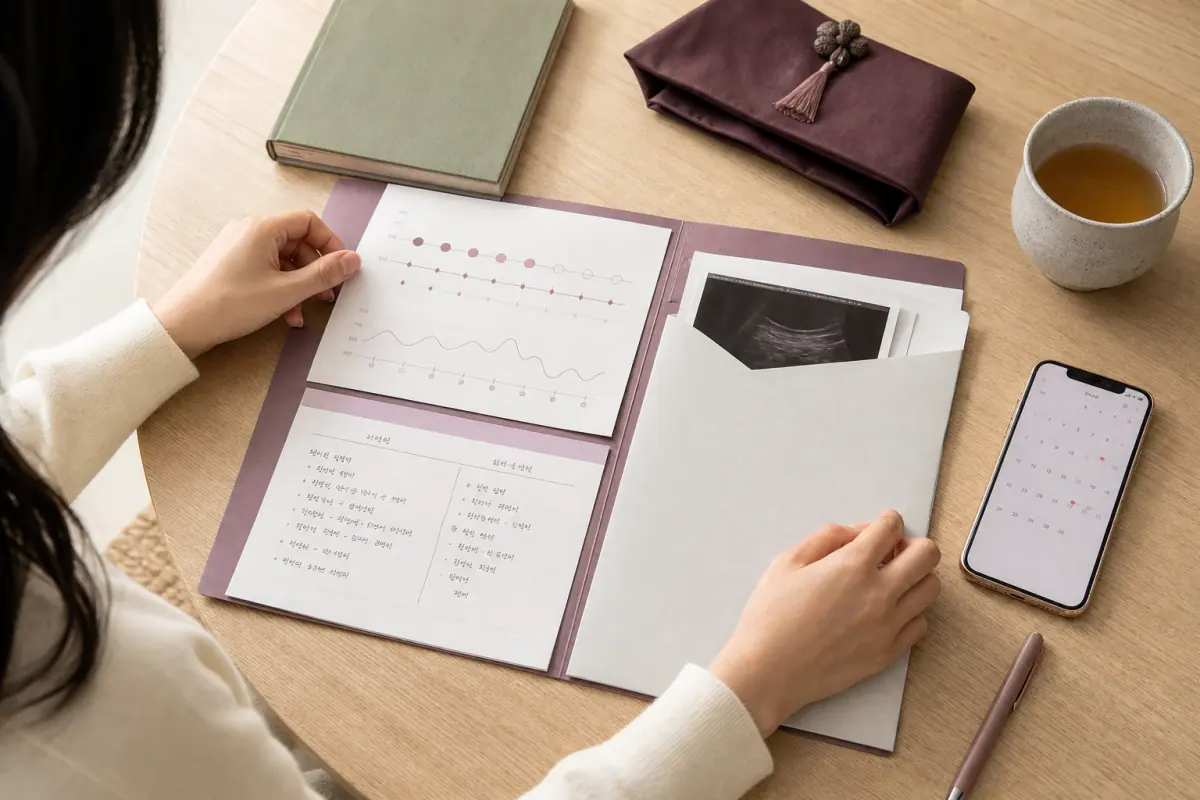
Organizing test results and treatment history chronologically helps you identify specific questions to ask during your next appointment.
For uterine fibroids, the location matters more than the size in determining symptoms
Fibroids that grow toward the inside of the uterus fibroidscan affect heavy bleeding even if they are relatively small, while large fibroids on the outside can press on the bladder or intestines, causing frequent urination, constipation, or pelvic pressure. Even for the same size, the choice of treatment varies depending on the deformation of the uterine cavity, pressure on surrounding organs, and pregnancy plans.
The mere fact that fibroids exist does not explain all pain. After confirming the location and size through imaging tests, it is necessary to distinguish whether the current discomfort is centered on bleeding, pressure and urinary/bowel discomfort, or if other pelvic pain is present.
Korean medicine focuses on the remaining pain and the pattern of recovery rather than just the name of the disease
Hormone therapy, procedures, surgery, and fertility plans continue according to test results. At Baekrokdam, we determine the direction of Korean herbal medicine treatment by observing whether there is significant blood-stasis pain (tense and stabbing) starting before menstruation, prominent coldness and squeezing pain in the lower abdomen, or prolonged loss of energy and digestion after bleeding.
Acupuncture is provided in parallel to reduce tension around the waist and pelvis and to alleviate pain that interferes with movement, bowel movements, and sleep. The focus of treatment is not to erase the name of the disease, but to manage the confirmed lesions while reducing the extent to which pain and bleeding dominate your daily life.
Improvement means expanding your range of daily activities before and after menstruation
Even before the pain disappears completely, changes may occur: pain that started before menstruation may begin later, the frequency of needing painkillers and the time spent lying down may decrease, and bowel or intercourse pain may not linger as long. The recovery speed after bleeding is also monitored.
If you are preparing for pregnancy, pain treatment and fertility schedules are not handled separately. After sharing your current age, ovarian reserve, and plans for surgery or procedures, the timing and intensity of Korean herbal medicine and acupuncture are adjusted; we maintain the symptoms that have already improved and focus the next prescriptions on the remaining factors.
Pelvic pain and fatigue may remain even after hormone therapy or surgery. In such cases, we distinguish between changes in the lesion and changes in pain, and continue recovery treatment based on what is still hindering daily life among menstruation, bowel movements, or sleep. We also check if movement becomes easier as tension in the abdomen and waist decreases.
Endometriosis, adenomyosis, and fibroids may appear overlapping, but the structure of their pain and bleeding differs. While continuing the plan for the disease confirmed by tests, we use Korean herbal medicine and acupuncture to address remaining pain, fatigue after heavy bleeding, and pelvic tension to connect the process to a full recovery of daily life.
Evidence and Update Information
This content was compiled by Korean medicine doctor Choi Yeon-seung and updated on 2026-08-31.
- NICE NG73: EndometriosisImaging, referral, medication, and surgical recommendations for endometriosis
- ACOG: Uterine FibroidsSymptoms by fibroid location and selection of tests and treatment
- ACOG: Chronic Pelvic PainCauses of chronic pelvic pain and functional impact assessment
- NICE NG88: Heavy menstrual bleedingEvaluation of menorrhagia and treatment selection recommendations
- ACOG: Abnormal Uterine BleedingTiming, amount, cycle, and evaluation criteria for abnormal bleeding