Pelvic Pain
Treatment that varies based on whether pelvic pain occurs only during menstruation or includes bowel and bladder discomfort
We distinguish whether pain occurs only during menstruation or is a constant heaviness, and whether it worsens with bowel movements or urination, and explain the recovery goals for herbal medicine and acupuncture treatment.
Pelvic pain is not just a problem in one spot of the lower abdomen, but is intertwined with menstruation,ovulationintercourse, bowel movements, and urination. By categorizing the scenarios in which pain recurs, we can clearly determine how to treat the remaining pain even after medical examinations.
Even for pelvic pain, pain on one side is viewed differently from a heavy feeling in the center.
The suspected cause varies depending on whether there is periodic stabbing pain on the right or left side, or if the center of the lower abdomen feels heavy with a pulling sensation extending to the lower back. If the pain spreads to the inner thighs or around the anus, we must also address tension within the pelvis and nerve irritation.
Baekrokdam Women's Clinic does not assign an organ name based solely on the location of the pain. By combining the menstrual cycle, the depth of the pain, and the difference between when pressed versus when moving, we examine issues around the uterus and ovaries, as well as the influence of the pelvic floor muscles and digestion/bowel movements.
Whether the pain starts before menstruation or persists after it ends determines the direction of treatment.
Pain that begins as a heavy sensation just before menstruation, peaks on the first day, and then resolves, is different from deep pelvic pain that remains after menstruation ends. We also distinguish between brief pain on one side around ovulation and a daily heavy feeling regardless of the cycle.
In herbal medicine treatment, we observe how the color and clots of menstrual blood, sensations of cold or heat, swelling, and digestion overlap with the pain. The focus of the prescription changes depending on whether blood stasis is central, whether pelvic circulation is stiffened by cold, or whether a heavy feeling persists due to depleted energy.
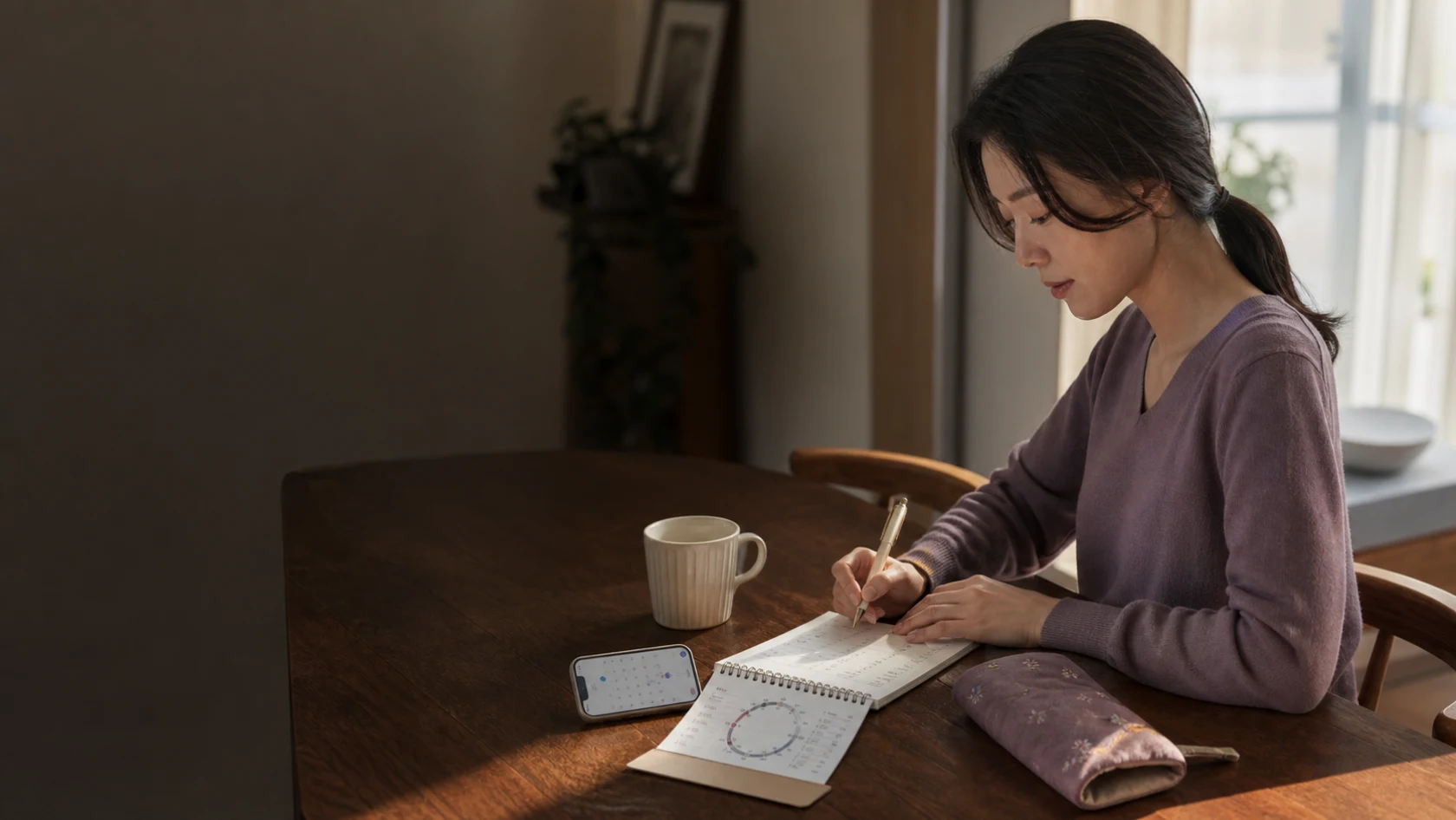
Record not only the start date but also the amount of bleeding, pain, medication, and impact on daily life using the same criteria.
If you experience deep pain during bowel movements, urination, or intercourse, we do not stop at simply reducing the pain.
If you experience stabbing pain inside the anus only during bowel movements during menstruation, increased pelvic pressure when the bladder is full, or prolonged deep pain after intercourse, the movement of pelvic organs and muscles may be intertwined. These accompanying symptoms are important clues for understanding the scope of the pain.
While continuing the treatment for diseases confirmed through examinations, acupuncture and herbal medicine treatment can address the state where the pelvis is constantly tense and the patient cannot apply strength to the abdomen due to pain. The goal is not just to lower the pain score, but to make bowel movements, sleep, exercise, and marital life comfortable again.
If pain persists even after examinations, we treat both pelvic circulation and tension together.
Even if you were told there were no major abnormalities in an ultrasound or other necessary tests, the discomfort has not disappeared if you still take time off work and repeatedly use painkillers every month. Moving beyond the stage of searching only for structural problems, we can treat the cycle where pain recurs alongside menstruation, digestion, and pelvic tension.
Baekrokdam involves a cold, hardened lower abdomen, a mass, and severe menstrual pain, We adjust the herbal medicine to match the overlapping pattern, such as pelvic pain that tightens after stress. Acupuncture is performed to relieve tension around the lower back, abdomen, and pelvis, thereby reducing pain during movement and bowel movements.
Chronic pelvic pain leaves behind tension that causes the body to curl up and breathe shallowly to avoid pain. Even on days when pain is less severe, if the lower back and pelvis remain stiff, we combine light walking and abdominal breathing with treatment to slowly release the pattern of the body stiffening in anticipation of pain.
Improvement means a reduction in the number of painful days and a shorter time to return to daily life.
Changes in treatment are not judged solely by the pain on the first day of menstruation. There must be a combined change: the day pain begins should be delayed, the frequency of needed painkillers should decrease, and you should no longer have to give up bowel movements, sleep, or going to work.
Situations where one side of the pelvis suddenly hurts severely accompanied by vomiting or a feeling of fainting, or where the possibility of pregnancy overlaps with bleeding, must be evaluated without delay. For other recurring pelvic pain, we connect cause evaluation with Korean medicine treatment to reduce the extent to which pain occupies your life.
Pelvic pain must be viewed not only by location but also by changes in the menstrual cycle and during bowel movements, urination, and intercourse. While respecting necessary examinations, Baekrokdam manages cold-heat, blood stasis, and pelvic tension through herbal medicine and acupuncture treatment to lead the way back to daily life.
Evidence and Update Information
This content was organized by Korean medicine doctor Choi Yeon-seung and updated on 2026-08-24.
- ACOG: Chronic Pelvic PainCauses of chronic pelvic pain and functional impact assessment
- NICE NG73
- NICE NG73: EndometriosisImaging, referral, medication, and surgical recommendations for endometriosis
- ACOG: Uterine FibroidsSymptoms by fibroid location and selection of tests and treatment
- NICE NG88: Heavy menstrual bleedingEvaluation of menorrhagia and treatment selection recommendations
- ACOG: Abnormal Uterine BleedingTiming, amount, cycle, and evaluation criteria for abnormal bleeding