
Recurrent miscarriage: Read in order of your questions
Understanding the diagnosis and test results
Recurrent miscarriage: Distinguishing between evaluation by cause and the recovery plan before the next pregnancy
Recurrentmiscarriagemiscarriage is evaluated when there have been two or more miscarriages, and a common background is a random chromosomal abnormality in the embryo. In some cases, parental chromosomal translocation, structural issues such as uterine shape, adhesions, or fibroids, antiphospholipid syndrome, or endocrine disorders like uncontrolled thyroid disease are involved. However, even after investigating medical history, blood, genetics, and uterine structure, the cause remains unexplained in more than half of the cases. This does not mean that a single stressor or daily behavior is the cause, nor is it the patient's fault. If you are currently pregnant and experiencing bleeding, abdominal pain, dizziness, or fainting, seek an immediate obstetric evaluation rather than scheduling a cause-analysis test.
After completing the cause analysis, prepare for the next pregnancy plan and physical recovery after miscarriage together.
First, check the recommended tests for recurrent miscarriage and the plan for the next pregnancy. Rather than narrowing it down to a single cause, we help recover sleep, digestion, and energy without delaying the schedule for tests or procedures.
we examine recurring symptoms and the body's recovery
Without promising pregnancy outcomes, we address menstruation, anemia, pelvic pain, sleep, digestion, energy, and tension following loss to create a foundation for recovery to continue the next pregnancy plan.
Test, medication, and procedure schedules are shared as they are
While maintaining the test and prescription plan, Korean medicine treatment can support the recovery of anemia, sleep, digestion, and energy after miscarriage.
Age, ovarian reserve, the gestational age of each pregnancy, and the test results of both partners change the timing of the next attempt and the choice of treatment.
Cases requiring an OB/GYN evaluationCheck when applicable
For bleeding or pain during a current pregnancy, evaluating the location and status of the pregnancy takes priority over recurrent miscarriage counseling. Do not arbitrarily add immune tests or treatments with uncertain evidence.
- Increased vaginal bleeding or persistent bright red bleeding
- One-sided or severe lower abdominal pain
- Dizziness, fainting, or cold sweats
- Bleeding during pregnancy accompanied by shoulder pain and severe weakness
- Fever and foul-smelling discharge or severe pelvic pain
Surgery, procedure, or further evaluationThe benefits and risks of surgery are determined with a specialist only when correctable causes, such as uterine cavity malformation, adhesion, or fibroids, are identified.
To what extent to integrate Korean medicine treatment
Recurrent Miscarriage: Distinguishing the roles of the two treatments
For recurrent miscarriages, recommended evaluations regarding the uterus, chromosomes, antiphospholipid antibodies, and thyroid, as well as plans for the next pregnancy, are checked first. Rather than explaining the cause through a single body constitution, we simultaneously focus on restoring sleep, digestion, and energy.
Observing how symptoms have disrupted your daily life
The gestational age of each pregnancy, ultrasound and chromosomal/pathological results, recovery after procedures, and the tests and medications for both partners are organized by date.
Categorizing symptom combinations even within the same diagnosis
Prescription priorities are determined by selecting clues from the actual medical interview and examinations among the following: current pregnancy safety-first type, Qi and blood deficiency type, post-miscarriage recovery type, blood stasis type, pelvic recovery type, liver-stagnation/mind-spirit type, and loss-of-tension type.
Re-evaluating through the next cycle and lifestyle changes
Without guaranteeing pregnancy outcomes, we monitor the completion of evaluations, medication safety, the next schedule, and the recovery of menstruation, anemia, sleep, and energy.
Treatment goalWithout attributing the miscarriage to the patient's lifestyle, we help recover the body and daily life in preparation for the next pregnancy after completing an evidence-based evaluation.
Consult using recurrent miscarriage evaluation and recovery records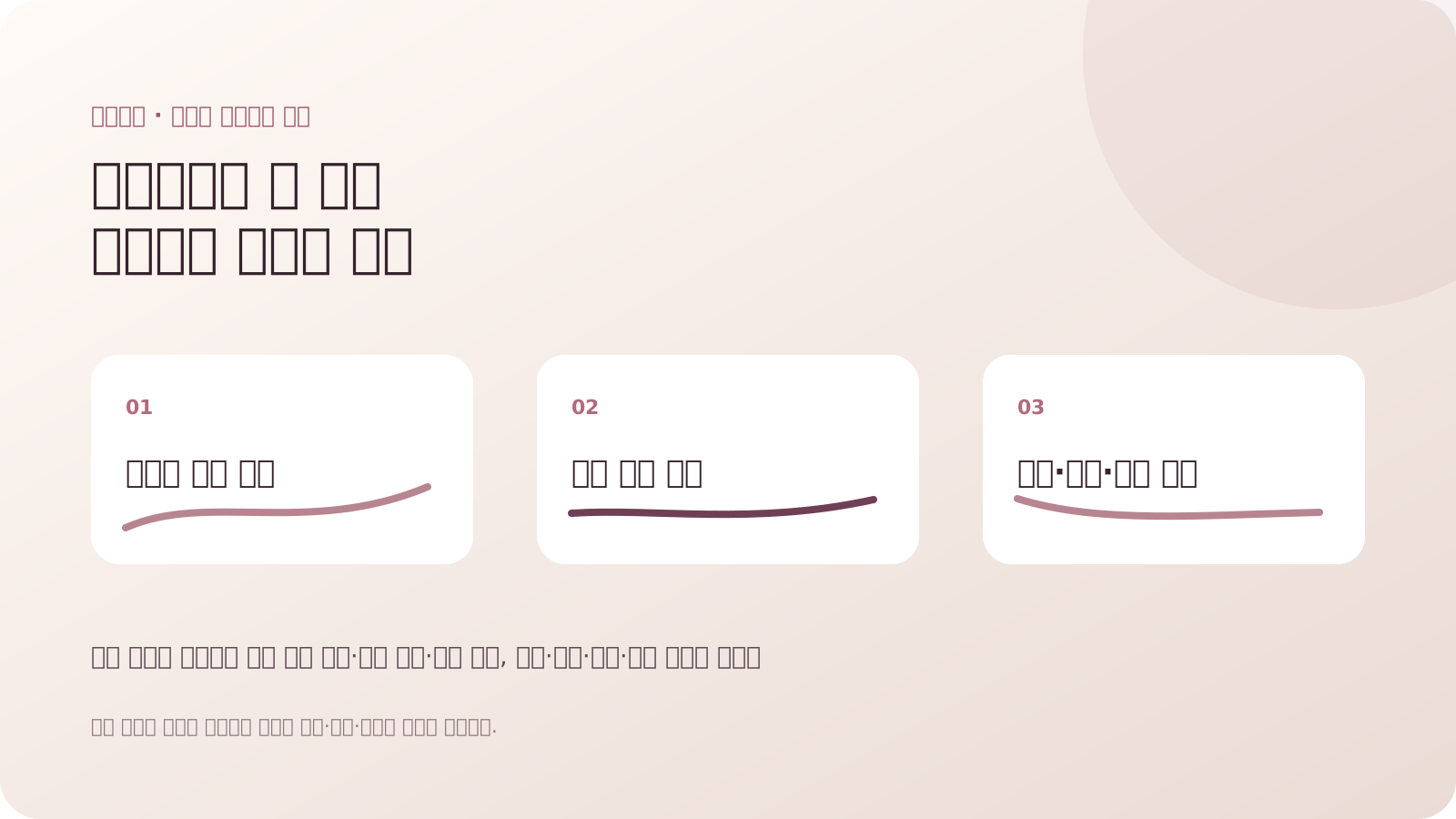
Without guaranteeing pregnancy outcomes, we monitor the completion of evaluations, medication safety, the next schedule, and the recovery of menstruation, anemia, sleep, and energy.
Photos show scenes of how cycles, pain, breastfeeding, and life transitions have affected daily life without revealing faces or identities. Disease tracking charts and conceptual diagrams are simplifications of differential diagnosis, examination, and progress records; they do not represent an individual's diagnosis or pregnancy/treatment results.Understanding Tests and Diagnosis
Recurrent Miscarriage: Three things to know first
When Interpreting Test Results
Abnormalities in the number of embryonic chromosomes often occur by chance and are not the fault of the patient's actions.
When Identifying Causes and Risk Factors
Selective evaluations are performed for parental translocation, uterine structure, antiphospholipid antibody syndrome, and uncontrolled endocrine diseases.
When Reviewing Lifestyle Changes
Since causes often remain unknown even after testing, we do not increase unnecessary panels or treatments without evidence.
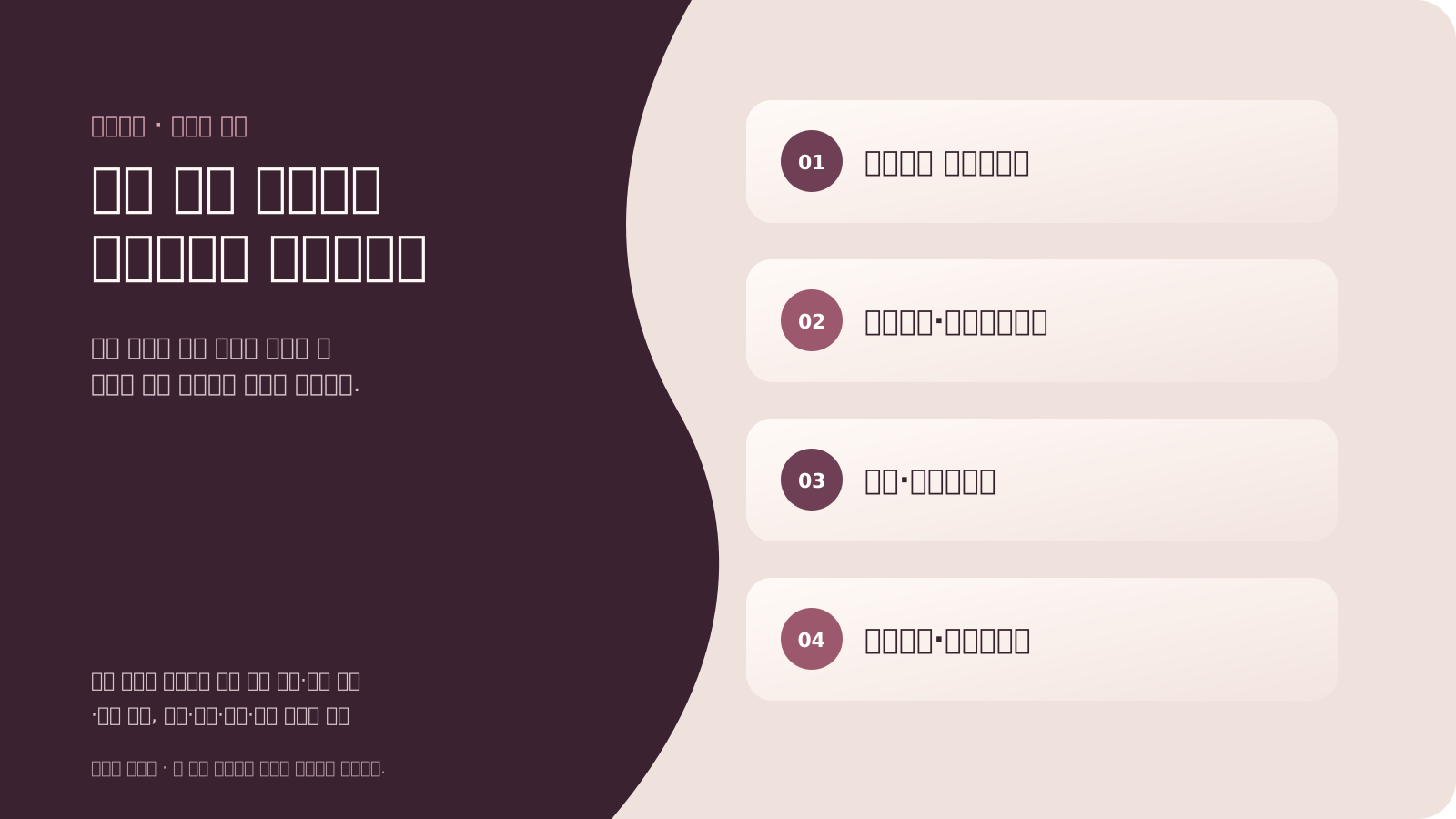
Centering on obstetric treatment by cause and plans for the next pregnancy, we only categorize Qi and blood deficiency, blood stasis-related pain, sleep tension, and digestive burden during the pre-pregnancy recovery period.
Conceptual reference · ASRM: Recurrent Pregnancy Loss Committee Opinion 2026 · ACOG: Bleeding During PregnancyDefining the role of concurrent treatment
Integrating tests, procedures, and Korean medicine treatment within a single plan
Scheduled tests and procedure dates are shared
We do not arbitrarily change the current plan and instead record symptoms and recovery status before and after treatment.
Setting specific goals for Korean medicine treatment
We center on evidence-based evaluations, such as genetic, uterine, antiphospholipid antibody, and endocrine factors, and plans for the next pregnancy. Between evaluations, menstruation andAnemia·Herbal medicine treatment goals are set only when sleep, digestion, or energy recovery have collapsed.
Review all medications in a single list
Please provide a complete list of prescription drugs, over-the-counter drugs, Korean herbal medicine, and supplements to adjust the timing and feasibility of concurrent use.
What to prepare before your visit
Please organize these three things before your visit
Gestational age, ultrasound, procedures, pathology/genetic results, and recovery process for each pregnancy
Note the test dates and results together to track recent changes.
Evaluation of genetics, uterus, antiphospholipid antibodies, thyroid, diabetes, etc., for both partners
Prepare test results and a list of medications used so that the status before and after treatment can be compared.
Complete list of aspirin, heparin, progesterone, herbal medicine, and supplements, and plans for the next pregnancy
Inform the medical staff of all prescription drugs, over-the-counter drugs, Korean herbal medicine, and supplements without omission.
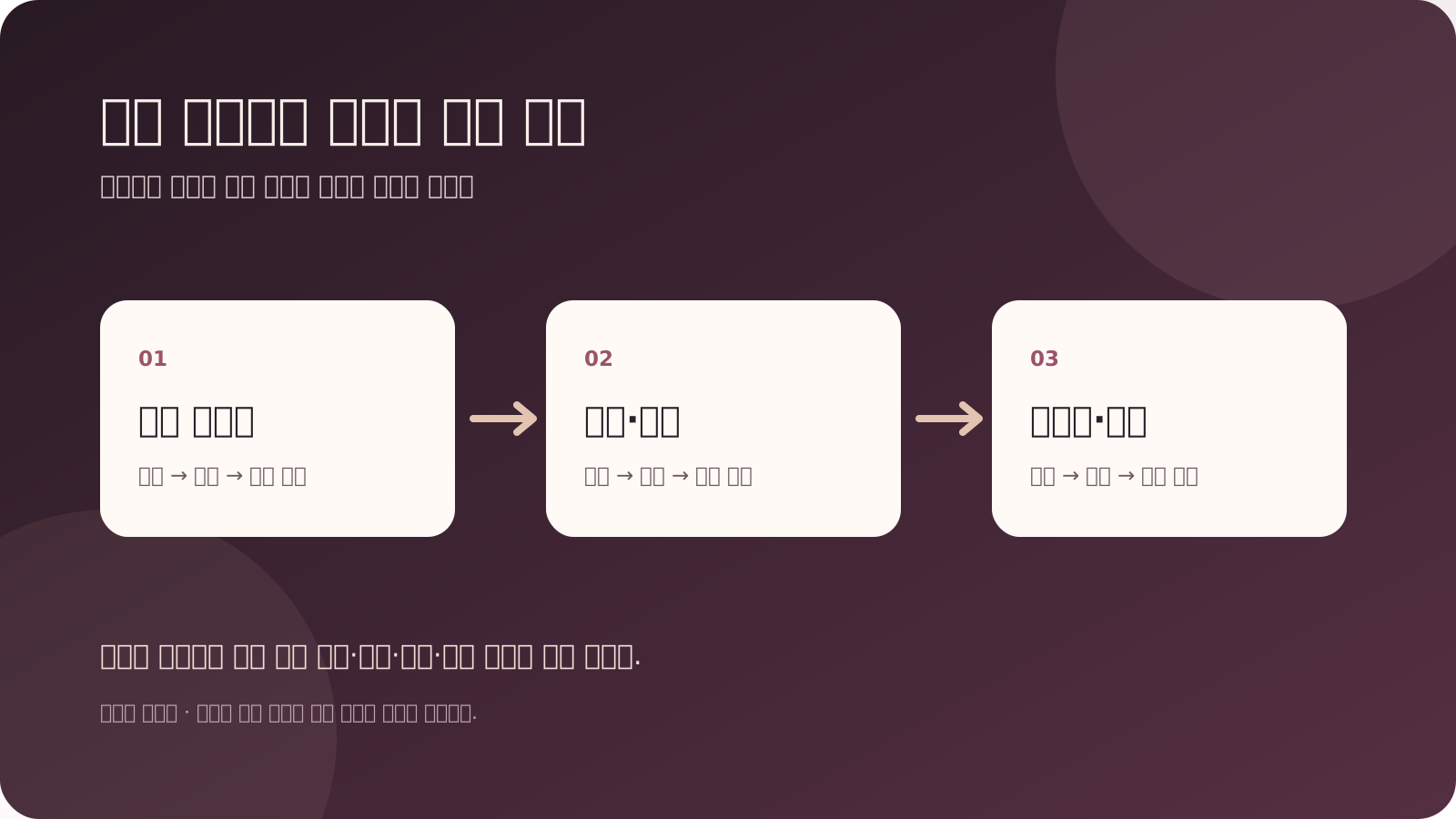
Rather than judging by the color of the blood alone, we first examine the pregnancy location, pain, bleeding, and follow-up tests.
Conceptual reference · ACOG: Bleeding During Pregnancy · ACOG: Early Pregnancy LossChanges to monitor before and after treatment
Check again using the same categories to determine if the treatment is helpful
We do not guarantee pregnancy results; instead, we monitor the completion of evaluations, medication safety, next schedules, and the recovery of menstruation, anemia, sleep, and energy.
Completion of evaluation by cause
Establish a baseline by confirming your current status during the first consultation.
Overall medication safety
Record this along with the dates when treatment or medication changed.
Recovery of menstruation, anemia, and sleep
Look for consistent changes over several days rather than a single good day.

Record not only the start date but also the amount of bleeding, pain, medication, and impact on daily life using the same criteria.
When continuing the two treatments together
Recurrent miscarriage: Four symptom combinations for herbal medicine prescriptions
We focus on recommended tests for recurrent miscarriage and plans for the next pregnancy. IVF (In Vitro Fertilization) If you are currently undergoing this process, please share your medication and schedule; we will then determine the role of Korean herbal medicine in treating anemia, sleep, digestion, and energy recovery.
Pattern identification (Byun-jeung) is not about renaming a gynecological diagnosis. For each condition, we determine whether to center the care on Korean medicine treatment, combine it with other treatments, or prioritize treating the underlying cause first. Then, we reflect items that actually change together, such as cycle, pain, cold/heat sensations, digestion, sleep, and energy levels, into the prescription.
When there is current bleeding or pain, or when the pregnancy location has not been confirmed
- Changes observed in cycles and pain
- We evaluate the amount of bleeding, one-sided pain, dizziness, and gestational age.
- Concurrent changes observed in the body
- We immediately evaluate for ectopic pregnancy, miscarriage, or infection.
- Prescription Priority
- Obstetrics and gynecology evaluation and follow-up are prioritized over Korean herbal medicine.
When dizziness, fatigue, or menstrual changes persist after bleeding or treatment
- Changes observed in cycles and pain
- We evaluate hemoglobin levels, bleeding, intake, and recovery after activity.
- Concurrent changes observed in the body
- We check for retained products of conception, infection, thyroid function, and anemia.
- Prescription Priority
- After treating the cause, we support the recovery of Qi, blood, and daily functioning.
When fixed pelvic pain, blood clots, or cycle changes persist after treatment
- Changes observed in cycles and pain
- We evaluate the location of pain, bleeding, and menstrual recovery.
- Concurrent changes observed in the body
- We check for retained products of conception, adhesions, or structural causes.
- Prescription Priority
- After a re-evaluation by obstetrics and gynecology, we manage pain and the burden of recovery.
When insomnia, anxiety, or increased heart rate occur just by thinking about the next pregnancy
- Changes observed in cycles and pain
- We evaluate nighttime awakening, avoidance behaviors, heart rate, and appetite.
- Concurrent changes observed in the body
- We check for grief, anxiety, depression, and the need for mental health support.
- Prescription Priority
- While maintaining counseling and support, we assist in the recovery of sleep, tension, and energy.
Order of Prescription Adjustment
- Check for urgent medical evaluation and current treatments
Check for emergency symptoms and the timing for re-evaluation; do not arbitrarily change prescription or procedure plans.
- Select the combination of symptoms that actually recur
Rather than using the four categories as a self-diagnosis checklist, we retain only the relevant clues from medical interviews and existing tests.
- Determine the next prescription based on the same items
After completing the evaluation by cause, we re-verify overall medication safety and changes in menstrual, anemia, and sleep recovery to decide whether to maintain, adjust, or discontinue treatment.
We review pregnancy-related evaluations, tests or surgeries for structural diseases, antibacterial treatment for infections, and schedules for infertility procedures and menopause treatment to divide and coordinate the scope of Korean herbal medicine treatment. Treatment goals are tracked by specifically defining changes in pain, bleeding, sleep, energy levels, and daily functioning.
Consult using recurrent miscarriage evaluation and recovery recordsWomen's Health Glossary
Additional information regarding recurrent miscarriage
You can check a brief definition before proceeding to a detailed explanation.Frequently Asked Questions
Frequently Asked Questions about Recurrent Miscarriage
After how many miscarriages is an evaluation performed?
ACOG recommends a medical history review, physical examination, and necessary tests after two or more miscarriages. Please determine the starting point with your obstetrician-gynecologist based on your individual situation.
What is the most common cause?
Abnormalities in the number of embryonic chromosomes are common and usually occur by chance during the fertilization process. It is not due to the patient's actions.
Why did it recur even though all tests were normal?
In more than half of the cases, an explainable cause cannot be found even after investigation. An 'unexplained' result does not imply a mistake or a lack of testing.
Can herbal medicine prevent the next miscarriage?
Such results cannot be guaranteed. Priority should be given to the cause evaluation by an obstetrician-gynecologist and the monitoring of the next pregnancy; supportive consultation does not replace these.
When should recurrent miscarriage testing begin?
ACOG recommends detailed examination and testing after two or more miscarriages. The obstetrician-gynecologist determines the order of tests based on the individual's gestational age and patterns.
Is a single positive result for antiphospholipid antibodies a confirmed diagnosis?
No. Testing should be performed at least 6 weeks after a miscarriage, and two positive results must be confirmed at least 12 weeks apart.
Do both partners need to undergo chromosomal testing?
It is not performed uniformly for all couples. Depending on the results of pregnancy tissue biopsy, the feasibility of testing, and the family history of chromosomal abnormalities, karyotype testing and genetic counseling for the couple may be considered.
When can Korean herbal medicine treatment be considered for recurrent miscarriage?
It is possible. We share the same schedule for tests, medications, and procedures, and first determine what will be addressed through Korean medicine treatment. Without promising pregnancy results, we manage menstruation, anemia, pelvic pain, sleep, digestion, energy levels, and tension following loss to create a foundation for recovery to continue planning the next pregnancy.
What should I record before a consultation for recurrent miscarriage?
It is helpful to organize the following information in chronological order: the gestational age, ultrasound, procedures, pathology/genetic results, and recovery process for each pregnancy; evaluations of both partners regarding genetics, uterus, antiphospholipid antibodies, thyroid, diabetes, etc.; a complete list of aspirin, heparin, progesterone, Korean herbal medicine, and supplements; and plans for the next pregnancy. Please prepare the test and procedure results for each pregnancy, the evaluations for both partners, and the medication plan for the next pregnancy.
Can I use Korean herbal medicine along with treatment for recurrent miscarriage?
Do not stop your current prescriptions arbitrarily, and please inform us of all medications and supplements you are taking. Rather than attributing the miscarriage to the patient's lifestyle, we provide evidence-based evaluations and help recover the body and daily life in preparation for the next pregnancy.
Evidence and Update Information
This content was compiled by Korean medicine doctor Choi Yeon-seung based on the official professional materials and disease-specific clinical data below, and was updated on 2026-08-24.
- ACOG: Repeated MiscarriagesDefinition of recurrent miscarriage and factors related to chromosomes, uterus, antiphospholipid antibodies, endocrine system, and unexplained causes
- RCOG: Recurrent miscarriageAge, chromosomal, uterine, antiphospholipid, and endocrine factors, hypotheses with limited evidence, and emergency boundaries
- ASRM: Recurrent Pregnancy Loss Committee Opinion 2026Evidence-based evaluation of recurrent miscarriage and limitations of immune testing and treatment
- ACOG: Bleeding During PregnancyCommon causes of bleeding during pregnancy and symptoms requiring immediate medical evaluation
- ACOG: Early Pregnancy LossSymptoms, diagnosis, and treatment options for early pregnancy loss
- ACOG: Ectopic PregnancyPain, bleeding, emergency symptoms, and diagnosis of ectopic pregnancy
- ACOG: Abnormal Uterine BleedingTiming, amount, cycle, and evaluation criteria for abnormal bleeding
- ASRM: Fertility Evaluation of Infertile WomenTiming of infertility evaluation and assessment of ovulation, fallopian tubes, uterus, and ovarian reserve