Postpartum Recovery
The Role of Postpartum Herbal Medicine and Acupuncture for Prolonged Chills, Joint Pain, and Fatigue
We aim to address the depletion of Qi and blood and the tension in the pelvis and joints caused by childbirth through postpartum herbal medicine and acupuncture, focusing on restoring the physical strength and sleep necessary to continue caregiving.
If you feel cold after childbirth and experience pain in your wrists, waist, and pelvis, and your energy does not return even after sleeping, you do not have to simply wait for time to solve it. We re-establish the sequence of postpartum recovery by considering bleeding, lack of sleep, breastfeeding, and digestive status.
Postpartum fatigue cannot be explained simply by a lack of sleep
Waking up frequently at night is tiring enough, but when combined with blood loss during childbirth, surgery, the depletion from breastfeeding, and decreased appetite and digestion, energy does not return even with brief rest. This may be accompanied by a heavy feeling in the body, cold sweats, dizziness, or throbbing in the chest.
Baekrokdam replenishes the Qi and blood depleted by childbirth, while also assessing whether a body with weakened digestion can comfortably accept herbal medicine. Rather than simply prescribing strong tonics, lochiawe adjust the intensity and composition of the postpartum herbal medicine to match the flow of meals, sleep, and breastfeeding.
Wrist, back, and pelvic pain are treated within the context of caregiving movements
The posture of holding and breastfeeding a baby places repeated stress on the wrists, shoulders, back, and pelvis. Simply recommending rest for painful areas is not practically helpful if caregiving cannot be stopped.
Acupuncture treatment helps recover from excessive tension in the wrists and shoulders, and restores the movement of the back and pelvis that became unstable after pregnancy and childbirth. Herbal medicine treatment does not just chase the pain; it addresses the overall bodily state where joints feel cold, fatigue sets in easily, sweating and edema occur, and recovery is slow due to lack of sleep.
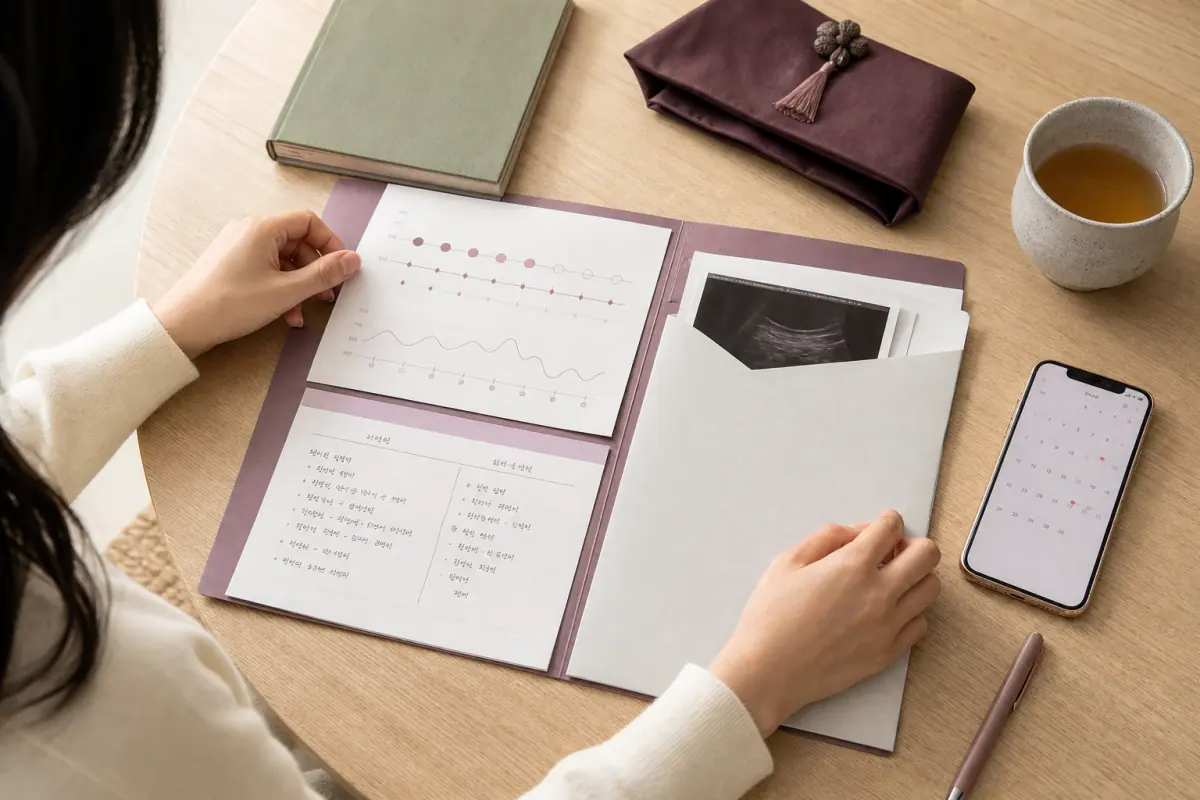
Organizing test results and treatment history chronologically helps you identify specific questions to ask during your next appointment.
Whether chills and a feeling of coldness in the body are present depends on whether there is a fever
Feeling a chill in the joints even without a fever when exposed to a cold breeze, or feeling the body cool down after sweating, can be seen as a slow recovery of postpartum Qi, blood, and Yang energy. If the coldness does not resolve even with warmth and is accompanied by a drop in digestion and energy, postpartum herbal medicine has a clear role to play.
On the other hand, if high fever, foul-smelling lochia, or red, painful breasts occur, we do not simply categorize it as postpartum wind (Sanhu-pung) but first check for infection. While not delaying the treatment of the cause, we integrate the role of Korean medicine treatment during the recovery period.
Even during breastfeeding, postpartum herbal medicine is prescribed to match appetite, digestion, and current medications
There is no need to avoid all herbal medicines simply because you are breastfeeding, nor should you think that postpartum herbal medicine is the same for everyone. We customize the medicinal ingredients and dosage plan by checking the breastfeeding status, the baby's age, current medications, and the mother's appetite and bowel movements.
If you have a loss of appetite and feel bloated, forcing an increase in tonic medicine can be burdensome. We change the sequence according to the postpartum progress, such as restoring digestion first before reinforcing Qi and blood, or using prescriptions that aid circulation during periods of significant pain and chills.
The goal of recovery is to have energy remaining in your own body even after caring for your child
We do not look only at the temporary feeling of the body warming up after taking postpartum herbal medicine. We monitor whether dizziness and chills upon waking in the morning decrease, whether wrist and back pain after holding the baby is reduced, and whether energy actually returns after meals and sleep.
Urgent changes such as chest pain, difficulty breathing, swelling in one leg, severe headache with vision changes, or excessive bleeding must be evaluated immediately. Other postpartum fatigue and pain should not be treated as a period to be endured; instead, we increase the speed of recovery by combining postpartum herbal medicine, acupuncture, and adjustments to daily movements.
In the early stages, chills and appetite may improve first, while wrist and pelvic pain may linger longer due to caregiving movements. If you continue acupuncture and posture adjustments without abruptly increasing activity levels once energy returns, you can maintain the recovery already achieved while reducing the scope of pain. The true standard of recovery is whether you have the capacity to continue with the next activity after caregiving.
Postpartum herbal medicine restores Qi, blood, chills, and fatigue depleted by childbirth, while acupuncture addresses wrist, back, and pelvic pain within the context of caregiving movements. Baekrokdam coordinates the sequence of the mother's return to daily life by reflecting breastfeeding and digestive status.
Evidence and Update Information
This content was organized by Korean medicine doctor Choi Yeon-seung and updated on 2026-08-24.
- ACOG: Postpartum Warning Signs
- ACOG: Optimizing Postpartum Care
- ACOG: Having a Baby: Postpartum CarePostpartum visits and management of recovery, emotions, and breastfeeding
- ACOG: Breastfeeding ChallengesEvaluation of breast engorgement and breastfeeding issues, and precautions against excessive pumping
- ACOG: Abnormal Uterine BleedingTiming, amount, cycle, and evaluation criteria for abnormal bleeding
- ACOG: Amenorrhea: Absence of PeriodsDefinition of amenorrhea and evaluation of pregnancy, endocrine, and structural causes