
Premature menopause: Read in order of your curiosity
Understanding the diagnosis and test results
Premature menopause: Managing hormone evaluation, bone health, and remaining symptoms together
Before age 40 Menstrual intervalIf periods become irregular or stop for a while, accompanied by hot flashes, night sweats, vaginal dryness, or insomnia, primary ovarian insufficiency is checked. Since menstruation may return, it is not the same as complete menopause; other causes such as pregnancy, thyroid, or prolactin issues must also be tested. Once diagnosed, priority is given to hormones, bone health, and pregnancy plans. For chronic remaining hot flashes, sleep issues, and fatigue, Baekrokdam herbal medicine treatment can be consulted in coordination with existing treatments.
Hormone and bone health are managed as long-term plans, while flushing, sleep, and dryness are managed according to current symptoms.
For premature menopause, ovarian function, bone and cardiovascular health, and necessary hormone therapy plans are examined first. Hot flashes, sleep, digestion, and loss of energy are addressed within that plan.
we examine recurring symptoms and the body's recovery
While continuing a long-term hormone management plan, herbal medicine treatment addresses combinations of flushing, nighttime awakening, vaginal dryness, feeling cold, loss of energy, digestion, and sleep as individual goals.
Test, medication, and procedure schedules are shared as they are
While maintaining hormone therapy, remaining flushing, sleep issues, dryness, and loss of energy can be supported with Korean medicine treatment.
Fertility options, such as age, possibility of natural pregnancy, need for contraception, or egg donation, are established alongside a long-term hormone plan.
Cases requiring an OB/GYN evaluationCheck when applicable
The possibility of pregnancy and other causes of amenorrhea are checked first; in primary ovarian insufficiency, hormone therapy and bone/cardiovascular management are central, provided there are no contraindications.
- Cases where there is a possibility of pregnancy accompanied by sudden pelvic pain or vaginal bleeding
- Cases of excessive bleeding requiring pad changes every 1 to 2 hours or feelings of fainting
- Cases of severe depression or thoughts of self-harm
- Cases where amenorrhea before age 40 lasts for several months or symptoms worsen rapidly
Surgery, procedure, or further evaluationPremature menopause itself is not an indication for surgery; such treatment is only considered when other abnormalities of the uterus or ovaries are present.
To what extent to integrate Korean medicine treatment
Premature Menopause: Distinguishing the Roles of Two Treatments
If menstruation stopped at an early age, an evaluation of pregnancy possibility, ovarian function, and bone and cardiovascular health comes first. While respecting necessary hormone therapy, we simultaneously check for hot flashes, sleep issues, energy levels, and digestive discomfort.
Observing how symptoms have disrupted your daily life
We record when amenorrhea began and changes in flushing, sleep, and dryness, and we review repeated FSH and estradiol tests, as well as hormone therapy and bone health plans.
Categorizing symptom combinations even within the same diagnosis
We determine the priority of the prescription by selecting clues from the following patterns based on actual medical interviews and examinations: Yin deficiency with internal heat/flushing type, Qi and blood deficiency/exhaustion type, Kidney Yang deficiency/cold sensation type, or Liver Qi stagnation/tension loss type.
Re-evaluating through the next cycle and lifestyle changes
We monitor flushing, nighttime awakening, dryness, sexual activity, energy levels, the continuation of hormone medication, and the schedule for bone health and fertility consultations.
Treatment goalWithout promising the recovery of ovarian function, we maintain treatment to protect long-term health while reducing the burden of flushing, sleep issues, dryness, and low energy.
Consult for a long-term plan for premature ovarian insufficiency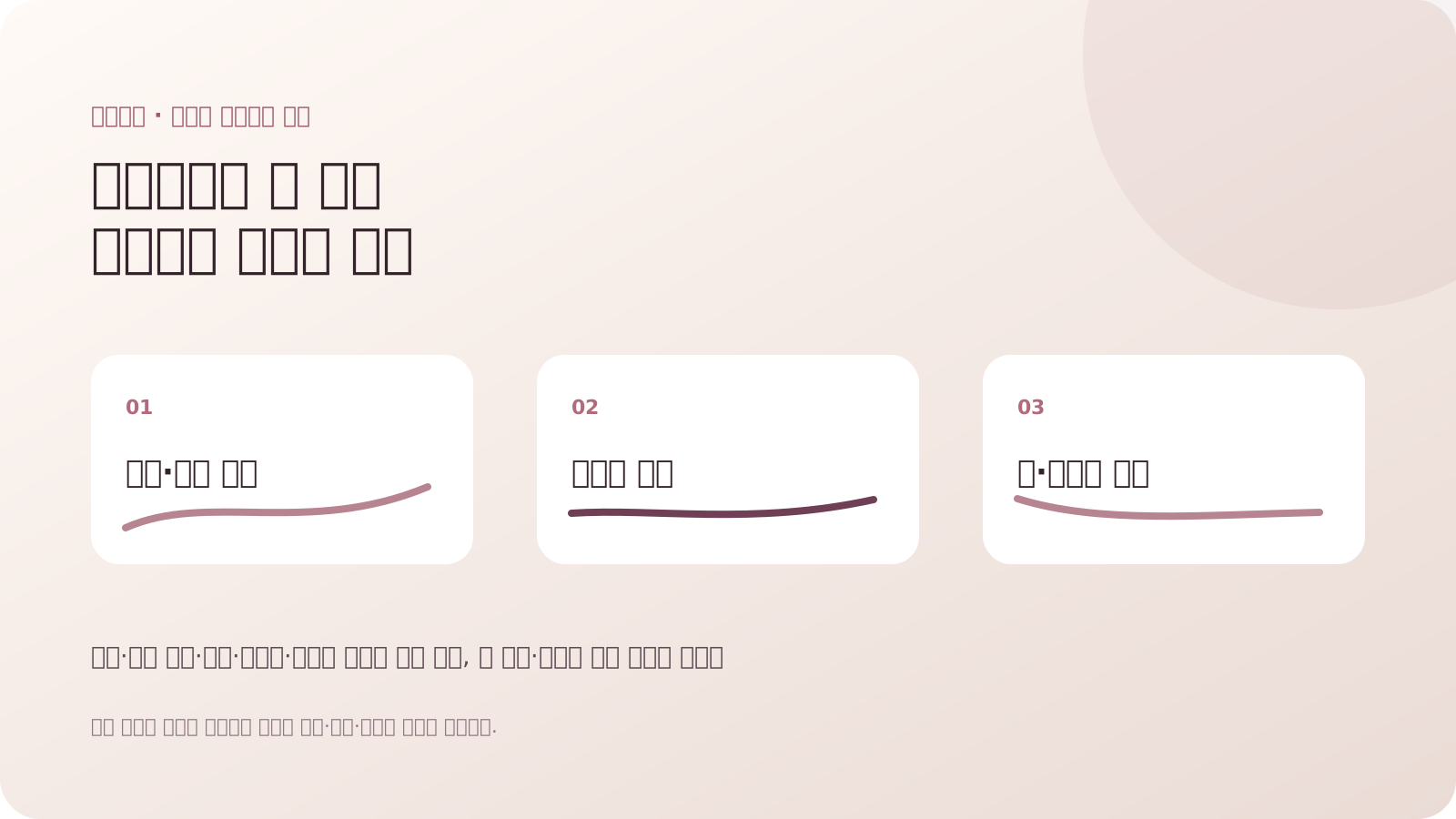
We monitor flushing, nighttime awakening, dryness, sexual activity, energy levels, the continuation of hormone medication, and the schedule for bone health and fertility consultations.
Photos show scenes of how cycles, pain, breastfeeding, and life transitions have affected daily life without revealing faces or identities. Disease tracking charts and conceptual diagrams are simplifications of differential diagnosis, examination, and progress records; they do not represent an individual's diagnosis or pregnancy/treatment results.Understanding Tests and Diagnosis
Premature Menopause: Three Things to Know First
When Interpreting Test Results
Irregular menstruation before age 40, amenorrheastarts with checking for pregnancy and other hormonal causes.
When Identifying Causes and Risk Factors
In addition to hot flashes, we also check for vaginal dryness, sleep, mood changes, and bone health.
When Reviewing Lifestyle Changes
Korean herbal medicine treatment is not a promise to restore ovarian reserve, but a consultation to help recover from remaining discomforts.
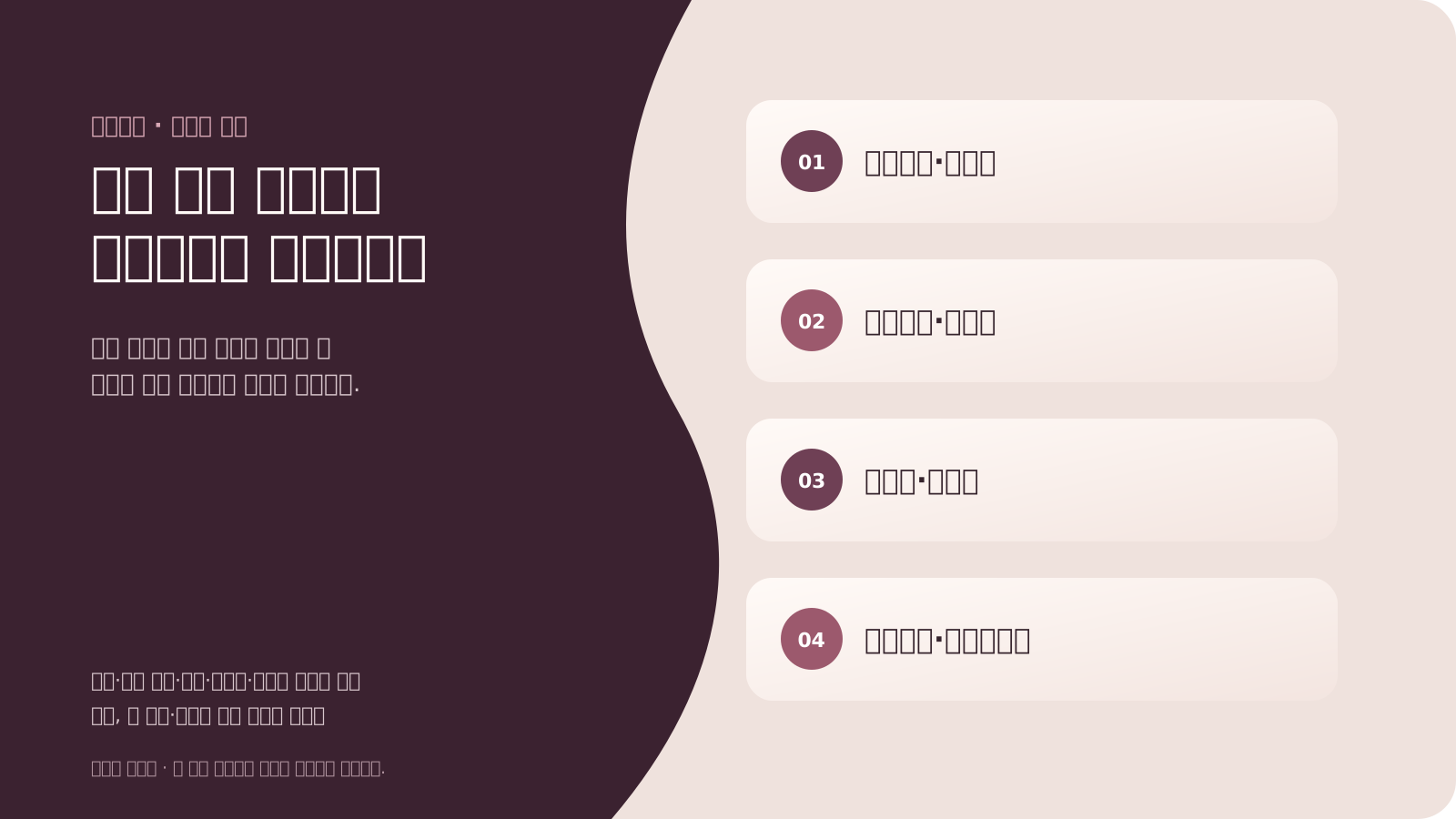
Without replacing hormone therapy, we categorize the remaining symptom combinations among Yin deficiency heat, Qi and blood deficiency, Yang deficiency cold sensation, and Liver stagnation.
Conceptual reference · ACOG: Hormone Therapy for Menopause · ACOG: Hormone Therapy in Primary Ovarian InsufficiencyDefining the role of concurrent treatment
Integrating tests, procedures, and Korean medicine treatment within a single plan
Scheduled tests and procedure dates are shared
We do not arbitrarily change the current plan and instead record symptoms and recovery status before and after treatment.
Setting specific goals for Korean medicine treatment
Hormone therapy and long-term management of bone and cardiovascular health are central. Along with that plan, Korean herbal medicine treatment determines the goal and prescription direction according to the combination of flushing, nighttime awakening, dryness, and decreased energy.
Review all medications in a single list
Please provide a complete list of prescription drugs, over-the-counter drugs, Korean herbal medicine, and supplements to adjust the timing and feasibility of concurrent use.
What to prepare before your visit
Please organize these three things before your visit
Onset of amenorrhea and evaluation of FSH, estradiol, thyroid, genetics, and autoimmunity
Note the test dates and results together to track recent changes.
Types, dosage, and contraindications of hormone therapy, and bone density and bone health plans
Prepare test results and a list of medications used so that the status before and after treatment can be compared.
Fertility goals and changes in flushing, sleep, dryness, and mood
Inform the medical staff of all prescription drugs, over-the-counter drugs, Korean herbal medicine, and supplements without omission.
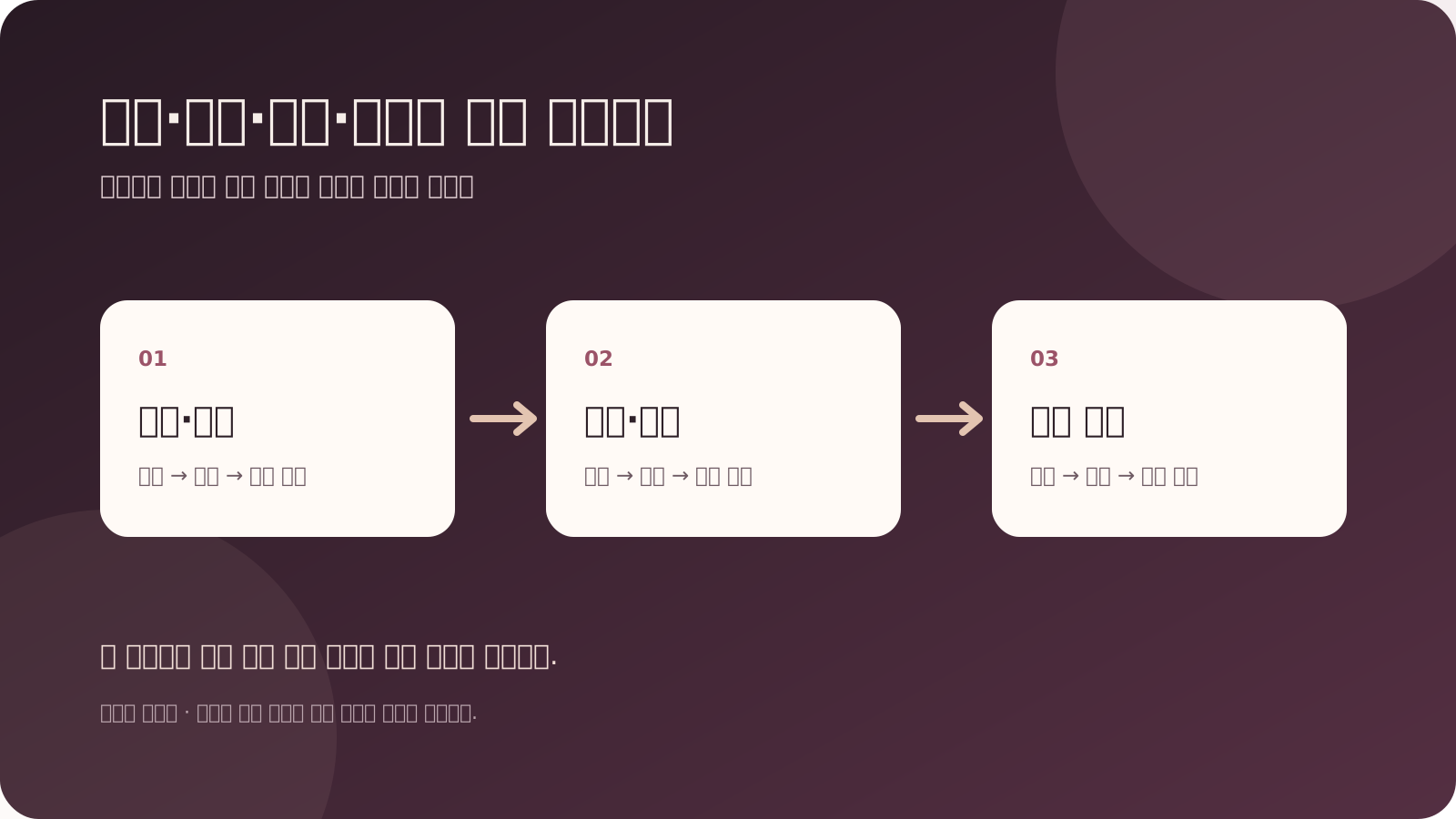
Symptoms are categorized separately rather than grouped as a single symptom to ensure safety and guide treatment selection.
Conceptual reference · ACOG: Hormone Therapy for Menopause · ACOG: Hormone Therapy in Primary Ovarian InsufficiencyChanges to monitor before and after treatment
Check again using the same categories to determine if the treatment is helpful
We monitor flushing, nighttime awakening, dryness, sexual activity, energy levels, the continuation of hormone medication, and the schedule for bone health and fertility consultations.
Flushing and nighttime awakenings
Establish a baseline by confirming your current status during the first consultation.
Hormone Medication
Record this along with the dates when treatment or medication changed.
Bone and Fertility Schedule
Look for consistent changes over several days rather than a single good day.

Record not only the start date but also the amount of bleeding, pain, medication, and impact on daily life using the same criteria.
When continuing the two treatments together
Premature menopause: four symptom combinations for Korean herbal medicine prescriptions
While continuing hormone therapy and bone/cardiovascular management, Korean herbal medicine treatment is directed based on the remaining combination of symptoms among Yin deficiency heat, Qi and blood deficiency, Yang deficiency cold sensation, and Liver Qi stagnation.
Pattern identification (Byun-jeung) is not about renaming a gynecological diagnosis. For each condition, we determine whether to center the care on Korean medicine treatment, combine it with other treatments, or prioritize treating the underlying cause first. Then, we reflect items that actually change together, such as cycle, pain, cold/heat sensations, digestion, sleep, and energy levels, into the prescription.
When nighttime heat sensations, sweating, dryness, and waking up are prominent
- Changes observed in cycles and pain
- Frequency of hot flashes, nighttime awakenings, and vaginal dryness are examined.
- Concurrent changes observed in the body
- Response to hormone therapy, contraindications, and medication are confirmed.
- Prescription Priority
- While maintaining the hormone plan, heat sensations, dryness, and sleep burdens are adjusted.
When fatigue, dizziness, and decreased concentration are significant along with amenorrhea
- Changes observed in cycles and pain
- Fatigue after activity, pallor, intake, and sleep are examined.
- Concurrent changes observed in the body
- Anemia, thyroid function, depression, and medication side effects are confirmed.
- Prescription Priority
- Supports the recovery of Qi, blood, and daily functioning.
When cold sensitivity, lower back pain, and decreased energy are more prominent than hot flashes
- Changes observed in cycles and pain
- Cold sensations, lower back pain, edema, and nocturia are examined.
- Concurrent changes observed in the body
- Causes related to thyroid, urinary tract, and bone health are confirmed.
- Prescription Priority
- While maintaining standard treatment, cold sensations and energy burdens are adjusted.
When anxiety, a sense of loss, sleep disturbances, or digestive issues occur after diagnosis
- Changes observed in cycles and pain
- We evaluate mood, heart rate, tension in the solar plexus, and avoidance behaviors.
- Concurrent changes observed in the body
- We identify the need for fertility counseling and mental health support.
- Prescription Priority
- We clarify information and schedules while supporting the recovery of sleep and tension levels.
Order of Prescription Adjustment
- Check for urgent medical evaluation and current treatments
Check for emergency symptoms and the timing for re-evaluation; do not arbitrarily change prescription or procedure plans.
- Select the combination of symptoms that actually recur
Rather than using the four categories as a self-diagnosis checklist, we retain only the relevant clues from medical interviews and existing tests.
- Determine the next prescription based on the same items
We re-evaluate changes in hot flashes, nighttime awakenings, hormone medication, bone health, and fertility schedules to determine whether to maintain, adjust, or discontinue treatment.
We review pregnancy-related evaluations, tests or surgeries for structural diseases, antibacterial treatment for infections, and schedules for infertility procedures and menopause treatment to divide and coordinate the scope of Korean herbal medicine treatment. Treatment goals are tracked by specifically defining changes in pain, bleeding, sleep, energy levels, and daily functioning.
Consult on long-term plans for premature ovarian insufficiencyWomen's Health Glossary
Additional information to know regarding premature menopause
You can check a brief definition before proceeding to a detailed explanation.Frequently Asked Questions
Frequently asked questions about premature menopause
If I haven't had a period for a while, is it premature menopause?
It cannot be confirmed by symptoms alone, as there are other causes such as pregnancy, thyroid issues, prolactin levels, weight, and the effects of exercise. If you are under 40, please consult an OB/GYN for hormone testing.
Are premature menopause and primary ovarian insufficiency the same thing?
While they are often used interchangeably in daily conversation, it is more accurate to distinguish primary ovarian insufficiency from menopause, where menstruation has completely ended, because ovarian function can appear intermittently in the former.
Can I receive Baekrokdam herbal medicine treatment while undergoing hormone therapy?
After reviewing your current hormone medication, individual risk factors, and pregnancy plans, we will consult on the possibility of concurrent treatment, focusing on remaining discomforts such as heat sensations, sleep issues, and fatigue.
Can all causes of premature menopause be found through testing?
No. In many cases of primary ovarian insufficiency, the cause cannot be found even after thorough evaluation. Long-term health management is still necessary even if the cause is unknown.
If my mother experienced early menopause, will I also have premature menopause?
Family history is a risk indicator, but it does not mean you will necessarily follow the same course. If you notice changes in your menstruation, please check your ovarian function at an OB/GYN.
Can I receive Baekrokdam herbal medicine treatment even if the cause is unknown?
First, we establish a plan for diagnosis, hormones, and bone health. Afterward, if heat sensations, insomnia, or fatigue recur, we will consult after reviewing your medications and pregnancy plans.
Do I need to fast for premature menopause tests?
It depends on the type of test and the schedule, so please follow the instructions of the facility where you made your appointment. Be sure to inform them of the date of your last period and whether you are taking any medications or hormone therapy.
When can herbal medicine treatment be considered for premature menopause?
It is possible. After sharing your testing, medication, procedure schedules, and long-term hormone management plan, we will set a primary goal for Korean medicine treatment among a combination of hot flashes, nighttime awakenings, vaginal dryness, cold sensations, decreased energy, digestion, and sleep.
What should I record before a consultation for premature menopause?
It is helpful to organize the following information in chronological order: the onset of amenorrhea; FSH, estradiol, thyroid, and genetic/autoimmune evaluations; types of hormone therapy, dosage, and contraindications; bone density and bone health plans; fertility goals; and changes in flushing, sleep, dryness, and mood. Please prepare your records regarding hormone tests, treatments, bone health plans, and flushing, sleep, and dryness.
Can I use Korean herbal medicine alongside premature menopause treatment?
Do not stop your current prescriptions arbitrarily, and please inform us of all medications and supplements you are taking. Without promising the recovery of ovarian function, we aim to reduce the burden of flushing, sleep issues, dryness, and fatigue while maintaining treatment that protects long-term health.
Evidence and Update Information
This content was compiled by Korean medicine doctor Choi Yeon-seung based on the official professional materials and disease-specific clinical data below, and was updated on 2026-08-24.
- Endocrine Society: Primary Ovarian InsufficiencySymptoms of diminished ovarian reserve before age 40 and long-term health
- Mayo Clinic: Primary ovarian insufficiency: Diagnosis and treatmentOfficial guide distinguishing the roles of testing and hormone therapy
- ACOG: Hormone Therapy for MenopauseHormone therapy by menopause symptom and consideration of personal risk
- ACOG: Hormone Therapy in Primary Ovarian InsufficiencyHormone therapy and long-term health management for POI
- ACOG: Amenorrhea: Absence of PeriodsDefinition of amenorrhea and evaluation of pregnancy, endocrine, and structural causes
- ACOG: Abnormal Uterine BleedingTiming, amount, cycle, and evaluation criteria for abnormal bleeding
- ACOG: Having a Baby: Postpartum CarePostpartum visits and management of recovery, emotions, and breastfeeding