
Breast engorgement: Read in order of your concerns
Understanding the diagnosis and test results
Distinguishing between bilateral congestion and unilateral redness, heat, and body aches
Breast engorgementThis occurs in the early stages of breastfeeding when milk supply increases or the interval between feeding and pumping widens, causing both breasts to feel tight, hard, and painful, and the nipples to flatten, making it difficult for the baby to latch. If heat and red pain are concentrated on one side, accompanied by fever, chills, and body aches, or if a painful lump remains, do not dismiss it as simple congestion; seek an evaluation from an OB-GYN or breast surgeon on the same day.
Manage congestion pain and maternal recovery while verifying breastfeeding methods and the presence of inflammation.
For breast engorgement, we first check breastfeeding posture, latching, whether excessive pumping is occurring, and symptoms of mastitis. We also monitor lochia, anemia, sleep, and energy levels after childbirth to support the mother's recovery.
we examine recurring symptoms and the body's recovery
Without irritating the breasts through excessive pumping or strong massage, we check for bilateral or unilateral fullness, heat, pain, changes after breastfeeding, and the burden on the mother's sleep and energy.
Test, medication, and procedure schedules are shared as they are
While maintaining necessary antibiotics and breastfeeding guidelines, Korean medicine treatment can support the recovery of the mother's sleep and energy.
We consider the intention to continue breastfeeding, the baby's intake and weight, and the mother's infection and medication safety.
Cases requiring an OB/GYN evaluationCheck when applicable
High fever, chills, rapidly spreading redness, severe systemic symptoms, or suspected abscesses require a medical evaluation first. Excessive emptying may worsen oversupply and inflammation.
- Cases where fever, chills, severe body aches, and red, hot pain in one breast occur together
- Cases where the area of redness and pain spreads rapidly or the general systemic condition deteriorates significantly
- Cases where a painful lump remains or skin changes increase even after treatment
- Dizziness, decreased consciousness, difficulty breathing, rapid pulse, or systemic deterioration to the point of being unable to drink water
Surgery, procedure, or further evaluationIf an abscess is suspected or if there is no response to treatment, imaging tests and consultations for procedures or surgery, such as drainage, may be necessary.
To what extent to integrate Korean medicine treatment
Breast engorgement: Distinguishing the roles of the two treatments
For breast engorgement, we look at breastfeeding posture, latching, whether excessive pumping is occurring, and Mastitis Symptoms are checked first. While continuing necessary breastfeeding counseling and antibiotic treatment, we also monitor lochia, anemia, and the mother's sleep and energy recovery.
Observing how symptoms have disrupted your daily life
Record the time and side (both/one) of breastfeeding or pumping, redness, body temperature, pain, the baby's latch, urine output, weight, and any medications used.
Categorizing symptom combinations even within the same diagnosis
Prescription priorities are determined by selecting clues from the following that match the actual medical interview and examination: physiological congestion type, localized congestion, pain type, inflammation, mastitis-priority type, deficiency of qi and blood, or breastfeeding exhaustion type.
Re-evaluating through the next cycle and lifestyle changes
We monitor body temperature, redness, pain, the number of comfortable feedings, reduction of excessive pumping, the baby's intake and weight, and the mother's sleep.
Treatment goalWithout promising specific breast milk volumes or replacing antibiotics, we ensure mastitis risks are not overlooked while supporting comfortable breastfeeding, pumping, and maternal recovery.
Consult using breast congestion and breastfeeding records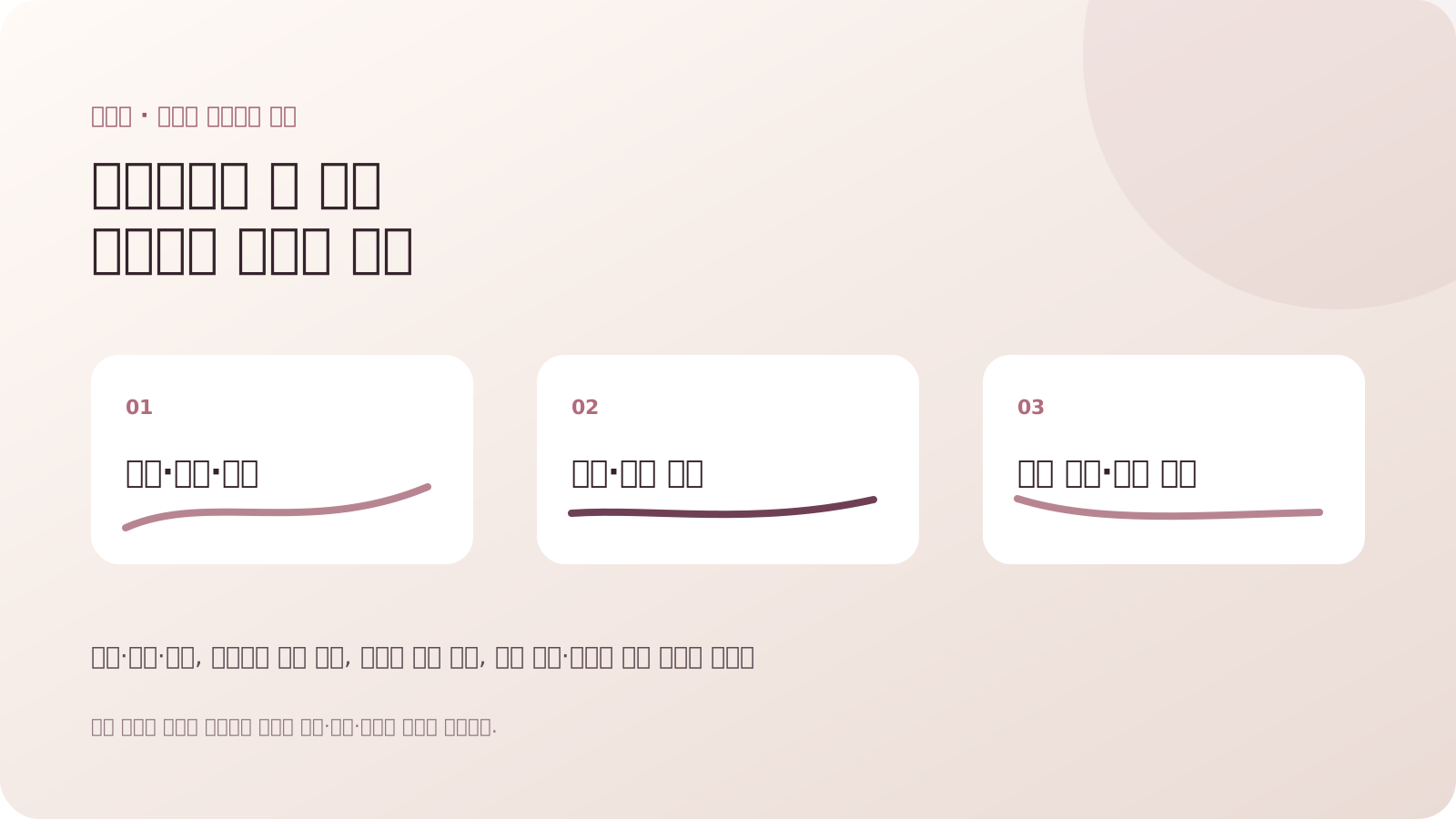
We monitor body temperature, redness, pain, the number of comfortable feedings, reduction of excessive pumping, the baby's intake and weight, and the mother's sleep.
Photos show scenes of how cycles, pain, breastfeeding, and life transitions have affected daily life without revealing faces or identities. Disease tracking charts and conceptual diagrams are simplifications of differential diagnosis, examination, and progress records; they do not represent an individual's diagnosis or pregnancy/treatment results.Understanding Tests and Diagnosis
Breast engorgement: Three things to know first
When Interpreting Test Results
We distinguish between early congestion, where both sides are similarly tense, and symptoms where inflammation is suspected to be concentrated on one side.
When Identifying Causes and Risk Factors
Recording changes after breastfeeding or pumping, as well as body temperature and the area of redness, helps in subsequent assessments.
When Reviewing Lifestyle Changes
For fever, rapid worsening, or painful lumps, standard medical care takes priority over herbal medicine treatment.
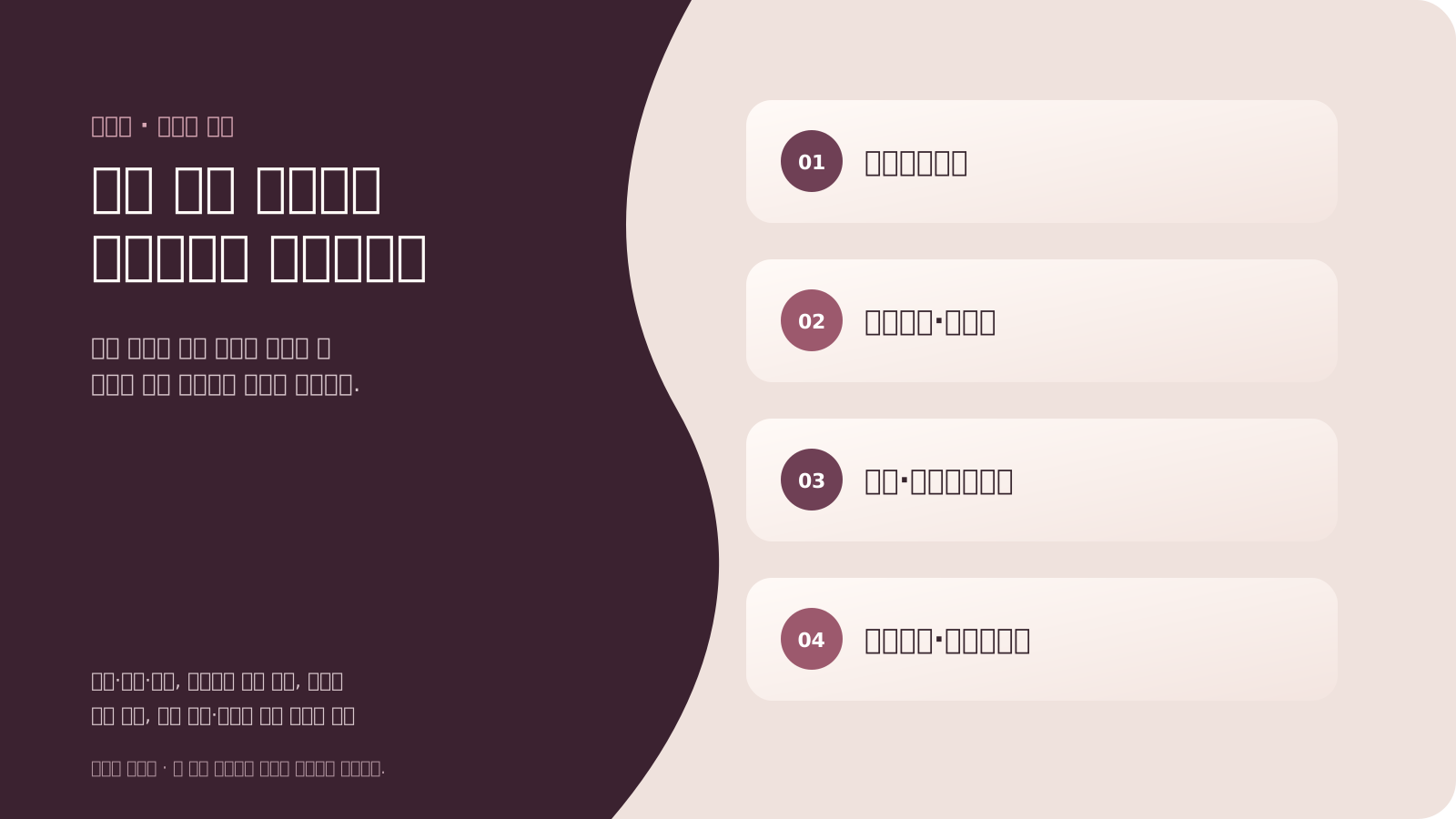
While maintaining breastfeeding counseling and necessary antibiotic or analgesic/anti-inflammatory treatment, we selectively assess the recovery burden among congestion, heat sensation, decline in qi and blood, and tension.
Conceptual reference · ACOG: Having a Baby: Postpartum Care · ACOG: Breastfeeding ChallengesDefining the role of concurrent treatment
Integrating tests, procedures, and Korean medicine treatment within a single plan
Scheduled tests and procedure dates are shared
We do not arbitrarily change the current plan and instead record symptoms and recovery status before and after treatment.
Setting specific goals for Korean medicine treatment
Breastfeeding counseling and necessary analgesic/anti-inflammatory or antibiotic treatment come first. We provide recovery support only if breastfeeding/pumping discomfort and the mother's sleep or energy decline persist after congestion and inflammation have been evaluated.
Review all medications in a single list
Please provide a complete list of prescription drugs, over-the-counter drugs, Korean herbal medicine, and supplements to adjust the timing and feasibility of concurrent use.
What to prepare before your visit
Please organize these three things before your visit
Date of birth, breastfeeding/pumping time, symptoms on both/one side, body temperature, and redness
Note the test dates and results together to track recent changes.
Baby's latch, urine output, weight, and breastfeeding counseling details
Prepare test results and a list of medications used so that the status before and after treatment can be compared.
Painkillers, antibiotics, herbal medicine, supplements, allergies, and breastfeeding plan
Inform the medical staff of all prescription drugs, over-the-counter drugs, Korean herbal medicine, and supplements without omission.
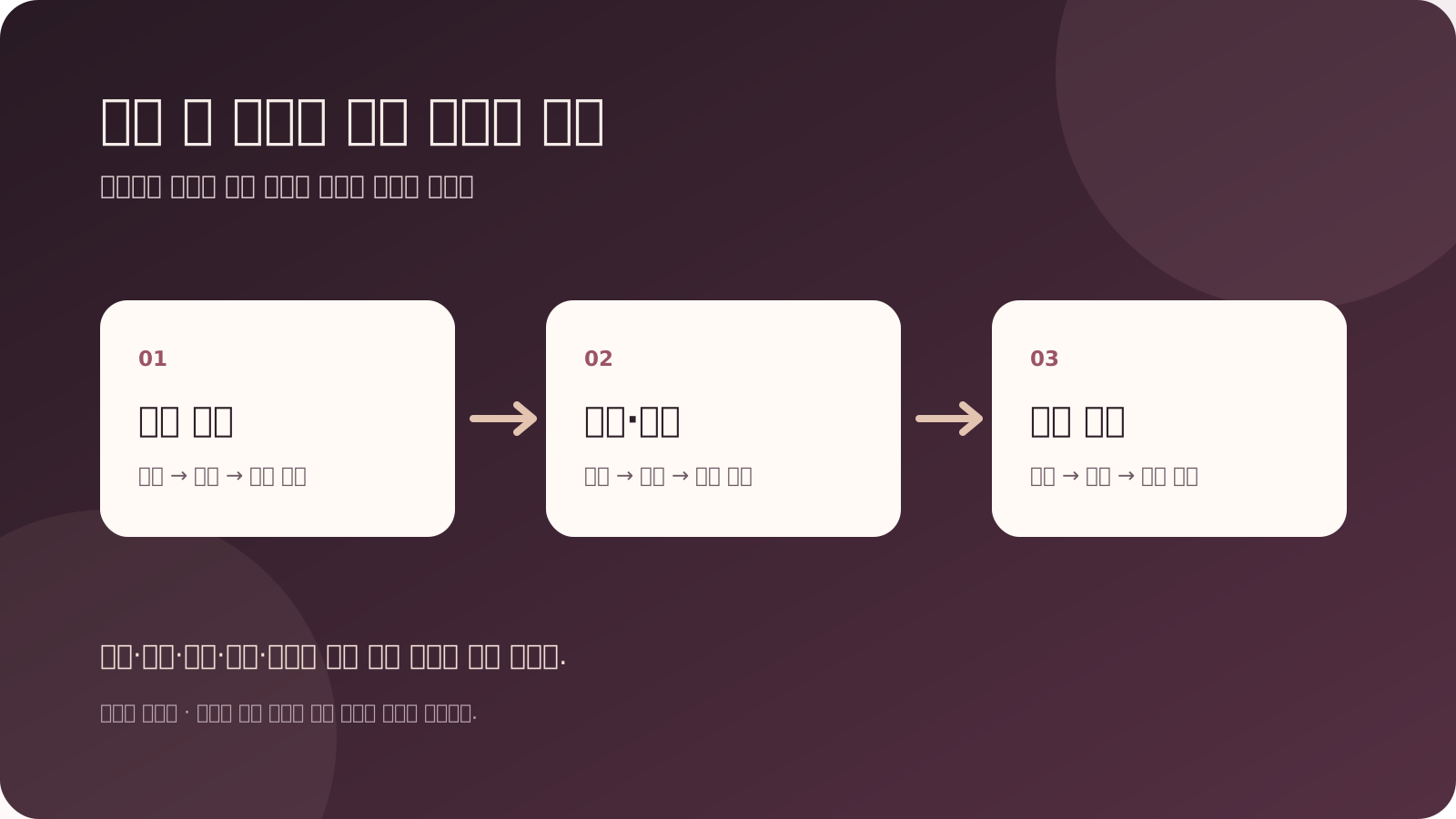
Bleeding, body temperature, blood pressure, breastfeeding, and pain are checked alongside actual caregiving functions.
Conceptual reference · ACOG: Having a Baby: Postpartum Care · ACOG: Breastfeeding ChallengesChanges to monitor before and after treatment
Check again using the same categories to determine if the treatment is helpful
We monitor body temperature, redness, pain, the number of comfortable feedings, reduction of excessive pumping, the baby's intake and weight, and the mother's sleep.
Body temperature, redness, and pain
Establish a baseline by confirming your current status during the first consultation.
Number of breastfeeding/pumping sessions
Record this along with the dates when treatment or medication changed.
Baby's intake and mother's sleep
Look for consistent changes over several days rather than a single good day.

Organizing test results and treatment history chronologically helps you identify specific questions to ask during your next appointment.
When continuing the two treatments together
Breast engorgement: Four symptom combinations for herbal medicine prescriptions
For breast engorgement, breastfeeding consultation and necessary antibiotics or anti-inflammatory pain relief treatment are prioritized first. lochia· We check the mother's pain and energy levels, observing whether anemia and lack of sleep are slowing recovery.
Pattern identification (Byun-jeung) is not about renaming a gynecological diagnosis. For each condition, we determine whether to center the care on Korean medicine treatment, combine it with other treatments, or prioritize treating the underlying cause first. Then, we reflect items that actually change together, such as cycle, pain, cold/heat sensations, digestion, sleep, and energy levels, into the prescription.
When both sides are tight in the early postpartum period and the baby has difficulty latching
- Changes observed in cycles and pain
- We check bilateral distension, edema around the nipples, and the timing of breastfeeding.
- Concurrent changes observed in the body
- We check the baby's latch, weight, urine output, and whether there is excessive pumping.
- Prescription Priority
- With breastfeeding consultation as the focus, we prioritize minimal expression for symptom relief.
When one area is hard and tender, but there is no systemic fever
- Changes observed in cycles and pain
- We check localized tenderness, redness, and changes after breastfeeding.
- Concurrent changes observed in the body
- We check for progression of inflammation, oversupply, pressure, and causes related to breast surgery.
- Prescription Priority
- Avoid excessive massage or emptying to reduce the burden of inflammation.
When there is fever, chills, wedge-shaped redness, and body aches
- Changes observed in cycles and pain
- We check body temperature, the extent of redness, and systemic symptoms.
- Concurrent changes observed in the body
- We evaluate for bacterial mastitis, abscesses, and the need for antibiotics.
- Prescription Priority
- We prioritize same-day medical evaluation and recommended treatment over herbal medicine.
When dizziness and loss of energy are significant due to lack of breastfeeding and sleep
- Changes observed in cycles and pain
- We monitor recovery after intake, sleep, bleeding, and activity.
- Concurrent changes observed in the body
- We check for anemia, thyroid issues, postpartum depression, and the amount of milk produced.
- Prescription Priority
- We respect your breastfeeding plan and support the recovery of Qi, Blood, and sleep.
Order of Prescription Adjustment
- Check for urgent medical evaluation and current treatments
Check for emergency symptoms and the timing for re-evaluation; do not arbitrarily change prescription or procedure plans.
- Select the combination of symptoms that actually recur
Rather than using the four categories as a self-diagnosis checklist, we retain only the relevant clues from medical interviews and existing tests.
- Determine the next prescription based on the same items
We re-examine changes in body temperature, redness, pain, breastfeeding/pumping frequency, baby's intake, and mother's sleep to decide whether to maintain, adjust, or discontinue treatment.
We review pregnancy-related evaluations, tests or surgeries for structural diseases, antibacterial treatment for infections, and schedules for infertility procedures and menopause treatment to divide and coordinate the scope of Korean herbal medicine treatment. Treatment goals are tracked by specifically defining changes in pain, bleeding, sleep, energy levels, and daily functioning.
Consult using breast congestion and breastfeeding recordsWomen's Health Glossary
Additional Information Regarding Breast Engorgement
You can check a brief definition before proceeding to a detailed explanation.Frequently Asked Questions
Frequently Asked Questions About Breast Engorgement
If both breasts are hard after childbirth, is it mastitis in both?
No. If both sides are similarly tense in the early stages of breastfeeding, it may be congestion. We evaluate for mastitis if one side has red, hot pain accompanied by fever and chills.
Can I continue breastfeeding if mastitis is suspected?
In most cases, breastfeeding or expressing milk can continue, but this may vary depending on the condition of the mother and baby, as well as medications. Please follow the instructions of your medical staff and breastfeeding specialists.
Is the hardness in both breasts after childbirth caused by an infection?
If both sides are similarly tense around 3 to 5 days postpartum without fever or erythema, it may be physiological congestion. We evaluate for mastitis if one side shows erythema and heat accompanied by fever and chills.
Can frequent pumping eliminate the cause of breast engorgement?
Additional pumping to completely empty the breast every time may further stimulate supply. Please consult with medical staff or breastfeeding specialists for a personalized plan, such as checking the baby's latch or expressing just enough to relieve discomfort.
Should I stop breastfeeding immediately if mastitis is suspected?
In most cases, breastfeeding or necessary milk expression can continue, but this may vary depending on the condition of the mother and baby, as well as medications. Do not stop on your own; follow the instructions of your medical institution.
When can herbal medicine treatment be considered for breast engorgement?
It is possible. Please share your schedule for tests, medications, and procedures, and first determine what will be addressed through Korean medicine treatment. We check for bilateral or unilateral swelling, heat, and pain, as well as changes after breastfeeding and the mother's sleep and energy levels, without overstimulating the breasts through excessive pumping or aggressive massage.
What should I record before a consultation for breast engorgement?
It is helpful to organize the following information in chronological order: date of birth, breastfeeding/pumping times, whether symptoms are on both or one side, body temperature, redness, baby's latching, urine, weight, and details of breastfeeding consultations, as well as any painkillers, antibiotics, Korean herbal medicine, supplements, allergies, and breastfeeding plans. Please prepare photos of body temperature and redness, breastfeeding/pumping times, and information on the baby's latching, urine, and weight.
Can I use Korean herbal medicine along with treatment for breast engorgement?
Do not stop your current prescriptions arbitrarily, and please inform us of all medications and supplements you are taking. This helps support comfortable breastfeeding, pumping, and maternal recovery without promising a specific milk volume, replacing antibiotics, or overlooking the risk of mastitis.
Evidence and Update Information
This content was compiled by Korean medicine doctor Choi Yeon-seung based on the official professional materials and disease-specific clinical data below, and was updated on 2026-08-24.
- NHS: Breast pain and breastfeedingBasis for determining the clinical boundary between the hardness, tightness, and pain of breast engorgement and latching difficulties, and blocked milk ducts or mastitis during breastfeeding
- Cambridge University Hospitals NHS: Breast, chest and nipple concernsBasis for distinguishing between engorgement occurring after an increase in milk production or changes in breastfeeding intervals, and mastitis accompanied by unilateral heat, redness, and systemic body aches
- ACOG: Breastfeeding ChallengesEvaluation of breast engorgement and breastfeeding issues, and precautions against excessive pumping
- Academy of Breastfeeding Medicine: Clinical Protocol #36: The Mastitis SpectrumThe spectrum of engorgement, inflammatory/bacterial mastitis, and abscesses; basis for the principles of continuing breastfeeding while avoiding excessive milk removal and deep massage
- ACOG: Having a Baby: Postpartum CarePostpartum visits and management of recovery, emotions, and breastfeeding
- ACOG: Abnormal Uterine BleedingTiming, amount, cycle, and evaluation criteria for abnormal bleeding
- ACOG: Amenorrhea: Absence of PeriodsDefinition of amenorrhea and evaluation of pregnancy, endocrine, and structural causes
- ACOG: Hormone Therapy for MenopauseHormone therapy by menopause symptom and consideration of personal risk