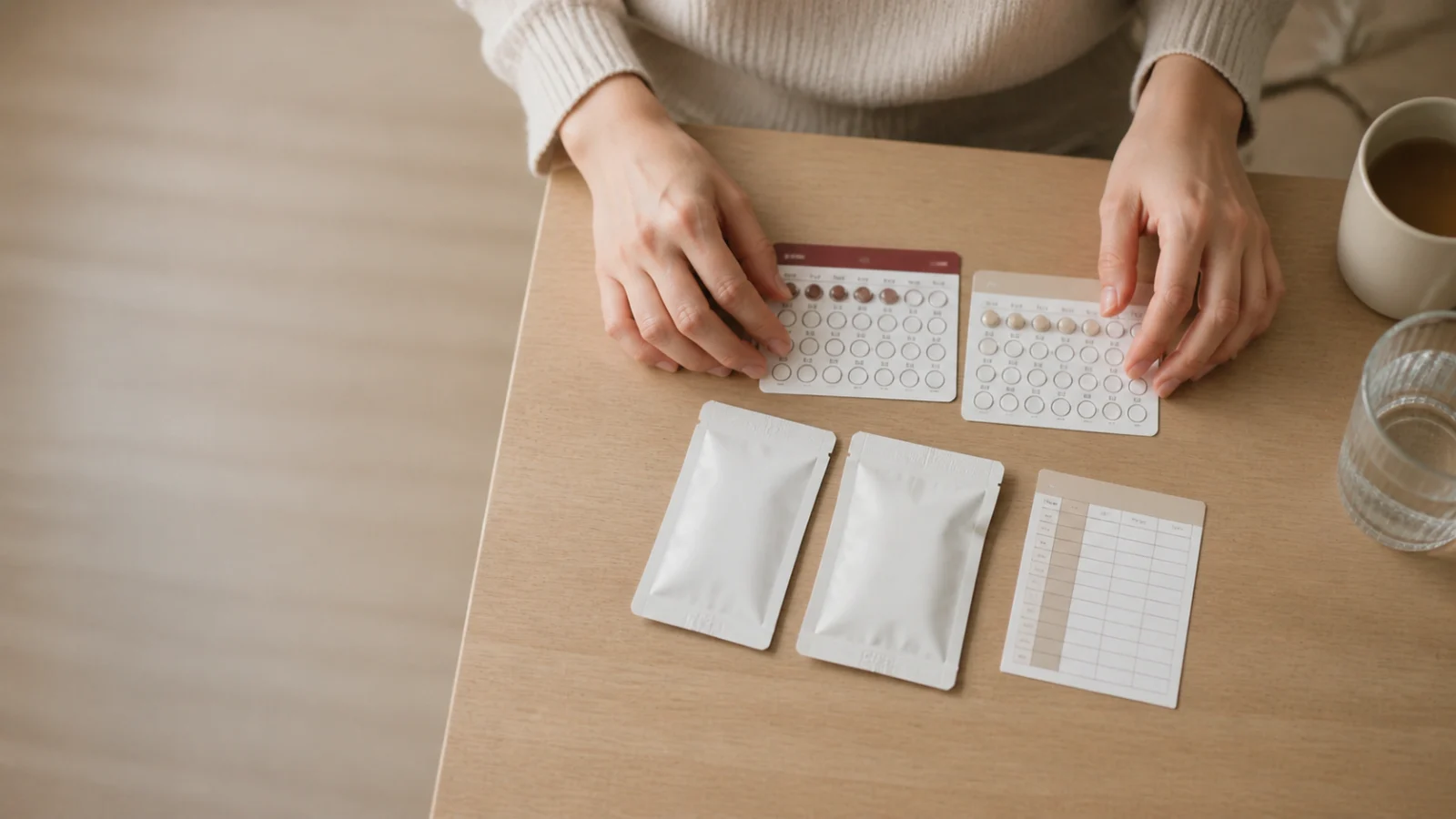
Trichomonas vaginitis: Read in order of your curiosity
Understanding the diagnosis and test results
Trichomonas vaginitis: Check treatment and re-testing schedules for yourself and your partner
TrichomonasVaginitisis often asymptomatic even when infected, so infection cannot be ruled out just because discharge appears normal. If symptoms are present, vaginal discharge may increase more than usual, become watery or frothy, appear yellow-green or gray, or have a fishy odor. Itching, burning, redness, soreness, and swelling of the vagina and vulva, as well as pain during urination and intercourse, may also occur. Since other types of vaginitis can be similar, you should be tested rather than judging by color or smell alone. A recent diagnosis alone cannot determine the timing of infection or the source of transmission. Please review your test results and exposure history with your medical provider.
For Trichomonas, recovery care is connected after both partners complete the causal treatment and re-testing.
For Trichomonas vaginitis, the priority is for both you and your partner to complete the prescribed treatment and prevent re-infection. If discharge or pelvic discomfort persists after treatment, the process is divided into re-confirming the cause and recovery care.
Begin with safety confirmation and treating the cause
Both you and your sexual partner should receive anti-protozoal treatment together and follow guidelines for sexual intercourse and the re-testing plan.
Determine the scope of Korean medicine treatment during the recovery phase
After treatment for both you and your partner is complete, we address only the remaining mucosal irritation, fatigue, and poor sleep; if there is a possibility of re-infection, re-testing is prioritized over Korean medicine treatment.
Treatment medication and follow-up plans are determined by checking pregnancy status and other STI test results together.
Cases requiring an OB/GYN evaluationPlease check first
For confirmed infections, recommended anti-protozoal treatment and simultaneous treatment of the partner are the priority. In cases of fever, pelvic pain, or bleeding during pregnancy, evaluation for upper tract infection or pregnancy complications is performed first.
- If yellow-green, gray, or frothy vaginal discharge suddenly increases and the odor changes
- If redness, swelling, soreness, or pain in the vulva and vagina is distinct
- If new pain occurs during urination or sexual intercourse
- If a sexual partner is diagnosed with a Trichomonas infection, even if you have no symptoms
Surgery, procedure, or further evaluationIt is not an indication for surgery; if it recurs, we re-verify partner treatment, re-infection, and whether medication was completed.
When initially required treatment is needed
Trichomoniasis: Supporting recovery after confirming safety
If Trichomonas is confirmed, treatment for both you and your partner, as well as guidelines for sexual activity until treatment is finished, come first. After treatment, the remaining discharge·pelvic discomfort and bodily recovery are addressed through herbal medicine treatment.
Observing how symptoms have disrupted your daily life
Record not only your medication name and completion date, but also your partner's treatment, sexual intercourse before treatment completion, the re-test date, and the symptom-free period.
Categorizing symptom combinations even within the same diagnosis
Prescription priorities are determined by selecting clues from the actual medical interview and examination among: infection-treatment priority, re-infection confirmation, damp-heat, residual irritation, qi and blood deficiency, and recovery types.
Re-evaluating through the next cycle and lifestyle changes
We look for completion of treatment for you and your partner, sexual activity guidelines during the treatment period, a re-test in approximately 3 months, the absence of re-infection, and residual irritation.
Treatment goalThis does not replace anti-protozoal treatment but breaks the cycle of re-infection, safely managing only the recovery of the mucous membranes and the whole body remaining after treatment.
Consult about Trichomonas treatment and re-testing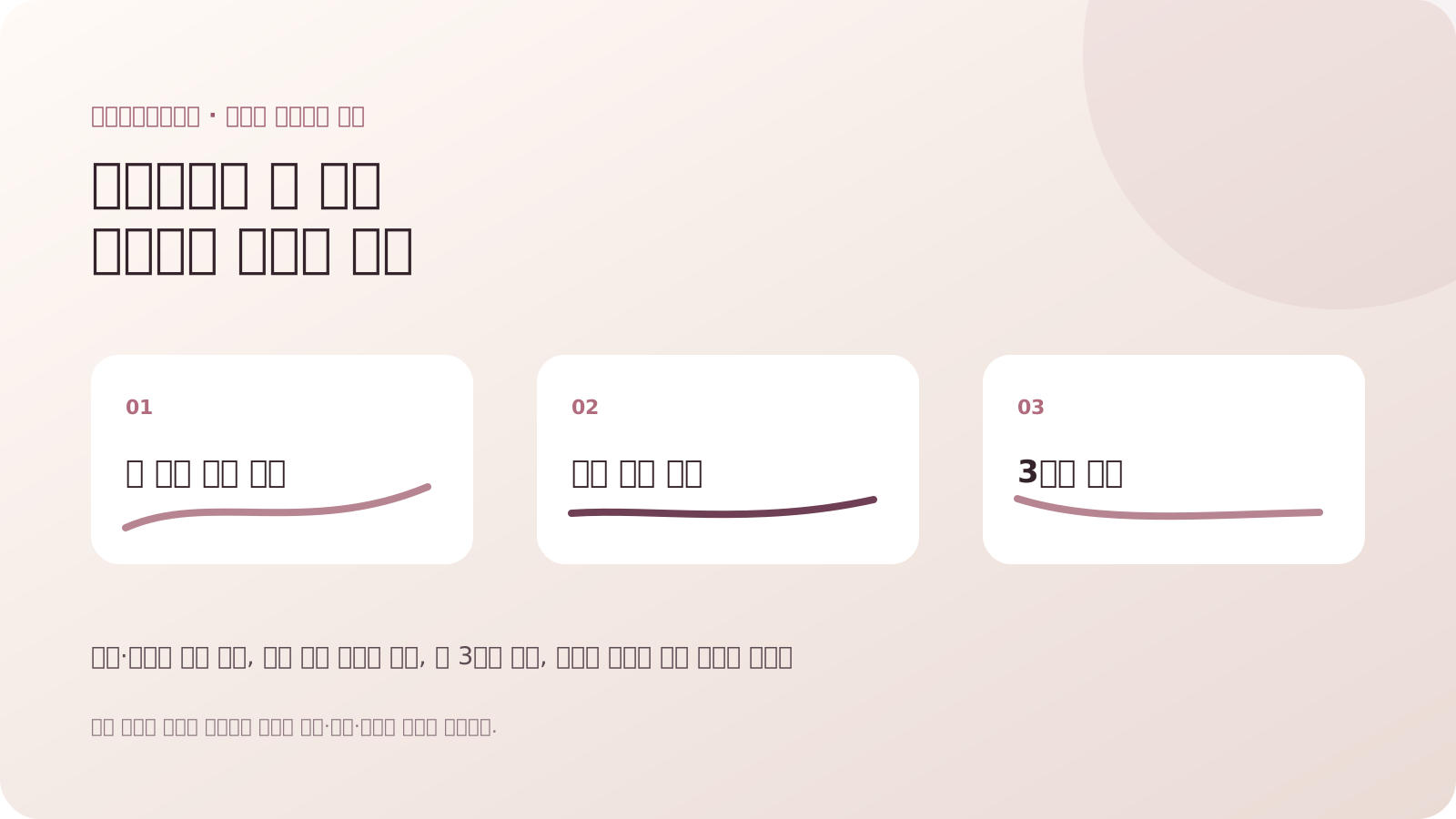
We look for completion of treatment for you and your partner, sexual activity guidelines during the treatment period, a re-test in approximately 3 months, the absence of re-infection, and residual irritation.
Photos show scenes of how cycles, pain, breastfeeding, and life transitions have affected daily life without revealing faces or identities. Disease tracking charts and conceptual diagrams are simplifications of differential diagnosis, examination, and progress records; they do not represent an individual's diagnosis or pregnancy/treatment results.Understanding Tests and Diagnosis
Trichomoniasis: Three things to know first
When Interpreting Test Results
Many infected individuals are asymptomatic, but it is transmitted to partners even in an asymptomatic state.
When Identifying Causes and Risk Factors
Main symptoms include yellow-green, gray, or frothy vaginal discharge and odor, as well as vulvar itching and redness.
When Reviewing Lifestyle Changes
Painful urination·dyspareuniamay accompany this, and a test is required to distinguish it from similar types of vaginitis.

The scope of Korean medicine treatment is limited to residual mucous membrane irritation and burdens on sleep, digestion, and energy remaining after the infection has been cleared.
Conceptual reference · CDC: Vaginal Discharge · CDC: Bacterial VaginosisNecessary initial treatment and recovery period care
Complete the necessary primary treatment first, then continue with Korean medicine treatment during the recovery period.
Adhere to the necessary primary treatment first
Share the test, medication, and re-examination schedule set by your medical staff, and do not change them arbitrarily until the treatment response is confirmed.
The scope of Korean medicine treatment is determined after confirmation
The scope of supportive recovery is determined only if mucous membrane irritation and systemic fatigue remain after you and your partner have completed anti-protozoal treatment, followed sexual activity guidelines during treatment, and completed re-testing.
Re-evaluate immediately if symptoms change
For confirmed infections, recommended anti-protozoal treatment and simultaneous partner treatment are the priority. For fever, pelvic pain, or bleeding during pregnancy, an evaluation for upper tract infection or pregnancy is performed first.
What to prepare before your visit
Please organize these three things before your visit
Test results, medication name, completion date, and scheduled re-test date
Note the test dates and results together to track recent changes.
Sexual partner treatment and sexual intercourse before and after treatment
Prepare test results and a list of medications used so that the status before and after treatment can be compared.
Pregnancy status, pelvic pain, fever, and other STI tests
Inform the medical staff of all prescription drugs, over-the-counter drugs, Korean herbal medicine, and supplements without omission.
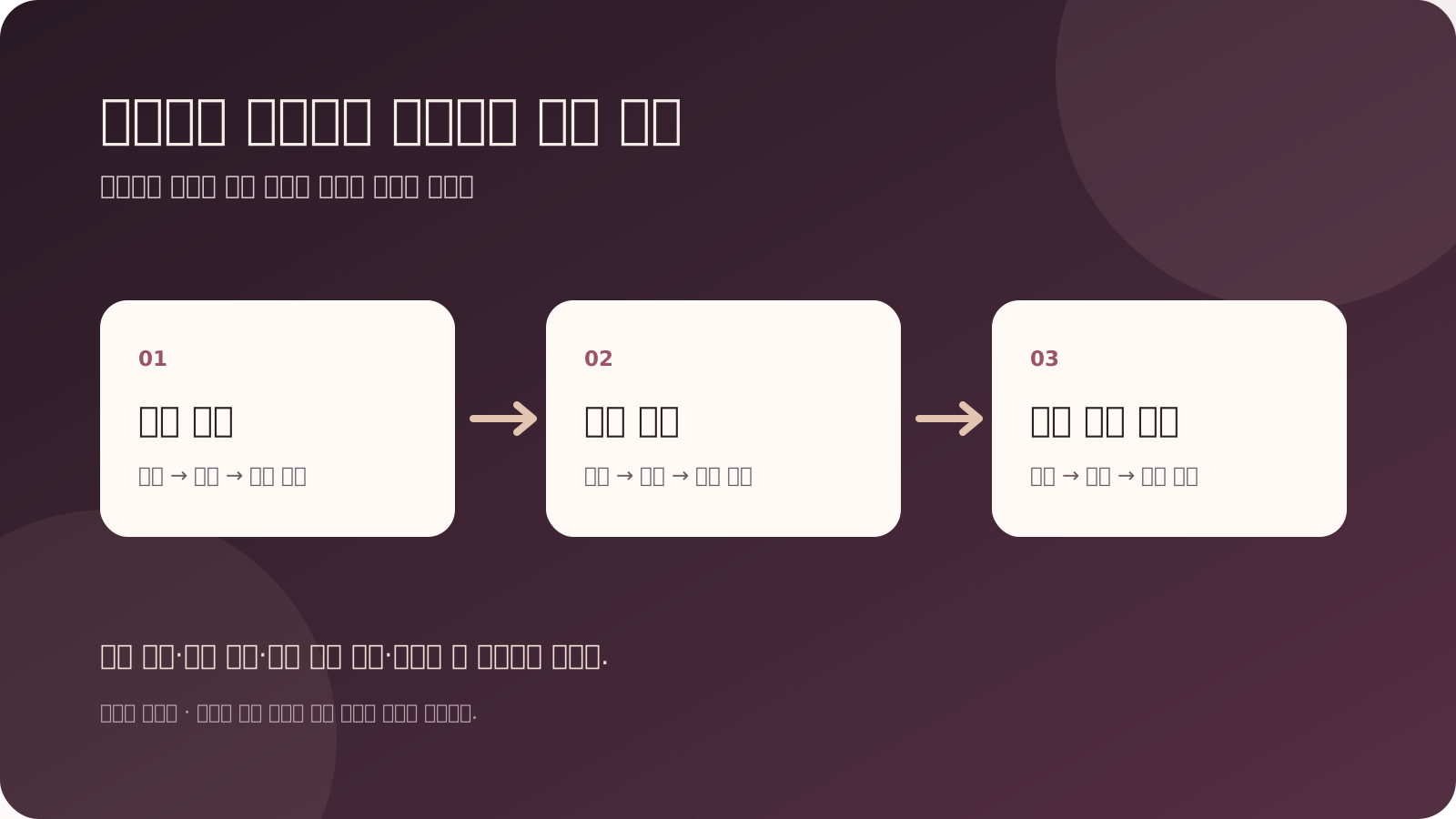
Test results, cause-specific treatment, symptom-free periods, and re-examinations are reviewed together.
Conceptual reference · CDC: Vaginal Discharge · CDC: Bacterial VaginosisChanges to monitor before and after treatment
Check again using the same categories to determine if the treatment is helpful
Completion of treatment for self and partner, sexual intercourse guidelines during treatment, re-testing after approximately 3 months, and checking for absence of re-infection and residual irritation.
Treatment completion for both partners
Establish a baseline by confirming your current status during the first consultation.
Guidelines for the treatment period
Record this along with the dates when treatment or medication changed.
Re-testing after 3 months
Look for consistent changes over several days rather than a single good day.

Organizing test results and treatment history chronologically helps you identify specific questions to ask during your next appointment.
After completing treatment for the cause
Trichomoniasis: Four symptom combinations for Korean herbal medicine prescriptions
Korean medicine treatment is limited to addressing residual mucosal irritation and burdens on sleep, digestion, and energy levels that remain after the infection has been cleared.
Pattern identification (Byun-jeung) is not about renaming a gynecological diagnosis. For each condition, we determine whether to center the care on Korean medicine treatment, combine it with other treatments, or prioritize treating the underlying cause first. Then, we reflect items that actually change together, such as cycle, pain, cold/heat sensations, digestion, sleep, and energy levels, into the prescription.
When test results are positive and there is discharge or irritation
- Changes observed in cycles and pain
- Review test results, discharge, and vulvar irritation.
- Concurrent changes observed in the body
- Confirm pregnancy, other STIs, and whether the partner has been treated.
- Prescription Priority
- Prioritize recommended anti-protozoal treatment and simultaneous treatment of the partner.
When symptoms recur after treatment and there is a possibility of exposure
- Changes observed in cycles and pain
- Review the timing of recurrence, sexual activity, and completion of medication.
- Concurrent changes observed in the body
- Confirm the possibility of re-infection, missed medication, or resistance with medical staff.
- Prescription Priority
- Prioritize re-testing and standard re-treatment over presumptive prescriptions.
When heat or stinging sensations persist even after a negative test result
- Changes observed in cycles and pain
- Check for mucosal heat, urinary irritation, and discharge.
- Concurrent changes observed in the body
- Rule out pelvic inflammatory disease, other types of vaginitis, or skin diseases.
- Prescription Priority
- After re-evaluation, selectively adjust treatment for remaining mucosal irritation.
When fatigue or poor sleep persists for a long time after treatment
- Changes observed in cycles and pain
- Check for fatigue after activity, appetite, and sleep patterns.
- Concurrent changes observed in the body
- First, check for persistent infection or medication side effects.
- Prescription Priority
- After confirming the infection has been cleared, provide support for recovery of energy.
Order of Prescription Adjustment
- Check for urgent medical evaluation and current treatments
Check for emergency symptoms and the timing for re-evaluation; do not arbitrarily change prescription or procedure plans.
- Select the combination of symptoms that actually recur
Rather than using the four categories as a self-diagnosis checklist, we retain only the relevant clues from medical interviews and existing tests.
- Determine the next prescription based on the same items
Re-verify the completion of treatment for both partners, treatment duration guidelines, and changes in the 3-month follow-up test to determine whether to maintain, adjust, or stop treatment.
We review pregnancy-related evaluations, tests or surgeries for structural diseases, antibacterial treatment for infections, and schedules for infertility procedures and menopause treatment to divide and coordinate the scope of Korean herbal medicine treatment. Treatment goals are tracked by specifically defining changes in pain, bleeding, sleep, energy levels, and daily functioning.
Consult about Trichomonas treatment and follow-up testsWomen's Health Glossary
Additional information regarding Trichomonas vaginitis
You can check a brief definition before proceeding to a detailed explanation.Frequently Asked Questions
Frequently Asked Questions about Trichomonas vaginitis
Can Trichomonas vaginitis be asymptomatic?
Yes. Many infected individuals have no symptoms but can still transmit it to others, so testing is necessary if there is a possibility of exposure.
What does the discharge from Trichomonas vaginitis look like?
There may be yellow-green or gray discharge that is more abundant than usual, watery, or frothy, accompanied by a fishy odor. It cannot be confirmed by appearance alone.
Should I be tested if I only have itching or pain during urination?
Vulvar itching, redness, pain, as well as pain during urination or intercourse are possible symptoms. Since other types of vaginitis present similarly, a physical examination and testing are required.
Does a recent diagnosis mean I was recently infected?
No. Because there can be an asymptomatic period, the date of diagnosis alone cannot determine the exact time of infection or the person who transmitted it.
What causes Trichomonas vaginitis?
It is caused by the infection of the urogenital tract by the protozoan Trichomonas vaginalis, and is primarily transmitted through sexual contact without a condom with an infected partner.
Should my partner be treated even if they have no symptoms?
Since asymptomatic infection and transmission are possible, your current partner should also receive an evaluation and treatment guidance. If only you are treated, reinfection may occur.
Could it have been caused by a toilet seat or a towel?
The officially established primary route is sexual contact with an infected partner. Rather than determining the route of infection based solely on household items or hygiene, please verify your test results and exposure history with medical staff.
When can herbal medicine treatment be considered for Trichomonas vaginitis?
For this condition, safety confirmation and treating the cause come first. Korean herbal medicine is used only to address remaining mucosal irritation, fatigue, or poor sleep after both you and your partner have completed treatment; if there is a possibility of reinfection, re-testing takes priority over Korean medicine treatment.
What should I record before a consultation for Trichomonas vaginitis?
It is helpful to organize the following information in chronological order: test results, medication names, completion dates, scheduled re-test dates, partner's treatment, sexual intercourse before and after treatment, pregnancy status, pelvic pain, fever, and other STI tests. Please first organize the treatment dates for yourself and your partner, guidelines for sexual intercourse, and the re-test plan.
Can I use herbal medicine along with treatment for Trichomonas vaginitis?
Do not stop your current prescription arbitrarily, and please disclose all medications and supplements you are taking. Herbal medicine does not replace anti-protozoal treatment but helps break the cycle of reinfection and safely manages the recovery of the mucosa and general body condition after treatment.
Evidence and Update Information
This content was compiled by Korean medicine doctor Choi Yeon-seung based on the official professional materials and disease-specific clinical data below, and was updated on 2026-08-24.
- CDC: About TrichomoniasisAsymptomatic infection/transmission, discharge, vulvar irritation, urinary/sexual symptoms, and reinfection
- NHS: TrichomoniasisYellow-green, frothy vaginal discharge and odor, vulvar itching, swelling, dysuria, and dyspareunia
- MedlinePlus: TrichomoniasisPossibility of being asymptomatic, yellow-green or gray discharge, odor, dysuria, and sexual discomfort
- WHO: TrichomoniasisSexual transmission of urogenital protozoan infection, possibility of being asymptomatic, and partner notification
- CDC: Vaginal DischargeReasons why the cause of vaginitis cannot be determined by symptoms alone and the necessary tests
- CDC: Bacterial VaginosisDiagnosis, treatment, and considerations during pregnancy for bacterial vaginosis
- CDC: Vulvovaginal CandidiasisTesting for Candida and the distinction between uncomplicated, complicated, and recurrent cases
- CDC: TrichomoniasisPartner treatment, re-examination, and re-infection management
- CDC: Pelvic Inflammatory DiseaseLow diagnostic threshold, antibiotics, and 72-hour re-evaluation for pelvic inflammatory disease (PID)