
Implantation bleeding: Read in order of your questions
Understanding the diagnosis and test results
For implantation bleeding, check the pregnancy location, pain, amount of bleeding, and testing timing rather than the color
Implantation bleedingis a common term used to describe light bleeding that may occur around the time the fertilized egg attaches to the lining of the uterus. Small amounts of pink, brown, or red blood may appear on underwear or tissue about 1 to 2 weeks after fertilization, but it cannot be confirmed as implantation bleeding based on color, amount, or duration alone. Early pregnancy bleeding can also occur due to changes in the cervix, infection, early pregnancy loss, or ectopic pregnancy. If pregnancy is possible or a pregnancy test is positive, notify an OB/GYN about the bleeding and, if necessary, confirm the location and progress of the pregnancy through blood hCG levels and ultrasound. Severe pelvic pain on one side, shoulder pain, dizziness, fainting, or heavy bleeding require immediate emergency evaluation.
The scope of Korean medicine treatment for bleeding during pregnancy is determined after confirming the location and progress of the pregnancy.
Bleeding where pregnancy is possible is not dismissed as implantation bleeding; instead, the timing of the pregnancy test and the presence of pain are checked first. If there is severe pain on one side, shoulder pain, a feeling of fainting, or increased bleeding, seek an OB/GYN evaluation immediately.
Begin with safety confirmation and treating the cause
Confirm the location and progress of the pregnancy via ultrasound and hCG, and follow the follow-up plan provided by the attending OB/GYN.
Determine the scope of Korean medicine treatment during the recovery phase
Once the pregnancy location and progress are confirmed and there is no acute risk, treatment is limited to symptoms that do not interfere with the pregnancy, such as nausea, poor sleep, or fatigue.
The ovulation date, procedure date, gestational age, and history of previous ectopic pregnancy or miscarriage change the priority of the evaluation.
Cases requiring an OB/GYN evaluationPlease check first
Notify medical staff of any bleeding during pregnancy. One-sided pain, shoulder pain, fainting, or increasing bleeding must first be evaluated for emergency causes, such as ectopic pregnancy.
- Cases of sudden and severe pain in the abdomen or pelvis on one side
- Cases accompanied by pain at the tip of the shoulder, severe dizziness, weakness, or fainting
- Cases of heavy bleeding that quickly soaks a pad or the continuous passage of large blood clots
- If there are worsening spasms accompanied by the discharge of substances that look like liquid or tissue
- If there is high fever, chills, or foul-smelling discharge accompanied by pelvic pain
Surgery, procedure, or further evaluationDepending on the cause, such as ectopic pregnancy or progressive bleeding, medication or surgical treatment may be necessary, so medical evaluation is not delayed.
When initially required treatment is needed
Implantation bleeding: helping recovery after confirming safety
Implantation bleeding cannot be concluded based on the color or amount of blood alone. We first check the timing of the pregnancy test and changes in pain and bleeding, and then connect you to the necessary medical care once the pregnancy status is confirmed.
Observing how symptoms have disrupted your daily life
Implantation status is not estimated by color. Please record the date of your last menstrual period, the date of the pregnancy test, the amount of bleeding, and when pain or dizziness began.
Categorizing symptom combinations even within the same diagnosis
Prescription priorities are determined by selecting clues that match the actual medical interview and examination from among the following: safety-evaluation priority type, energy/decreased appetite type, sleep/anxiety and arousal type, cold sensation/lower back pain accompaniment type.
Re-evaluating through the next cycle and lifestyle changes
Changes in bleeding amount, pain, dizziness, and ultrasound/hCG follow-up plans are treated as the highest priority indicators, and arbitrary changes in treatment are avoided.
Treatment goalWe do not promise successful implantation and do not overlook dangerous bleeding; we record discomfort only to the extent that it does not interfere with OB/GYN follow-ups.
Check the safety line for early pregnancy bleeding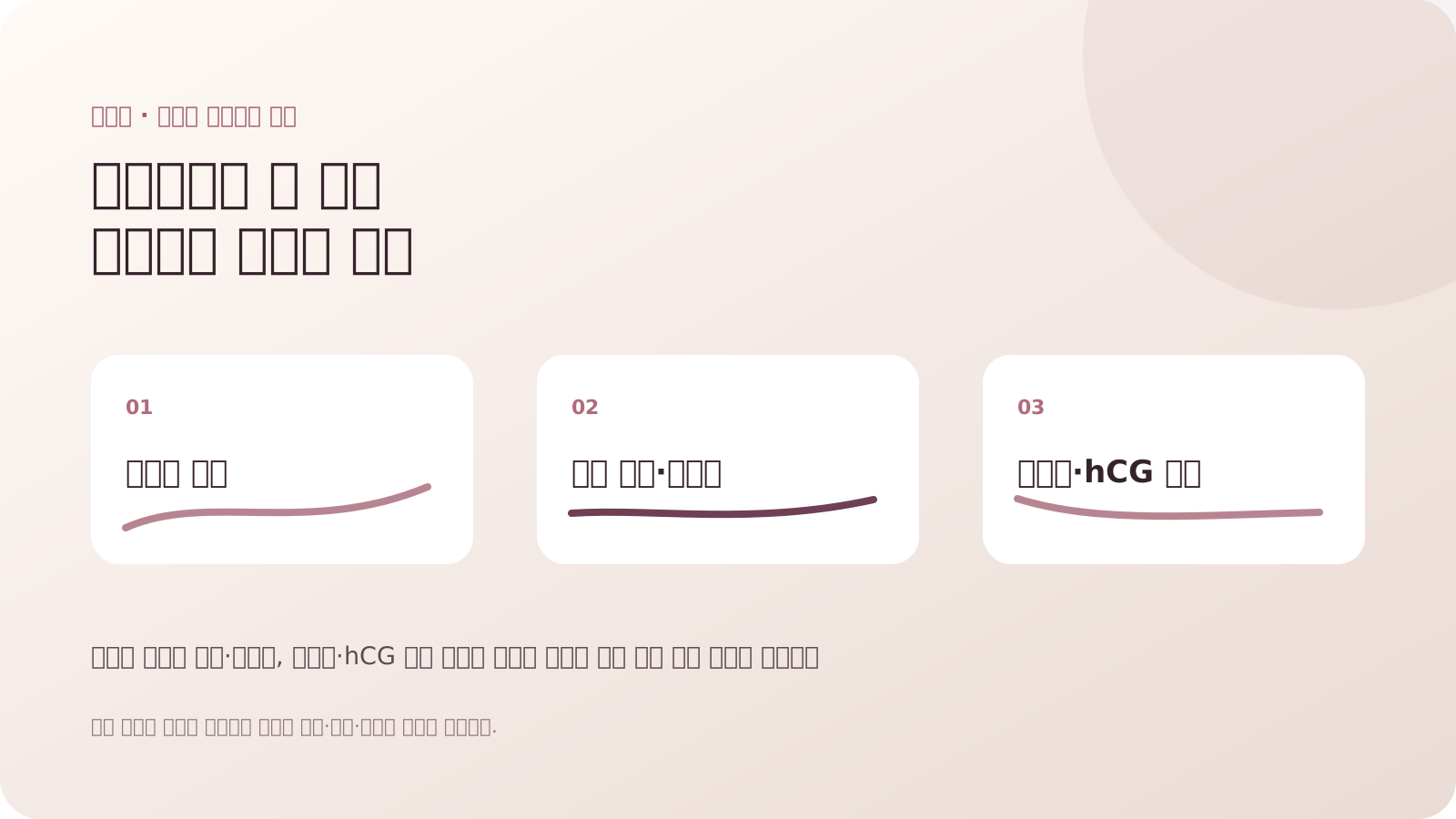
Changes in bleeding amount, pain, dizziness, and ultrasound/hCG follow-up plans are treated as the highest priority indicators, and arbitrary changes in treatment are avoided.
Photos show scenes of how cycles, pain, breastfeeding, and life transitions have affected daily life without revealing faces or identities. Disease tracking charts and conceptual diagrams are simplifications of differential diagnosis, examination, and progress records; they do not represent an individual's diagnosis or pregnancy/treatment results.Understanding Tests and Diagnosis
Implantation bleeding: three things to know first
When Interpreting Test Results
A small amount of spotting may appear around 1 to 2 weeks after fertilization, but this is not unique to implantation bleeding.
When Identifying Causes and Risk Factors
Based on color alone, such as pink, brown, or red, or the amount of bleeding, it is impossible to distinguish between a normal pregnancy miscarriageand an ectopic pregnancy.
When Reviewing Lifestyle Changes
Severe one-sided pain, shoulder pain, dizziness, fainting, or heavy bleeding must be checked immediately at the emergency room.
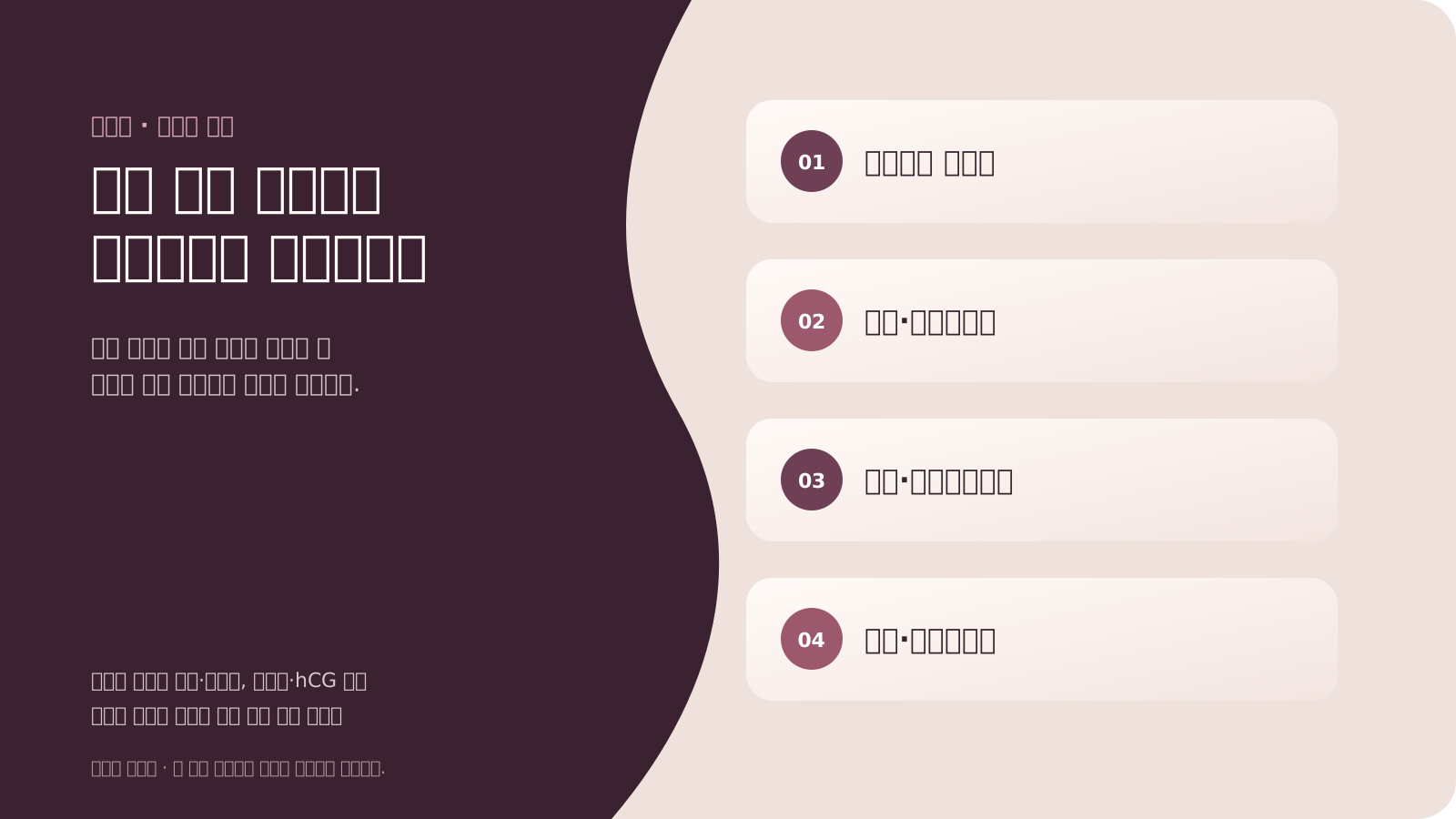
Before the location and progress of the pregnancy are confirmed, safety evaluation takes priority over herbal medicine pattern identification. Even after evaluation, we only limitedly categorize remaining burdens related to digestion, sleep, and energy.
Conceptual reference · ACOG: Bleeding During Pregnancy · ACOG: Early Pregnancy LossNecessary initial treatment and recovery period care
Complete the necessary primary treatment first, then continue with Korean medicine treatment during the recovery period.
Adhere to the necessary primary treatment first
Share the test, medication, and re-examination schedule set by your medical staff, and do not change them arbitrarily until the treatment response is confirmed.
The scope of Korean medicine treatment is determined after confirmation
At this stage, confirming the location and progress of the pregnancy takes priority over persuading the patient to undergo Korean medicine treatment. Goals for herbal medicine treatment are set only if burdens such as nausea, sleep, or energy remain after an OB/GYN evaluation and if the attending medical staff has granted permission.
Re-evaluate immediately if symptoms change
Bleeding during pregnancy should be reported to medical staff; one-sided pain, shoulder pain, fainting, or increasing bleeding requires a priority evaluation for emergency causes such as ectopic pregnancy.
What to prepare before your visit
Please organize these three things before your visit
Last menstrual period, ovulation/procedure date, pregnancy test date
Note the test dates and results together to track recent changes.
Start, amount, and color changes of bleeding, along with one-sided pain, dizziness, or shoulder pain
Prepare test results and a list of medications used so that the status before and after treatment can be compared.
Ultrasound and hCG plans, and a full list of prescribed medications, vaginal suppositories, injections, and Korean herbal medicine
Inform the medical staff of all prescription drugs, over-the-counter drugs, Korean herbal medicine, and supplements without omission.
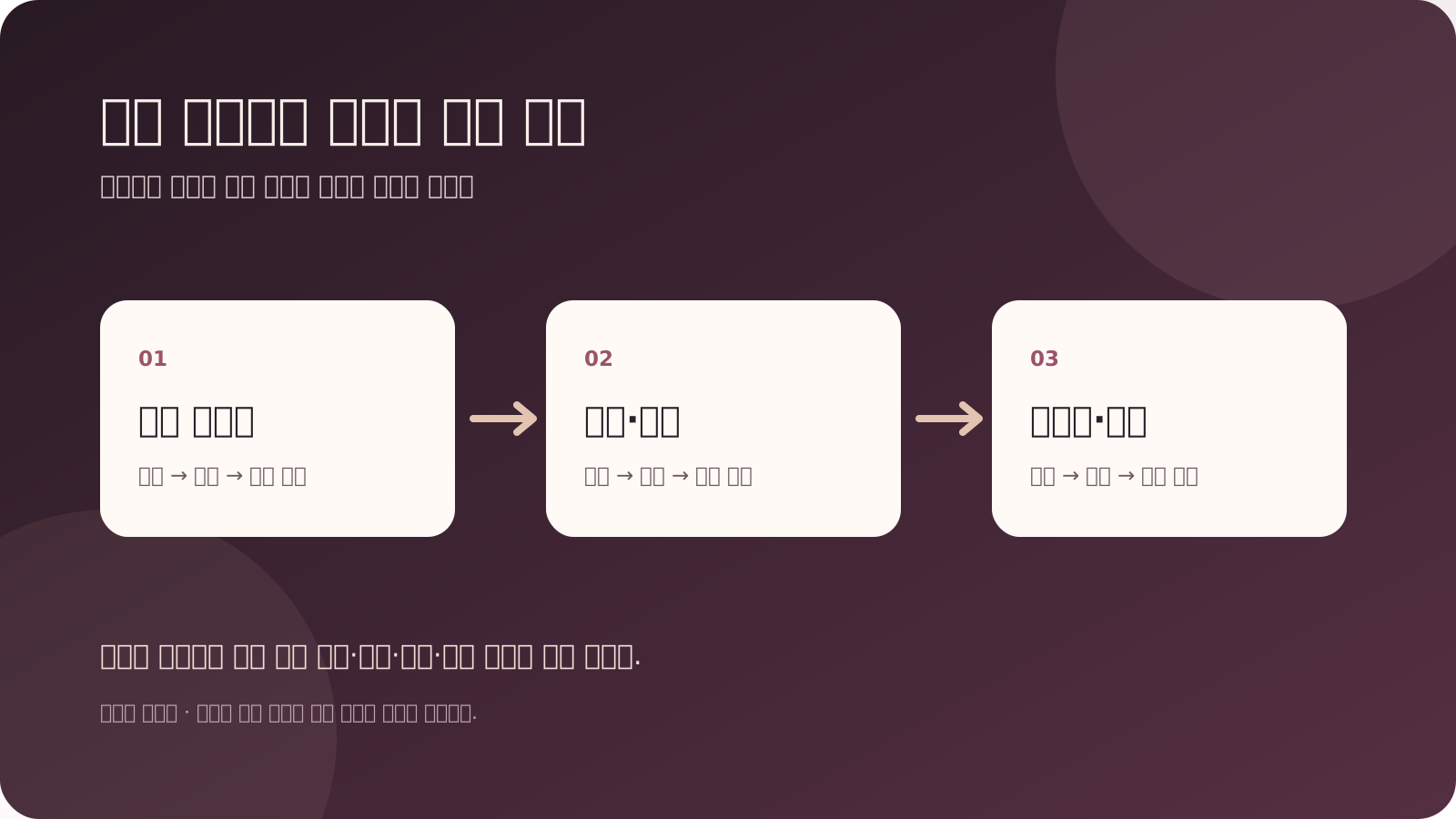
Rather than judging by the color of the blood alone, we first examine the pregnancy location, pain, bleeding, and follow-up tests.
Conceptual reference · ACOG: Bleeding During Pregnancy · ACOG: Early Pregnancy LossChanges to monitor before and after treatment
Check again using the same categories to determine if the treatment is helpful
Changes in bleeding amount, pain, dizziness, and ultrasound/hCG follow-up plans are the top priority indicators; avoid changing treatments arbitrarily.
Changes in bleeding amount
Establish a baseline by confirming your current status during the first consultation.
One-sided pain and dizziness
Record this along with the dates when treatment or medication changed.
Ultrasound and hCG schedule
Look for consistent changes over several days rather than a single good day.

Record not only the start date but also the amount of bleeding, pain, medication, and impact on daily life using the same criteria.
After completing treatment for the cause
Four symptom combinations for distinguishing implantation bleeding and Korean herbal medicine prescriptions
Before the location and progress of the pregnancy are confirmed, Korean herbal medicine Pattern Identificationis secondary to a safety evaluation. After the evaluation, prescriptions are limited only to addressing remaining burdens in digestion, sleep, or energy levels.
Pattern identification (Byun-jeung) is not about renaming a gynecological diagnosis. For each condition, we determine whether to center the care on Korean medicine treatment, combine it with other treatments, or prioritize treating the underlying cause first. Then, we reflect items that actually change together, such as cycle, pain, cold/heat sensations, digestion, sleep, and energy levels, into the prescription.
When bleeding occurs together with one-sided pain and dizziness
- Changes observed in cycles and pain
- We monitor for increased bleeding, the location of pain, feelings of fainting, and shoulder pain.
- Concurrent changes observed in the body
- The possibility of ectopic pregnancy, miscarriage, or infection is checked immediately.
- Prescription Priority
- Same-day OB/GYN or emergency evaluation is prioritized over Korean herbal medicine prescriptions.
When eating is difficult due to nausea and decreased energy even after evaluation
- Changes observed in cycles and pain
- Monitor intake, vomiting, urine output, and changes in weight.
- Concurrent changes observed in the body
- Verify dehydration status and medication safety during pregnancy with the obstetrics and gynecology (OB/GYN) department.
- Prescription Priority
- Minimize the burden on digestion and energy levels within a confirmed safe range.
When unable to sleep after bleeding and repeatedly checking symptoms
- Changes observed in cycles and pain
- Monitor the degree of nighttime arousal, heart rate, searching behavior, and anxiety.
- Concurrent changes observed in the body
- Provide explanations on the progress of the pregnancy and check if mental health support is needed.
- Prescription Priority
- Clarify the testing schedule and support the recovery of sleep and tension levels.
When mild cold sensations, lower back pain, and fatigue remain after evaluation
- Changes observed in cycles and pain
- Monitor body temperature perception, lower back discomfort, and fatigue after activity.
- Concurrent changes observed in the body
- Perform an immediate re-evaluation if pain increases or bleeding patterns change.
- Prescription Priority
- Narrow down supportive goals after verifying contraindications and medication use during pregnancy.
Order of Prescription Adjustment
- Check for urgent medical evaluation and current treatments
Check for emergency symptoms and the timing for re-evaluation; do not arbitrarily change prescription or procedure plans.
- Select the combination of symptoms that actually recur
Rather than using the four categories as a self-diagnosis checklist, we retain only the relevant clues from medical interviews and existing tests.
- Determine the next prescription based on the same items
Re-verify changes in bleeding amount, one-sided pain, dizziness, ultrasound results, and hCG schedules to determine whether to maintain, adjust, or discontinue treatment.
We review pregnancy-related evaluations, tests or surgeries for structural diseases, antibacterial treatment for infections, and schedules for infertility procedures and menopause treatment to divide and coordinate the scope of Korean herbal medicine treatment. Treatment goals are tracked by specifically defining changes in pain, bleeding, sleep, energy levels, and daily functioning.
Check safety guidelines for early pregnancy bleedingWomen's Health Glossary
Additional Information Regarding Implantation Bleeding
You can check a brief definition before proceeding to a detailed explanation.Frequently Asked Questions
Frequently Asked Questions About Implantation Bleeding
What do implantation bleeding symptoms usually look like?
About 1 to 2 weeks after fertilization, a small amount of pink, brown, or red spotting may be seen on underwear or tissue. However, implantation bleeding cannot be confirmed by these appearances alone.
Can implantation bleeding and menstruation be distinguished by color?
They cannot be safely distinguished by color, amount, and date alone. Consider pregnancy test results, changes in bleeding, and pain together, and notify your OB/GYN of any bleeding during pregnancy.
If the bleeding is minimal, do I not need to worry about miscarriage?
Light bleeding is common and does not necessarily mean a miscarriage, but it does not rule out miscarriage or ectopic pregnancy. Report any bleeding or pain and confirm the necessary ultrasound and hCG plans.
Is Korean herbal medicine treatment necessary for implantation bleeding?
First, visit an obstetrics and gynecology (OB/GYN) clinic to confirm the location of the pregnancy and the cause of the bleeding, and to receive necessary treatment for ectopic pregnancy, miscarriage, or infection. If Korean herbal medicine treatment is needed thereafter, the goal is to recover energy, digestion, and sleep after the bleeding, tailored to the confirmed condition and gestational age.
What causes implantation bleeding?
A small amount of spotting may occur around 1 to 2 weeks after fertilization as the fertilized egg settles into the uterine lining. However, since similar bleeding can occur due to other causes, it cannot be identified by sight alone.
If I bleed after sexual intercourse, does it mean there is a problem with implantation?
During pregnancy, the cervix has increased blood vessel dilation and can bleed easily after contact. Nevertheless, rather than judging the cause by sight, please report any bleeding to your OB/GYN.
If the bleeding is minimal, is there no possibility of miscarriage?
Small amounts of bleeding can occur in early pregnancy and do not necessarily mean a miscarriage, but they cannot rule one out either. Please check for changes in bleeding and cramping, and confirm the plan for necessary ultrasounds or hCG tests.
When can Korean herbal medicine treatment be considered for implantation bleeding?
For this condition, confirming safety and treating the cause come first. Once the pregnancy location and progress are confirmed and there are no acute risks, we limitedly address only symptoms that do not interfere with the course of pregnancy, such as nausea, poor sleep, or fatigue.
What should I record before a consultation regarding implantation bleeding?
It is helpful to organize the following information in chronological order: date of last menstrual period,ovulationprocedure date, pregnancy test date, the start, amount, and color changes of bleeding, as well as one-sided pain, dizziness, or shoulder pain; the full list of ultrasound/hCG plans and prescribed medications, vaginal suppositories, injections, or Korean herbal medicine. Please first prepare the date of your last menstrual period, pregnancy test date, records of bleeding and pain, and your OB/GYN follow-up plan.
Can I use Korean herbal medicine along with treatment for implantation bleeding?
Do not stop your current prescriptions arbitrarily, and please inform us of all medications and supplements you are taking. We do not promise successful implantation and will not overlook dangerous bleeding; we record discomfort within a scope that does not interfere with OB/GYN follow-up.
Evidence and Update Information
This content was compiled by Korean medicine doctor Choi Yeon-seung based on the official professional materials and disease-specific clinical data below, and was updated on 2026-08-24.
- ACOG: Bleeding During PregnancyCommon causes of bleeding during pregnancy and symptoms requiring immediate medical evaluation
- ACOG: Ectopic PregnancyPain, bleeding, emergency symptoms, and diagnosis of ectopic pregnancy
- ACOG: Early Pregnancy LossSymptoms, diagnosis, and treatment options for early pregnancy loss
- ACOG: Abnormal Uterine BleedingTiming, amount, cycle, and evaluation criteria for abnormal bleeding
- ASRM: Fertility Evaluation of Infertile WomenTiming of infertility evaluation and assessment of ovulation, fallopian tubes, uterus, and ovarian reserve